Composer · 20th Century · 1883–1945
Anton Webern
Austrian composer and conductor (1883–1945).
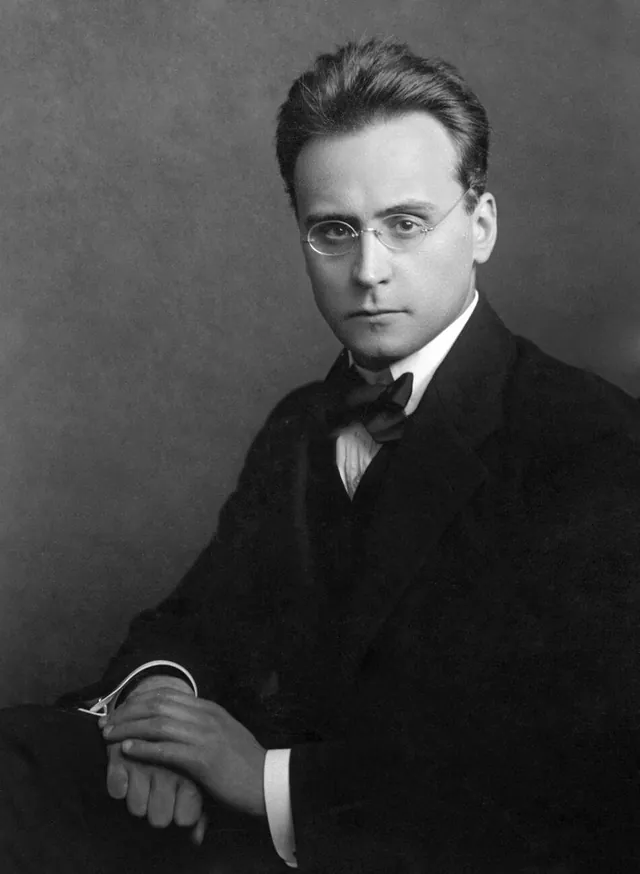
Biography
Anton Webern (German: [ˈantoːn ˈveːbɐn] ; 3 December 1883 – 15 September 1945) was an Austrian composer, conductor, and musicologist whose modernist music was among the most radical of its milieu in its lyrical, poetic concision and use of then novel atonal and twelve-tone techniques. His approach was typically rigorous, inspired by his studies of the Franco-Flemish School under Guido Adler and by Arnold Schoenberg's emphasis on structure in teaching composition from the music of Johann Sebastian Bach, the First Viennese School, and Johannes Brahms. Webern, Schoenberg, and their colleague Alban Berg were at the core of what became known as the Second Viennese School.
Webern was likely the first and certainly the last of the three to write music in an aphoristic and expressionist style, reflecting his instincts and the idiosyncrasy of his compositional process. Working from personal experience, he treated themes of love, nature, mysticism, and nostalgia. Unhappily peripatetic and often assigned light music or operetta in his early conducting career, he aspired to conduct what was seen as more respectable, serious music at home in Vienna. Following Schoenberg's guidance, Webern tried writing music of greater length during and after their World War I service, relying on the structural support of texts in many Lieder.
He rose as a choirmaster and conductor, championing Gustav Mahler's music in Red Vienna and abroad. With Schoenberg based in Berlin, Webern began writing music of increasing confidence, independence, and scale using twelve-tone technique. Marginalized as a "cultural Bolshevist" in Fascist Austria and Nazi Germany, he maintained "the path to the new music", enjoyed international recognition, and relied more on teaching for income. He opposed fascist cultural positions but espoused pan-Germanism and was torn, like friends and family, among uncertainties. His hope for moderate, stable, and successful governance of Austria within Nazi Germany proved misplaced, and he helped Jewish friends emigrate and hide while repeatedly considering emigrating himself.
Text adapted from the Wikipedia article “Anton Webern”, licensed under CC BY-SA 4.0.
Works with clarinet
- 2 Songs, for chorus, clarinet, bass clarinet, celesta, guitar and violin, op. 19
- 3 Songs, for soprano, Eb clarinet and guitar, op. 18
- 5 Canons on Latin Texts, for voice, clarinet and bass clarinet, op. 16
- Quartet, for clarinet, saxophone, piano and violin, op. 22
Works with saxophone
- Quartet, for clarinet, saxophone, piano and violin, op. 22