Soprano / tenor recorder (C instruments)
Recorder Fingering Chart
Complete recorder fingering chart, C4–D6: a clear diagram for every note, alternate and trill fingerings, and the sounding pitch on each recorder.
Written pitch. Fingerings apply to C recorders (soprano, tenor); alto & sopranino use the same patterns a fifth higher in name.
A written C5 sounds C6 on Soprano recorder, C5 on Tenor recorder.
First octave register C4–C♯5
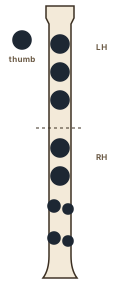
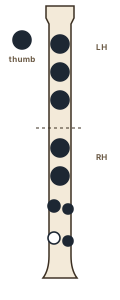
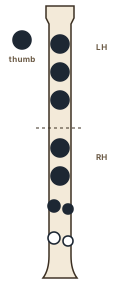
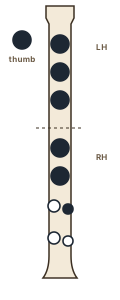
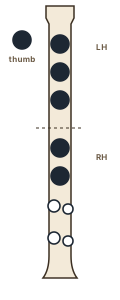
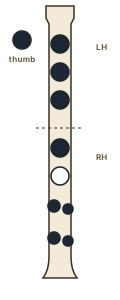
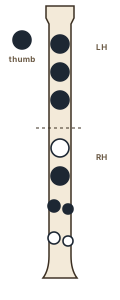
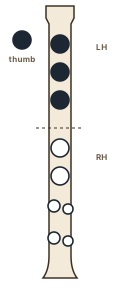
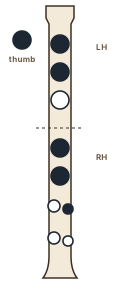
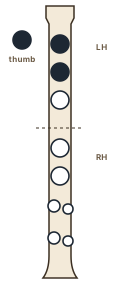
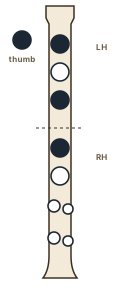
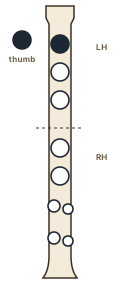
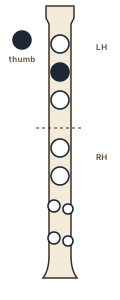
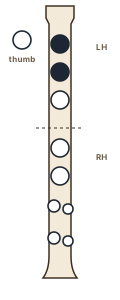
Second octave register D5–D6
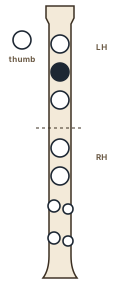
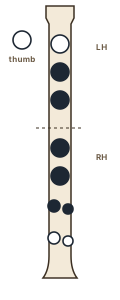
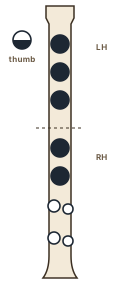
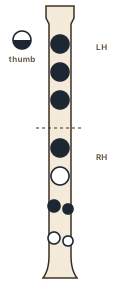
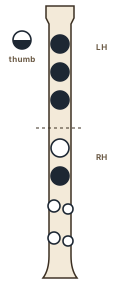
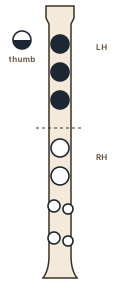
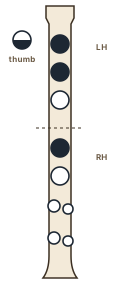
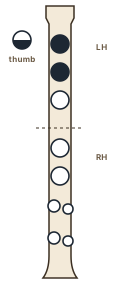
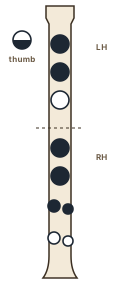
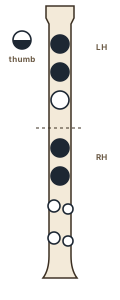
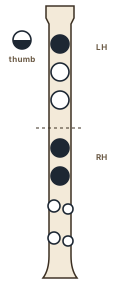
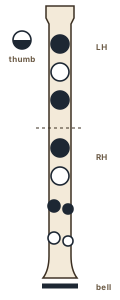
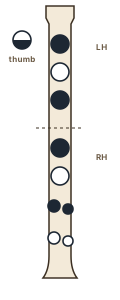
Key names
| Key | Name | Hand |
|---|---|---|
| T | thumb hole | Left |
| t | thumb hole half-covered (pinched) | Left |
| 1 | left index hole | Left |
| 2 | left middle hole | Left |
| 3 | left ring hole | Left |
| 4 | right index hole | Right |
| 5 | right middle hole | Right |
| 6 | both right-ring holes | Right |
| 6l | lower right-ring hole only | Right |
| 7 | both right-pinky holes | Right |
| 7l | lower right-pinky hole only | Right |
| X | bell end closed against the knee | Right |
Sounding pitch by instrument
| Instrument | Transposition |
|---|---|
| Soprano recorder | sounds 12 semitones higher |
| Tenor recorder | sounds as written |
Fingerings cross-checked against The Woodwind Fingering Guide and standard method books. Spotted a problem? Tell us.
Latest posts
- Essential Skills for Playing Wind Instruments Effectively
- Overlooked Details in Saxophone Articulation Techniques
- How Context Changes Mouthpiece Comparison
- Building a Flute Low Register Checklist for Better Tone
- Context and Woodwind Scale Practice Strategies
- Evaluating Saxophone Embouchure Advice for Better Tone
- Developing a Strong Flute Low Register for Better Tone
- Is Clarinet the Hardest Instrument to Learn? Reality Check
- Natural Minor Scales Overlooked Details and Hidden Nuances
- Common Woodwind Practice Myths and How to Plan Better