Fingering charts
Woodwind Fingering Charts
Free, printable fingering charts with clear diagrams for every note on the clarinet, flute, saxophone and recorder — including alternates and trill fingerings.
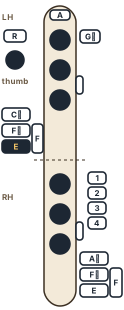
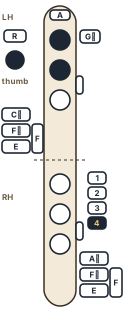
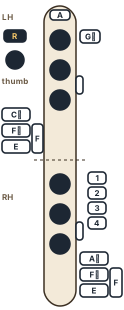
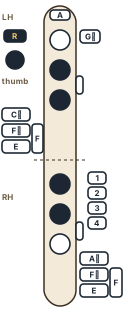
Clarinet fingering chart
45 notes, E3–C7 · 75 fingerings. Applies to all Boehm-system clarinets (B♭, A, E♭, bass); pitches are written.
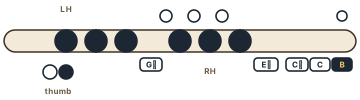
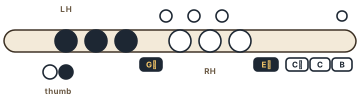
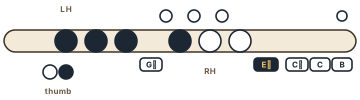
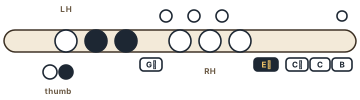
Flute fingering chart
38 notes, B3–C7 · 45 fingerings. Applies to concert flute (also piccolo, alto and bass flute by written pitch).
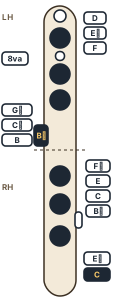
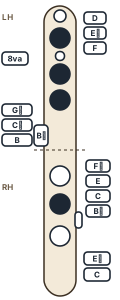
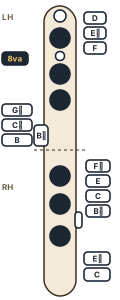
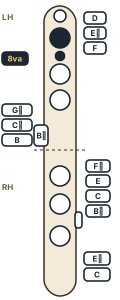
Saxophone fingering chart
33 notes, B♭3–F♯6 · 43 fingerings. Applies to every saxophone — soprano, alto, tenor and baritone share written fingerings.
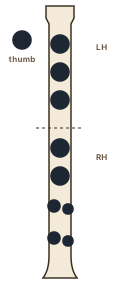
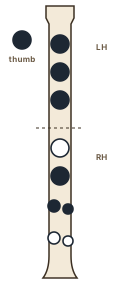
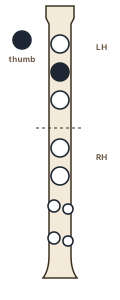
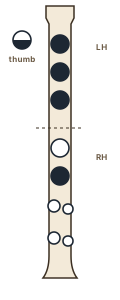
Recorder fingering chart
27 notes, C4–D6 · 34 fingerings. Applies to C recorders (soprano, tenor); alto & sopranino use the same patterns a fifth higher in name.
How to read our fingering diagrams
Every diagram shows the instrument from the player's point of view. Filled holes and keys are pressed; white ones stay open. The first diagram on each note page is the standard fingering; alternates follow, each with a note on when to use it. Half-filled circles (recorder) mean a partly covered or pinched hole. Hover over any key for its name.
All pitches are written pitches — what you read in your part. Each note page also lists what that note sounds on every member of the family, so a B♭ clarinettist, an alto saxophonist and a pianist can talk about the same note. Not sure what that means? Read transposing instruments, explained.