Saxophone
Saxophone Fingering Chart
Complete saxophone fingering chart, B♭3–F♯6: a clear diagram for every note, alternate and trill fingerings, and the sounding pitch on each saxophone.
Written pitch. Fingerings apply to every saxophone — soprano, alto, tenor and baritone share written fingerings.
A written C5 sounds B♭4 on Soprano sax (B♭), E♭4 on Alto sax (E♭), B♭3 on Tenor sax (B♭), E♭3 on Baritone sax (E♭).
Low register register B♭3–C♯5
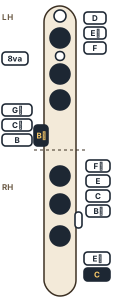
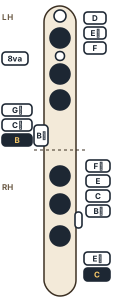
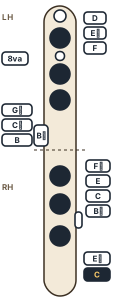
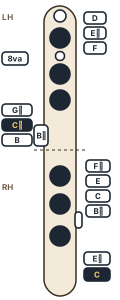
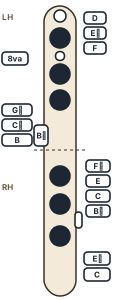
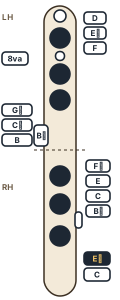
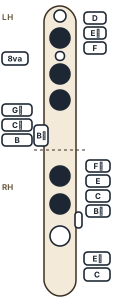
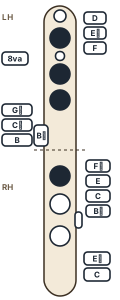
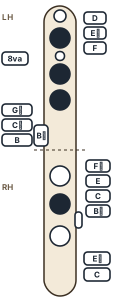
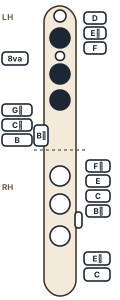
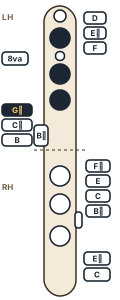
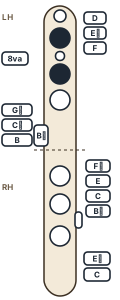
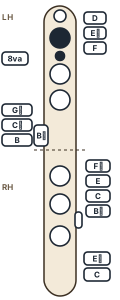
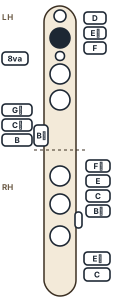
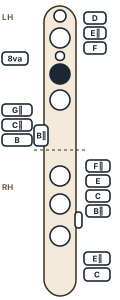
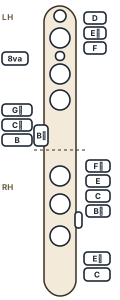
Middle register register D5–C♯6
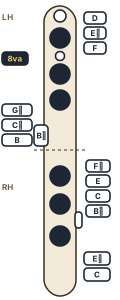
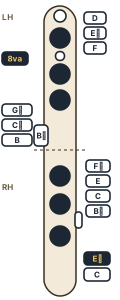
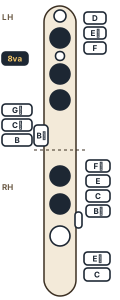
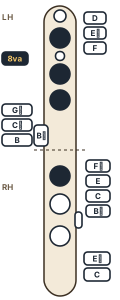
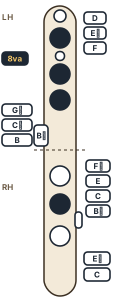
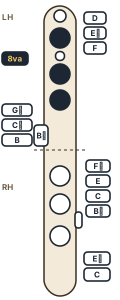
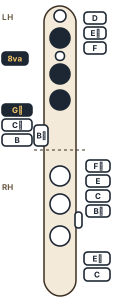
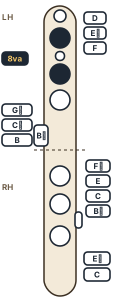
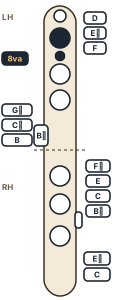
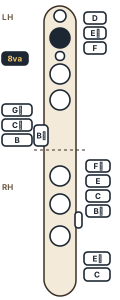
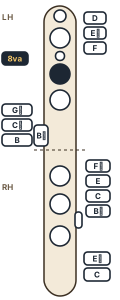
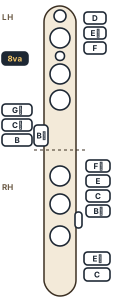
Palm-key register register D6–F♯6
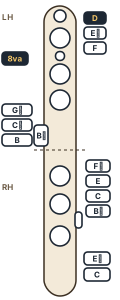
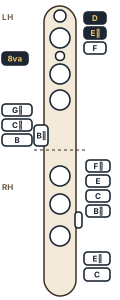
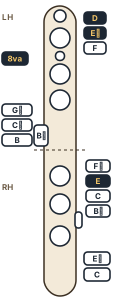
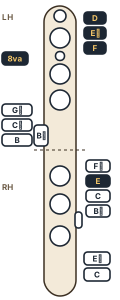
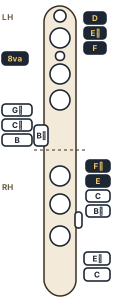
Key names
| Key | Name | Hand |
|---|---|---|
| T | octave key | Left |
| pD | palm D key | Left |
| pEb | palm E♭ key | Left |
| pF | palm F key | Left |
| fF | front F key | Left |
| L1 | left index key | Left |
| bis | bis B♭ key | Left |
| L2 | left middle key | Left |
| L3 | left ring key | Left |
| Gs | G♯ key (left pinky) | Left |
| LCs | low C♯ key | Left |
| LB | low B key | Left |
| LBb | low B♭ key | Left |
| hFs | high F♯ key | Right |
| sE | side E key | Right |
| sC | side C key | Right |
| sBb | side B♭ key | Right |
| R1 | right index key | Right |
| R2 | right middle key | Right |
| R3 | right ring key | Right |
| Fs | alternate F♯ key | Right |
| REb | E♭ key (right pinky) | Right |
| RC | low C key (right pinky) | Right |
Sounding pitch by instrument
| Instrument | Transposition |
|---|---|
| Soprano sax (B♭) | sounds 2 semitones lower |
| Alto sax (E♭) | sounds 9 semitones lower |
| Tenor sax (B♭) | sounds 14 semitones lower |
| Baritone sax (E♭) | sounds 21 semitones lower |
Fingerings cross-checked against The Woodwind Fingering Guide and standard method books. Spotted a problem? Tell us.
Latest posts
- How to Select a Saxophone for Your Skill Level
- Documenting Woodwind Sight Reading Progress and Techniques
- Essential Skills for Playing Wind Instruments Effectively
- Overlooked Details in Saxophone Articulation Techniques
- How Context Changes Mouthpiece Comparison
- Building a Flute Low Register Checklist for Better Tone
- Context and Woodwind Scale Practice Strategies
- Evaluating Saxophone Embouchure Advice for Better Tone
- Developing a Strong Flute Low Register for Better Tone
- Is Clarinet the Hardest Instrument to Learn? Reality Check