Saxophone · Palm-key register register
Saxophone fingering for E6
Octave key, palm D key, palm E♭ key, side E key. Basic.
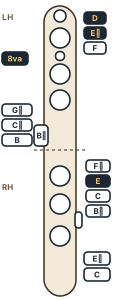
What it sounds like
| Instrument | Sounding pitch | Frequency (A4 = 440 Hz) | |
|---|---|---|---|
| Soprano sax (B♭) | D6 | 1,174.66 Hz | |
| Alto sax (E♭) | G5 | 783.99 Hz | |
| Tenor sax (B♭) | D5 | 587.33 Hz | |
| Baritone sax (E♭) | G4 | 392.00 Hz |
Tip for the palm-key register register
Palm-key notes are often sharp and thin. Open the throat, lower the jaw slightly and roll the palm keys rather than jab at them.
Frequently asked questions
How do you play E6 on the saxophone?
Standard fingering: Octave key, palm D key, palm E♭ key, side E key. Basic.
What does written E6 sound like on the saxophone?
Soprano sax (B♭): D6 (1174.7 Hz); Alto sax (E♭): G5 (784.0 Hz); Tenor sax (B♭): D5 (587.3 Hz); Baritone sax (E♭): G4 (392.0 Hz).
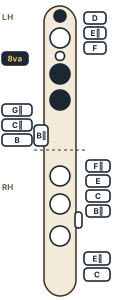
Are there alternate fingerings for E6?
Yes — 1 alternate: (1) Left hand 2-3, octave key, front F key. Front-F alternative, next to C and C♯.