Composer · Post-War · 1935
Arvo Pärt
Estonian composer (born 1935).
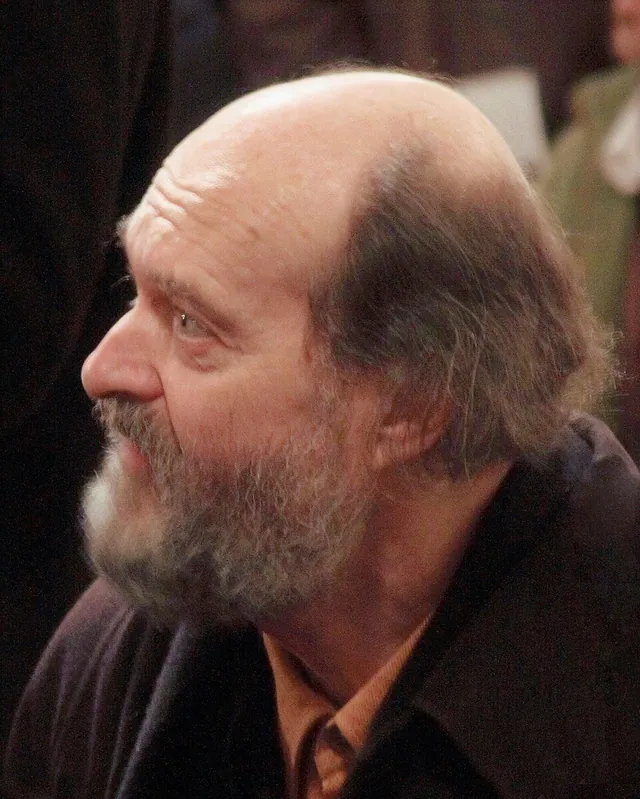
Biography
Arvo Pärt (Estonian pronunciation: [ˈɑrvo ˈpært]; born 11 September 1935) is an Estonian composer. Since the late 1970s, Pärt has worked in a minimalist style that employs tintinnabuli, a compositional technique he invented. Pärt's music is in part inspired by Gregorian chant. His most performed works include Fratres (1977), Spiegel im Spiegel (1978), and Für Alina (1976). From 2011 to 2018, and again in 2022 and 2025, Pärt was the most performed living composer in the world. The Arvo Pärt Centre, in Laulasmaa, was opened to the public in 2018.
Text adapted from the Wikipedia article “Arvo Pärt”, licensed under CC BY-SA 4.0.
Works with bassoon
- Passio, for tenor, bass, vocal quartet, chorus, oboe, bassoon, violin, cello and organ
- Quintettino, for flute, oboe, clarinet, horn and bassoon, op. 13
Works with clarinet
- Quintettino, for flute, oboe, clarinet, horn and bassoon, op. 13
Works with flute
- Concerto piccolo over B-A-C-H, for trumpet, strings, harpsichord and piano
- Quintettino, for flute, oboe, clarinet, horn and bassoon, op. 13
Works with oboe
- Collage over B-A-C-H, for strings, oboe, harpsichord, and piano
- Collage sur B-A-C-H, for oboe, string orchestra, harpsichord, and piano
- Passio, for tenor, bass, vocal quartet, chorus, oboe, bassoon, violin, cello and organ
- Quintettino, for flute, oboe, clarinet, horn and bassoon, op. 13
Works with recorder
- Arbos, for 7 recorders and 3 triangles ad lib