Composer · 20th Century · 1890–1959
Bohuslav Martinů
Czech composer (1890–1959).
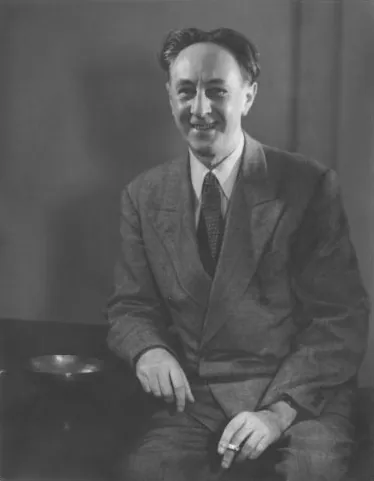
Biography
Bohuslav Jan Martinů (Czech: [ˈboɦuslaf ˈmarcɪnuː] ; December 8, 1890 – August 28, 1959) was a Czech composer of modern classical music. He wrote 6 symphonies, 15 operas, 14 ballet scores, and a large body of orchestral, chamber, vocal, and instrumental works. He became a violinist in the Czech Philharmonic Orchestra, and briefly studied under Czech composer and violinist Josef Suk. After leaving Czechoslovakia in 1923 for Paris, Martinů deliberately withdrew from the Romantic style in which he had been trained. During the 1920s he experimented with modern French stylistic developments, exemplified by his orchestral works Half-time and La Bagarre. He also adopted jazz idioms, for instance in his Kitchen Revue (Kuchyňská revue).
In the early 1930s he found his main fount for compositional style: neoclassicism, creating textures far denser than those found in composers treating Stravinsky as a model. He was prolific, quickly composing chamber, orchestral, choral, and instrumental works. His Concerto Grosso and the Double Concerto for Two String Orchestras, Piano and Timpani are among his best-known works from this period. Among his operas, Juliette and The Greek Passion are considered the finest. He has been compared to Prokofiev and Bartók in his innovative incorporation of Czech folk elements into his music. He continued using Bohemian and Moravian folk melodies throughout his oeuvre, for instance in The Opening of the Springs (Otvírání studánek).
His symphonic career began when he emigrated to the United States in 1941, fleeing the German invasion of France. His six symphonies were performed by all the major US orchestras. Martinů returned to live in Europe for two years starting in 1953, then was back in New York until returning to Europe in May 1956. He died in Switzerland in August 1959.
Text adapted from the Wikipedia article “Bohuslav Martinů”, licensed under CC BY-SA 4.0.
Works with bassoon
- La Revue de cuisine, jazz suite and ballet for clarinet, bassoon, trumpet, cello and piano, H.161
- La revue de cuisine, jazz suite and ballet for clarinet, bassoon, trumpet, violin, cello, and piano, H.161, "Kitchen revue"
- Nonet no. 2 · free score
- Sextet for Flute, Oboe, Clarinet, 2 Bassoons and Piano, H.174
Works with clarinet
- Clarinet Sonatina (1956) · free score
- La Revue de cuisine, jazz suite and ballet for clarinet, bassoon, trumpet, cello and piano, H.161
- La revue de cuisine, jazz suite and ballet for clarinet, bassoon, trumpet, violin, cello, and piano, H.161, "Kitchen revue"
- Musique de Chambre no. 1, for clarinet, violin, viola, cello, harp and piano, H.376
- Nonet no. 2 · free score
- Sextet for Flute, Oboe, Clarinet, 2 Bassoons and Piano, H.174
- Sonatina, for clarinet and piano, H.356
Works with flute
- Flute Sonata (1945)
- 4 Promenades, for flute, violin and harpsichord, H.274
- Flute Sonata, H.306
- Madrigal-Sonata for Flute, Violin and Piano, H.291
- Posvícení, for flute and strings, H.2
- Scherzo, for flute and piano, H.174a
- Sextet for Flute, Oboe, Clarinet, 2 Bassoons and Piano, H.174
- Sonata for Flute, Violin and Piano, H.254
- Trio for Flute, Cello and Piano, H.300
Works with oboe
- Concerto for Oboe and Small Orchestra (1955) · free score
- Fantasia for Theremin, Oboe, String Quartet, and Piano, H.301
- Nonet no. 2 · free score
- Oboe Concerto, H.353
- Quartet for Oboe, Violin, Cello and Piano, H.315
- Sextet for Flute, Oboe, Clarinet, 2 Bassoons and Piano, H.174