Composer · Classical · 1732–1809
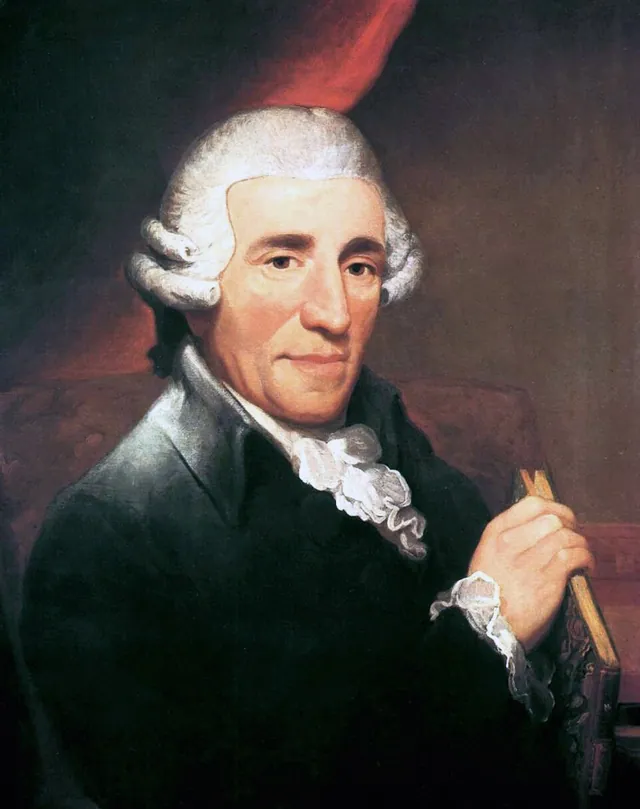
Franz Joseph Haydn
Austrian composer (1732–1809).
Biography
Franz Joseph Haydn ( HY-dən; German: [ˈfʁants ˈjoːzɛf ˈhaɪdn̩] ; 31 March 1732 – 31 May 1809) was an Austrian composer of the Classical period. He was pivotal in the evolution of chamber music forms such as the string quartet and piano trio. His contributions to musical form have led him to be called "Father of the Symphony", "Father of the String quartet" and "Father of Sonata Form".
Haydn rose from humble origins as the child of working people in a rural village. He established his career firstly by serving as a chorister at St. Stephen's Cathedral, Vienna, then through an arduous period as a freelance musician. Eventually he found career success, spending much of his working life as music director for the wealthy Esterházy family at their palace of Eszterháza in rural Hungary. Though he had his own orchestra there, it isolated him from other composers and trends in music so that he was, as he put it, "forced to become original". During this period his music circulated widely in publication, eventually making him the most celebrated composer in Europe. Notable works include the Paris and London symphonies. With the death of his patron Nikolaus Esterházy in 1790, Haydn became free to travel, and augmented his fame as a performer before the public in both London and Vienna. Late in life, he composed the oratorios The Creation (1798) and The Seasons (1801). The last years of his life (1803–1809) were spent in a state of debility, unable to compose due to poor health. He died in Vienna in 1809 at the age of 77.
Harold C. Schonberg writes that Haydn "was the Classic performer par excellence, and in his long life, from 1732 to 1809, he grew up with the new musical ideas and, more than any one man, shaped them." He was the elder brother of composer Michael Haydn, a friend and mentor of Mozart, and a teacher of Beethoven. Haydn, Mozart and Beethoven are sometimes referred to as the "First Viennese School".
Text adapted from the Wikipedia article “Joseph Haydn”, licensed under CC BY-SA 4.0.
Works with bassoon
- 12 Minuetti di ballo for 2 violins, bass, flute, 2 oboes, bassoon and 2 horns, Hob.IX:4
- Divertimento in B flat major, for 2 oboes, 2 horns, 3 bassoons and serpent, Hob.II:46, "Chorale St. Antoni"
- Divertimento in C major, for 2 oboes, 2 horns and 2 bassoons, Hob.II:7
- Divertimento in D major, for 2 oboes, 2 horns and 2 bassoons, Hob.deest
- Divertimento in F major, for 2 English horns, 2 horns, 2 violins, 2 bassoons, Hob.II:16, "Feld-Parthie"
- Divertimento in F major, for 2 oboes, 2 horns, bassoon and strings, Hob.II:20
- Divertimento in F major, for oboe, bassoon, 2 horns, violin, viola and bass, Hob.II:F2
- Sinfonia Concertante for violin, cello, oboe, bassoon, and orchestra, Hob.I:105
Works with clarinet
- Clarinet Trio no. 1 in E flat major, Hob.IV:Es1
- Divertimento in C major, Hob.II:17, no. 3, for 2 clarinets, 2 horns and strings
- Divertimento in C major, for 2 clarinets and 2 horns, Hob.II:14
- Notturno in C major, for 2 lire organizzate, 2 clarinets, 2 horns, 2 violas and bass, Hob.II:25
- Notturno in G and C, for 2 lire organizzate, 2 clarinets, 2 horns, 2 violas and bass, Hob.II:30
Works with flute
- 12 Minuetti di ballo for 2 violins, bass, flute, 2 oboes, bassoon and 2 horns, Hob.IX:4
- 2 Divertimenti, for flute, oboe, 2 violin, cello, and double bass, Hob.II, nos. 13-14
- 32 Pieces for Flute-Clock, Hob.XVIII:1-32
- 6 Scherzandos, for flute or 2 oboes, 2 horns and 2 violins, and bass, Hob.II:33-38
- Andante with Variations in F minor, Hob.XVII:6, "Un piccolo divertimento"
- Divertimento in A major, for flute or 2 oboes, 2 horns, 2 violins, and bass, Hob.II:38
- Divertimento in D major, for 2 flutes, 2 horns, 2 violins and bass, Hob.II:8
- Flute Quartet in C major, op. 5, no. 6, Hob.II:11
- Flute Quartet in D major, op. 5, no. 1, Hob.II:D9
- Flute Quartet in G major, op. 5, no. 2, Hob.II:G4
- Flute Sonata in C major, op. 87
- Flute Trio no. 1 in C major, Hob.IV:1
- Flute Trio no. 15 in G major, Hob.XV:15
- Flute Trios 'London', Hob.IV
- Works for Flute-Clock, Hob.XIX
Works with oboe
- 12 Minuetti di ballo for 2 violins, bass, flute, 2 oboes, bassoon and 2 horns, Hob.IX:4
- 2 Divertimenti, for flute, oboe, 2 violin, cello, and double bass, Hob.II, nos. 13-14
- 6 Scherzandos, for flute or 2 oboes, 2 horns and 2 violins, and bass, Hob.II:33-38
- Divertimento in A major, for flute or 2 oboes, 2 horns, 2 violins, and bass, Hob.II:38
- Divertimento in B flat major, for 2 oboes, 2 horns, 3 bassoons and serpent, Hob.II:46, "Chorale St. Antoni"
- Divertimento in C major, for 2 oboes, 2 horns and 2 bassoons, Hob.II:7
- Divertimento in D major, for 2 oboes, 2 horns and 2 bassoons, Hob.deest
- Divertimento in F major, for 2 English horns, 2 horns, 2 violins, 2 bassoons, Hob.II:16, "Feld-Parthie"
- Divertimento in F major, for 2 oboes, 2 horns, bassoon and strings, Hob.II:20
- Divertimento in F major, for oboe, bassoon, 2 horns, violin, viola and bass, Hob.II:F2
- Divertimento in G major, Hob.II:9, no. 1, for 2 oboes, 2 horns and strings
- Divertimento in G major, Hob.II:G1, no. 4, for 2 oboes, 2 horns and strings
- Oboe Concerto in C major, Hob.VIIg:C1
- Sinfonia Concertante for violin, cello, oboe, bassoon, and orchestra, Hob.I:105