Composer · Baroque · 1636–1704
Marc-Antoine Charpentier
French composer (1643–1704).
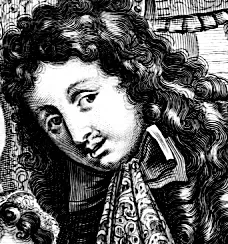
Biography
Marc-Antoine Charpentier (French: [maʁk ɑ̃twan ʃaʁpɑ̃tje]; 1643 – 24 February 1704) was a French Baroque composer during the reign of Louis XIV. One of his most famous works is the prelude of his Te Deum H.146, Marche en rondeau, which has been used as the theme song fanfare before television broadcasts of the Eurovision Network since the inception of the European Broadcasting Union in 1954.
Marc-Antoine Charpentier dominated the Baroque musical scene in seventeenth century France because of the quality of his prolific output. He mastered all genres, and his skill in writing sacred vocal music was especially hailed by his contemporaries.
He began his career by going to Italy, where he fell under the influence of Giacomo Carissimi as well as other Italian composers, perhaps Domenico Mazzocchi. He would remain marked by the Italian style and become the only one with Jean-Joseph Cassanéa de Mondonville in France to approach the oratorio. In 1670, he became a master of music (composer and singer) in the service of the Duchess of Guise. From 1690 Charpentier composed Médée, on a piece by Corneille. It was a determining failure in his career of composer: he henceforth devoted himself to religious music. He became the composer of the Carmelites of the "Rue du Bouloir", Montmartre Abbey, Abbaye-aux-Bois and Port-Royal. In 1698, Charpentier was appointed music master for the children of the Sainte-Chapelle du Palais. After having obtained from the king Louis XIV a softening of Lully's monopoly, Molière turned to Charpentier to compose the music for the intermissions of Circe and Andromeda, as well as sung scenes for the revivals of The Forced Marriage, and finally the musical pieces of The Imaginary invalid.
Text adapted from the Wikipedia article “Marc-Antoine Charpentier”, licensed under CC BY-SA 4.0.
Works with bassoon
- Offerte non encore exécutée, for 2 flutes, 2 oboes, strings and bassoon, H.522
Works with flute
- 3 Noëls, for 2 flutes, recorders, and continuo, H.531
- 3 Tenebrae lessons, for 3 or 6 voices, flute, string and continuo, H.135-137
- Antienne pour les violons, flûtes et hautbois, for 2 flutes, oboe, strings and continuo, H.532
- Antienne, for 2 flutes, strings and continuo, H.526
- Après Confitebor, for 2 flutes, strings and continuo, H.516
- Dialogus inter angelos et pastores, histoire sacrée for 4 voices, chorus, 2 flutes, strings and continuo, H.420 — Oratorio
- In nativitatem Domini canticum, Christmas for soprano, countertenor, tenor, bass, 2 flutes, 2 violins and continuo, H.314
- Menuet et Autre menuet, for 2 flutes and bass viol, H.541
- Messe à 8 voix et 8 violons et flûtes, for 8 voices, chorus, 2 flutes, strings and continuo, H.3
- Miserere mei Deus, motet for 5 voices, chorus, 2 flutes, strings and continuo, H.219
- Offerte non encore exécutée, for 2 flutes, 2 oboes, strings and bassoon, H.522
- Offerte pour l'orgue, for 2 flutes, 2 oboes, strings and continuo, H.514
- Ouverture pour le sacre d'un évêque, for 2 flutes, oboe, strings and continuo, H.537
- Panis quem ego dabo, for 5 voices, 2 flutes and continuo, H. 275
- Pour le Saint Sacrement au reposoir, motet for voices, chorus, 2 flutes and continuo, H.346
- Pour un reposoir, for 3 flutes, strings and continuo, H.523
- Sola vivebat in antris, motet for 2 voices, 2 flutes and continuo, H.373
- Supplication pro defunctis ad beatam Virginem, motet for 3 voices, 3 flutes and continuo, H.328
- Symphonie en g ré sol bmol, for 2 flutes and continuo, H.529
Works with oboe
- Antienne pour les violons, flûtes et hautbois, for 2 flutes, oboe, strings and continuo, H.532
- Offerte non encore exécutée, for 2 flutes, 2 oboes, strings and bassoon, H.522
- Offerte pour l'orgue, for 2 flutes, 2 oboes, strings and continuo, H.514
- Ouverture pour le sacre d'un évêque, for 2 flutes, oboe, strings and continuo, H.537
Works with recorder
- 3 Noëls, for 2 flutes, recorders, and continuo, H.531
- 7 Noëls sur les instruments, for 2 recorders, strings, and continuo, H.534