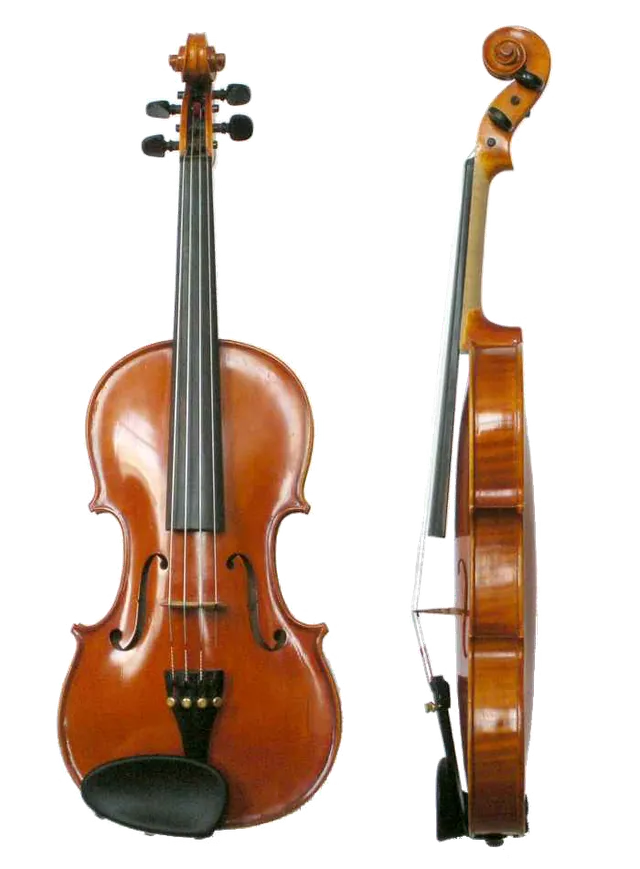
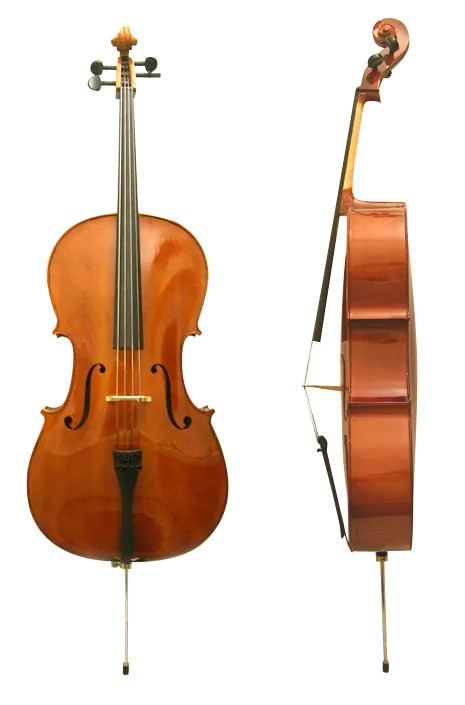
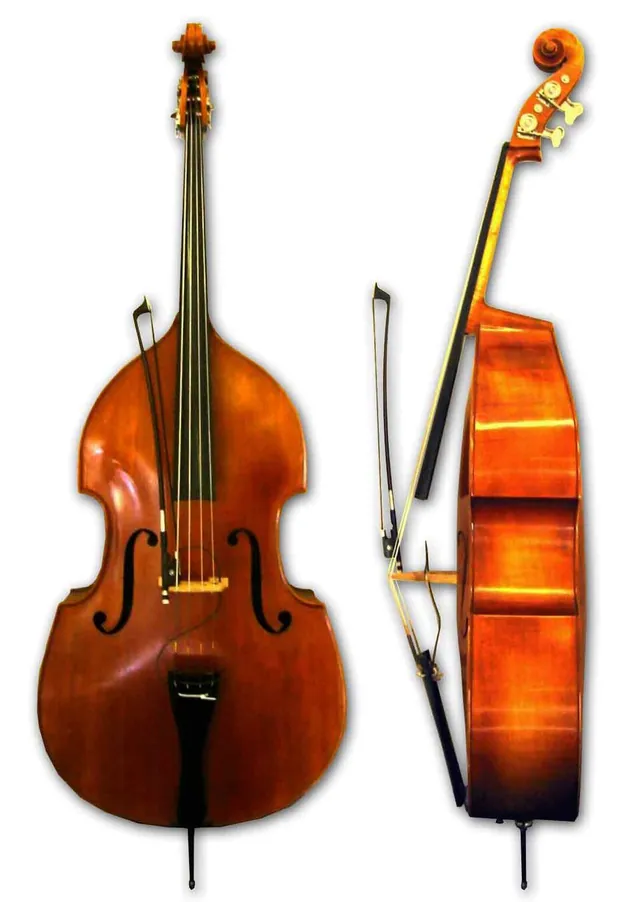
Bowed strings · Bowed · Violin family
Viola
A fifth below the violin: C3, G3, D4, A4; reads alto clef.
Quick facts
| Family | Bowed strings — Bowed |
|---|---|
| Hornbostel–Sachs | 321.322-71 |
| Pitched in | C |
| Transposition | Sounds as written (non-transposing) |
| Written range | C3 – E6 |
| Sounding range | C3 – E6 (130.81 – 1319 Hz) |
| Clefs | Alto, Treble |
| Other names | Bratsche / Viola, alto, alto de viola da braccio |
Player's notes
- A fifth below the violin: C3, G3, D4, A4; reads alto clef.
- Body length varies widely, roughly 38–43 cm.
About the viola
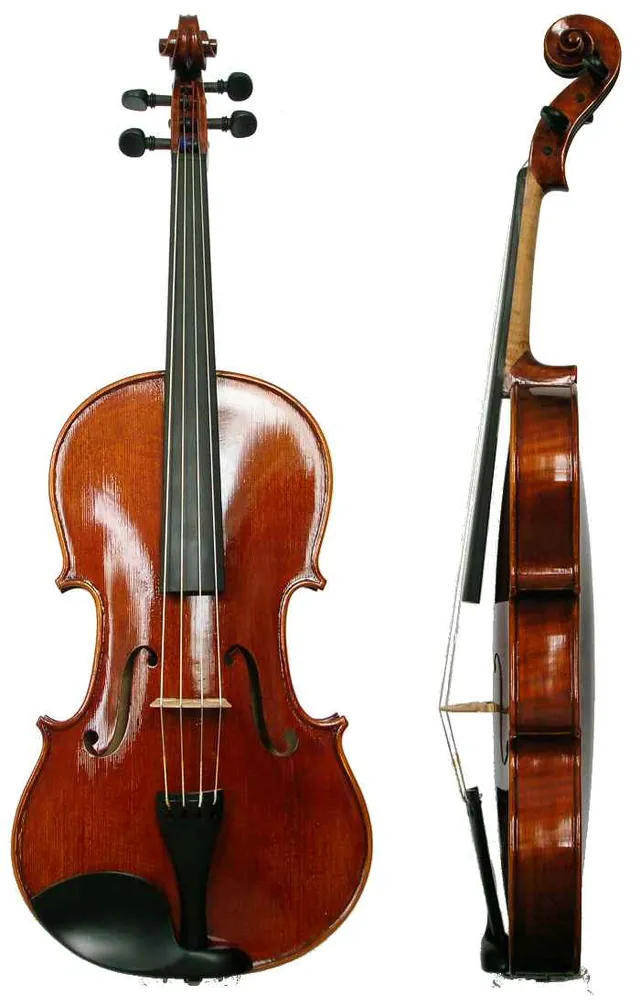
The viola ( vee-OH-lə, () Italian: [ˈvjɔːla, viˈɔːla]) is a string instrument of the violin family, and is usually bowed when played. The viola is slightly larger than the violin and has a lower sound. Since the 18th century, it has been the middle or alto voice of the violin family, between the violin (which is tuned a perfect fifth higher) and the cello (which is tuned an octave lower). The strings from low to high are typically tuned to C3, G3, D4, and A4.
In the past, the viola varied in size and style, as did its names. The word viola originates from the Italian language. The Italians often used the term viola da braccio, meaning, literally, 'of the arm'. "Brazzo" was another Italian word for the viola, which the Germans adopted as Bratsche. The French had their own names: cinquiesme was a small viola, haute contre was a large viola, and taile was a tenor. Today, the French use the term alto, a reference to its range.
The viola was popular in the heyday of five-part harmony, up until the eighteenth century, taking three lines of the harmony and occasionally playing the melody line. Music notation for the viola differs from most other instruments in that it primarily uses the alto clef. When viola music has substantial sections in a higher register, it switches to the treble clef to make it easier to read.
Text adapted from the Wikipedia article “Viola”, licensed under CC BY-SA 4.0.
Listen
Recordings from Wikimedia Commons, found via Openverse.
Frequently asked questions
What is the range of the viola?
The practical written range of the viola is C3 to E6, which sounds C3 to E6 (130.8 Hz to 1319 Hz at A4 = 440 Hz).
Is the viola a transposing instrument?
No. The viola sounds at written pitch (concert pitch).
What clef does the viola read?
The viola reads alto clef and treble clef.
How is the viola classified?
In the Hornbostel–Sachs system the viola is classified as 321.322-71.