Plucked & fretted · Plucked (fretted) · Lute family
Banjo
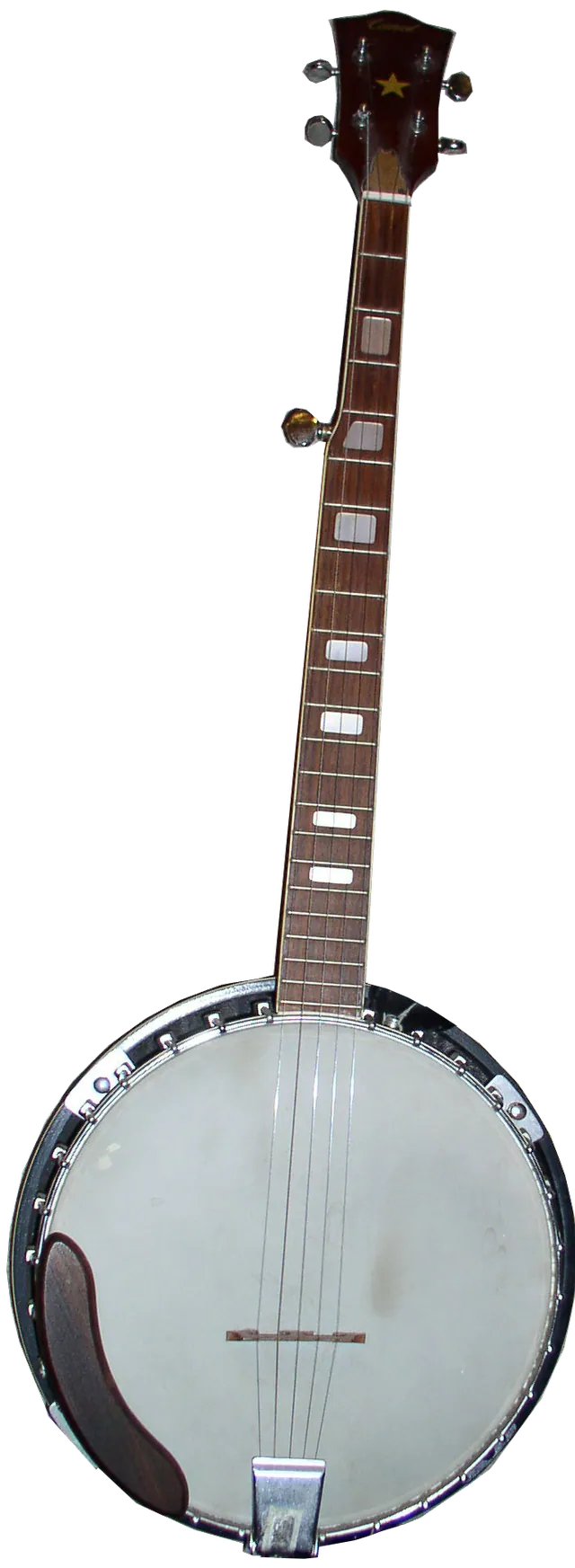
Five-string banjo in open G: g4 D3 G3 B3 D4, with a short drone string.
Quick facts
| Family | Plucked & fretted — Plucked (fretted) |
|---|---|
| Hornbostel–Sachs | 321.322-8 |
| Pitched in | C |
| Transposition | Sounds as written (non-transposing) |
| Written range | D3 – D6 |
| Sounding range | D3 – D6 (146.83 – 1175 Hz) |
| Clef | Treble |
Player's notes
- Five-string banjo in open G: g4 D3 G3 B3 D4, with a short drone string.
- A drum-like membrane head gives its bright, percussive attack.
About the banjo
The banjo is a stringed instrument with a thin membrane stretched over a frame or cavity to form a resonator. The membrane is typically circular, and in modern forms is usually made of BOPET, where early membranes were made of goat skin.
Early forms of the instrument were fashioned by African Americans and had African antecedents, and the instrument was strongly associated with black people. In the 19th century, interest in the instrument was spread across the United States and United Kingdom by traveling shows of the highly popular traveling blackface minstrel shows, followed by mass production and mail-order sales, including instructional books. The inexpensive or home-made banjo remained part of rural folk culture, but five-string and four-string banjos also became popular for home parlor music entertainment, college music clubs, and early 20th century jazz bands. By the early 20th century, the banjo was most frequently associated with folk, cowboy music, and country music.
By mid-century it had come to be strongly associated with bluegrass. Eventually it began to be employed occasionally and sporadically in various kinds or other kinds of popular music. Some famous American bluegrass players of the banjo are Ralph Stanley and Earl Scruggs.
Text adapted from the Wikipedia article “Banjo”, licensed under CC BY-SA 4.0.
Listen
Recordings from Wikimedia Commons, found via Openverse.
Frequently asked questions
What is the range of the banjo?
The practical written range of the banjo is D3 to D6, which sounds D3 to D6 (146.8 Hz to 1175 Hz at A4 = 440 Hz).
Is the banjo a transposing instrument?
No. The banjo sounds at written pitch (concert pitch).
What clef does the banjo read?
The banjo reads treble clef.
How is the banjo classified?
In the Hornbostel–Sachs system the banjo is classified as 321.322-8.
Related instruments
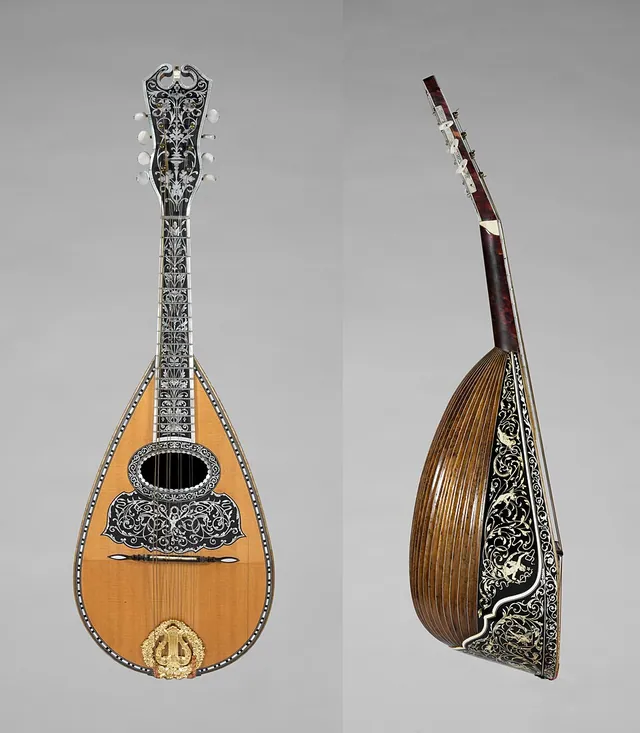
Mandolin
Four pairs of strings tuned like a violin: G3 D4 A4 E5.
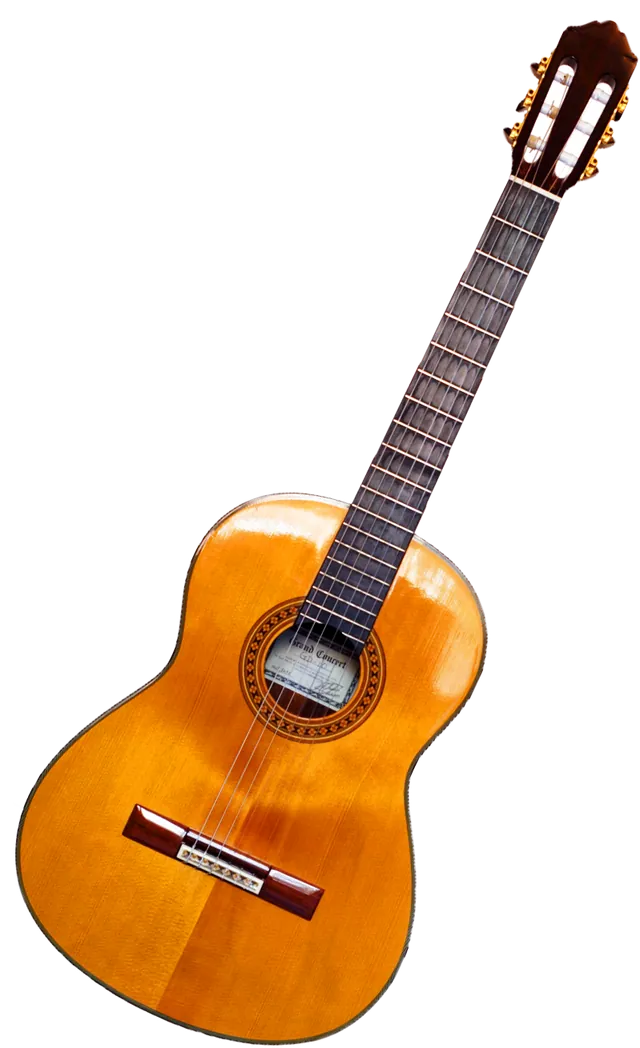
Guitar
Standard tuning E2 A2 D3 G3 B3 E4; written an octave higher than it sounds.
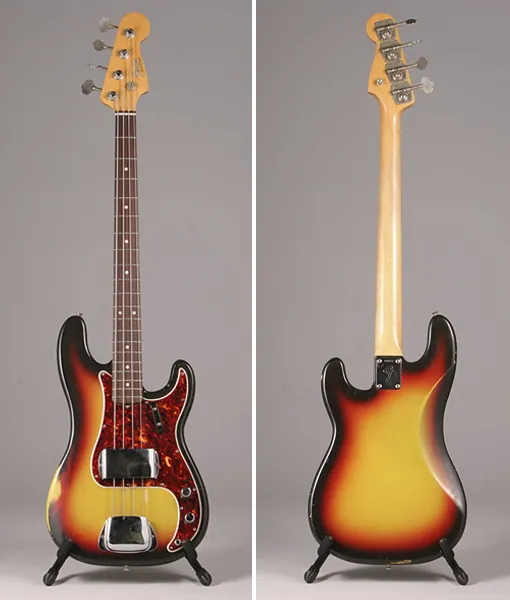
Bass Guitar
Tuned like the double bass (E1 A1 D2 G2) and also written an octave higher.
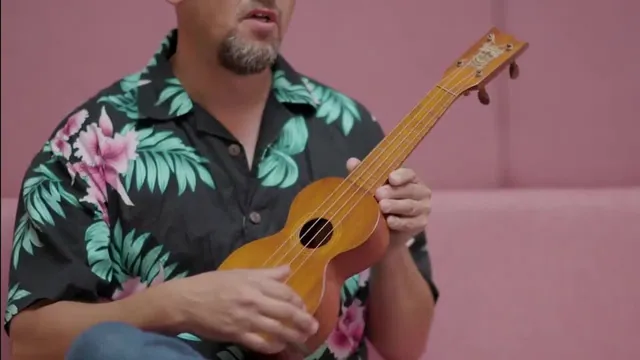
Ukulele
Standard re-entrant tuning G4 C4 E4 A4 ('My Dog Has Fleas').

Harp
47 strings tuned diatonically; seven pedals set each pitch class flat, natural or sharp.