Plucked & fretted · Plucked (fretted) · Guitar family
Guitar
Standard tuning E2 A2 D3 G3 B3 E4; written an octave higher than it sounds.
Quick facts
| Family | Plucked & fretted — Plucked (fretted) |
|---|---|
| Hornbostel–Sachs | 321.322-5-6 |
| Pitched in | C |
| Transposition | Sounds a octave lower than written |
| Written range | E3 – B6 |
| Sounding range | E2 – B5 (82.41 – 988 Hz) |
| Clef | Treble |
| Materials | mahogany wood, maple wood |
| Other names | Gitaroj, Gitarre, Gitarren, gitaren, gitarlar, gitary, gt, gtr, guitare, guitares |
Player's notes
- Standard tuning E2 A2 D3 G3 B3 E4; written an octave higher than it sounds.
- Dozens of alternate tunings — drop D, DADGAD, open G — reshape the fretboard.
About the guitar
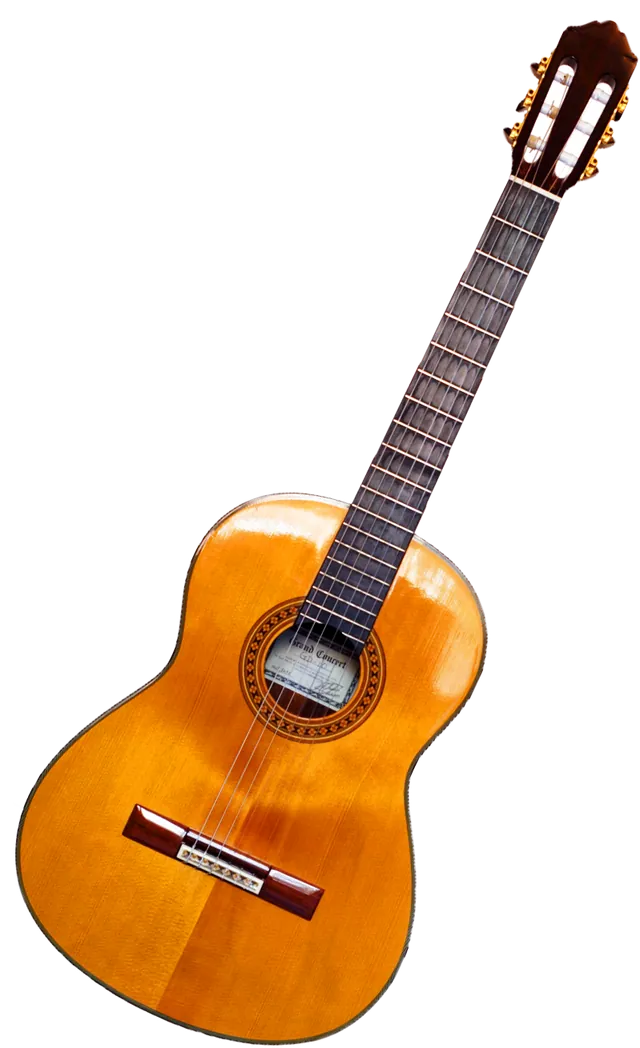
The guitar is a stringed musical instrument that is usually fretted (with some exceptions) and typically has six or twelve strings, though guitars with seven, eight and nine strings also exist. It is usually held flat against the player's body and played by strumming or plucking the strings with the dominant hand, while simultaneously pressing selected strings against frets with the fingers of the opposite hand. A guitar pick may also be used to strike the strings. The sound of the guitar is projected either acoustically, by means of a resonant hollow chamber on the guitar, or amplified by an electronic pickup and an amplifier.
The guitar is classified as a chordophone, meaning the sound is produced by a vibrating string stretched between two fixed points. Historically, a guitar was constructed from wood, with its strings made of catgut. Steel guitar strings were introduced near the end of the nineteenth century in the United States, but nylon and steel strings became mainstream only following World War II. The guitar's ancestors include the gittern, the vihuela, the four-course Renaissance guitar, and the five-course baroque guitar, all of which contributed to the development of the modern six-string instrument.
There are three main types of modern guitar: the classical guitar (Spanish guitar); the steel-string acoustic guitar or electric guitar; and the lap steel guitar, also known as the Hawaiian guitar (played across the player's lap). Traditional acoustic guitars include the flat top guitar (typically with a large sound hole) or the archtop guitar, which is sometimes called a "jazz guitar". The tone of an acoustic guitar is produced by the strings' vibration, amplified by the hollow body of the guitar, which acts as a resonating chamber. The classical Spanish guitar is often played as a solo instrument using a comprehensive fingerstyle technique where each string is plucked individually by the player's fingers, as opposed to being strummed. The term "finger-picking" can also refer to a specific tradition of folk, blues, bluegrass, and country guitar playing in the United States.
Text adapted from the Wikipedia article “Guitar”, licensed under CC BY-SA 4.0.
Listen
Recordings from Wikimedia Commons, found via Openverse.
Frequently asked questions
What is the range of the guitar?
The practical written range of the guitar is E3 to B6, which sounds E2 to B5 (82.4 Hz to 988 Hz at A4 = 440 Hz).
Is the guitar a transposing instrument?
Yes. The guitar is pitched in C: sounds a octave lower than written. A written C sounds C.
What clef does the guitar read?
The guitar reads treble clef.
How is the guitar classified?
In the Hornbostel–Sachs system the guitar is classified as 321.322-5-6.
Related instruments
Bass Guitar
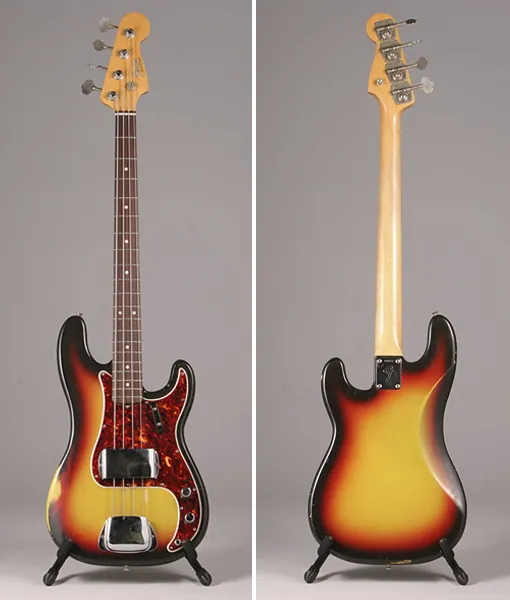
Tuned like the double bass (E1 A1 D2 G2) and also written an octave higher.
Ukulele
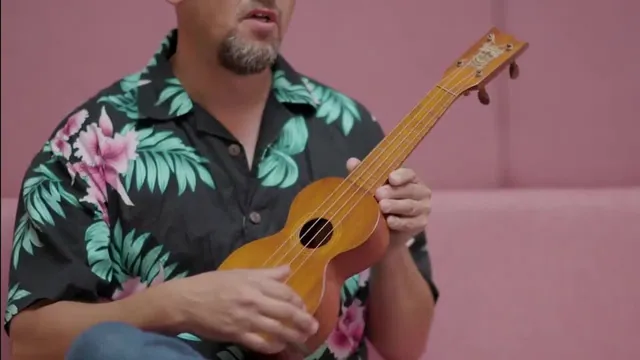
Standard re-entrant tuning G4 C4 E4 A4 ('My Dog Has Fleas').
Mandolin
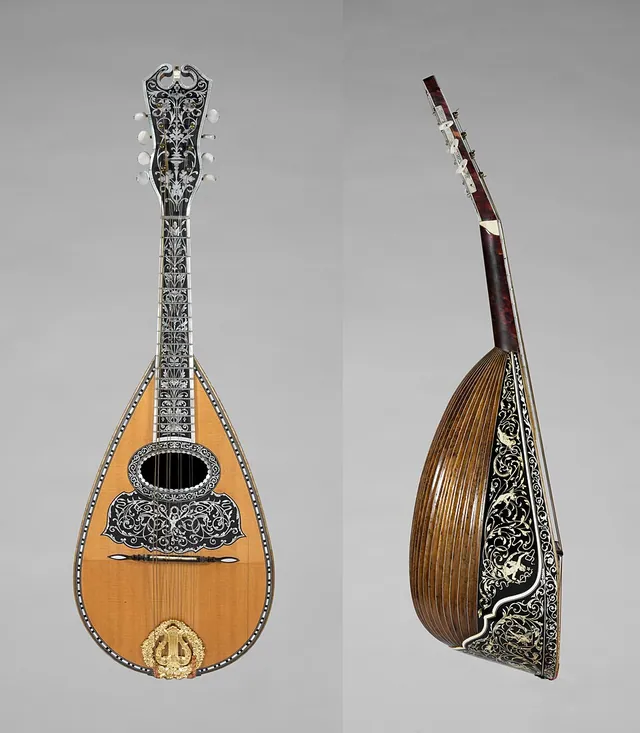
Four pairs of strings tuned like a violin: G3 D4 A4 E5.
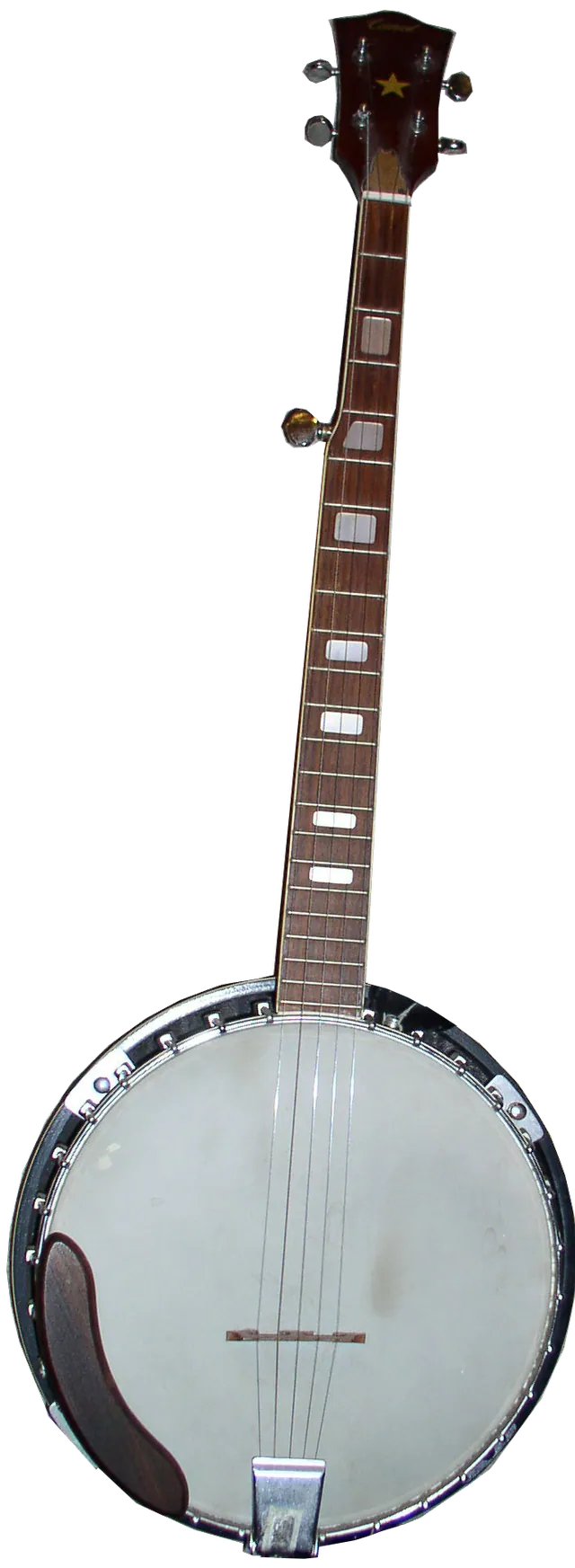
Banjo
Five-string banjo in open G: g4 D3 G3 B3 D4, with a short drone string.

Harp
47 strings tuned diatonically; seven pedals set each pitch class flat, natural or sharp.