Plucked & fretted · Plucked (fretted) · Lute family
Mandolin
Four pairs of strings tuned like a violin: G3 D4 A4 E5.
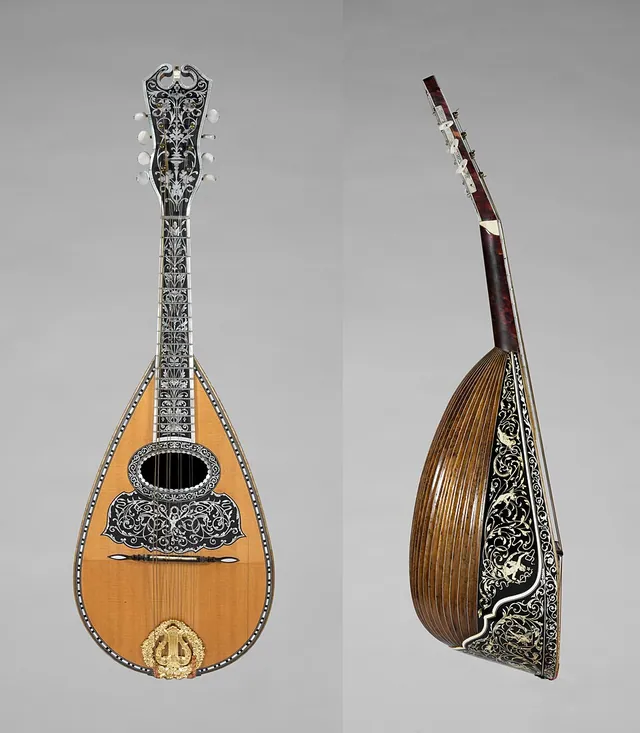
Quick facts
| Family | Plucked & fretted — Plucked (fretted) |
|---|---|
| Hornbostel–Sachs | 321.321-6 |
| Pitched in | C |
| Transposition | Sounds as written (non-transposing) |
| Written range | G3 – A6 |
| Sounding range | G3 – A6 (196.00 – 1760 Hz) |
| Clef | Treble |
| Other names | Mandoline, mandolina |
Player's notes
- Four pairs of strings tuned like a violin: G3 D4 A4 E5.
- Played with a plectrum; tremolo sustains long notes.
About the mandolin
A mandolin (Italian: mandolino, pronounced [mandoˈliːno]; literally "small mandola") is a stringed musical instrument in the lute family and is generally plucked with a pick. It most commonly has four courses of doubled strings tuned in unison, thus giving a total of eight strings. A variety of string types are used, with steel strings being the most common and usually the least expensive. The courses are typically tuned in an interval of perfect fifths, with the same tuning as a violin (G3, D4, A4, E5). Also, like the violin, it is the soprano member of a family that includes the mandola, octave mandolin, mandocello and mandobass.
There are many styles of mandolin, but the three most common types are the Neapolitan or round-backed mandolin, the archtop mandolin and the flat-backed mandolin. The round-backed version has a deep bottom, constructed of strips of wood, glued together into a bowl. The archtop, also known as the carved-top mandolin, has an arched top and a shallower, arched back both carved out of wood. The flat-backed mandolin uses thin sheets of wood for the body, braced on the inside for strength in a similar manner to a guitar. Each style of instrument has its own sound quality and is associated with particular styles of music. Neapolitan mandolins feature prominently in European classical music and in traditional music like the Andean music of Peru. Archtop instruments are common in American folk music, old-time music, and bluegrass music. Flat-backed instruments are commonly used in Irish, British, and Brazilian folk music, and Mexican estudiantinas.
Other mandolin variations differ primarily in the number of strings and include four-string models (tuned in fifths) such as the Brescian and Cremonese; six-string types (tuned in fourths) such as the Milanese, Lombard, and Sicilian; six-course instruments of 12 strings (two strings per course) such as the Genoese; and the tricordia, with four triple-string courses (12 strings total).
Text adapted from the Wikipedia article “Mandolin”, licensed under CC BY-SA 4.0.
Listen
Recordings from Wikimedia Commons, found via Openverse.
Frequently asked questions
What is the range of the mandolin?
The practical written range of the mandolin is G3 to A6, which sounds G3 to A6 (196.0 Hz to 1760 Hz at A4 = 440 Hz).
Is the mandolin a transposing instrument?
No. The mandolin sounds at written pitch (concert pitch).
What clef does the mandolin read?
The mandolin reads treble clef.
How is the mandolin classified?
In the Hornbostel–Sachs system the mandolin is classified as 321.321-6.
Related instruments
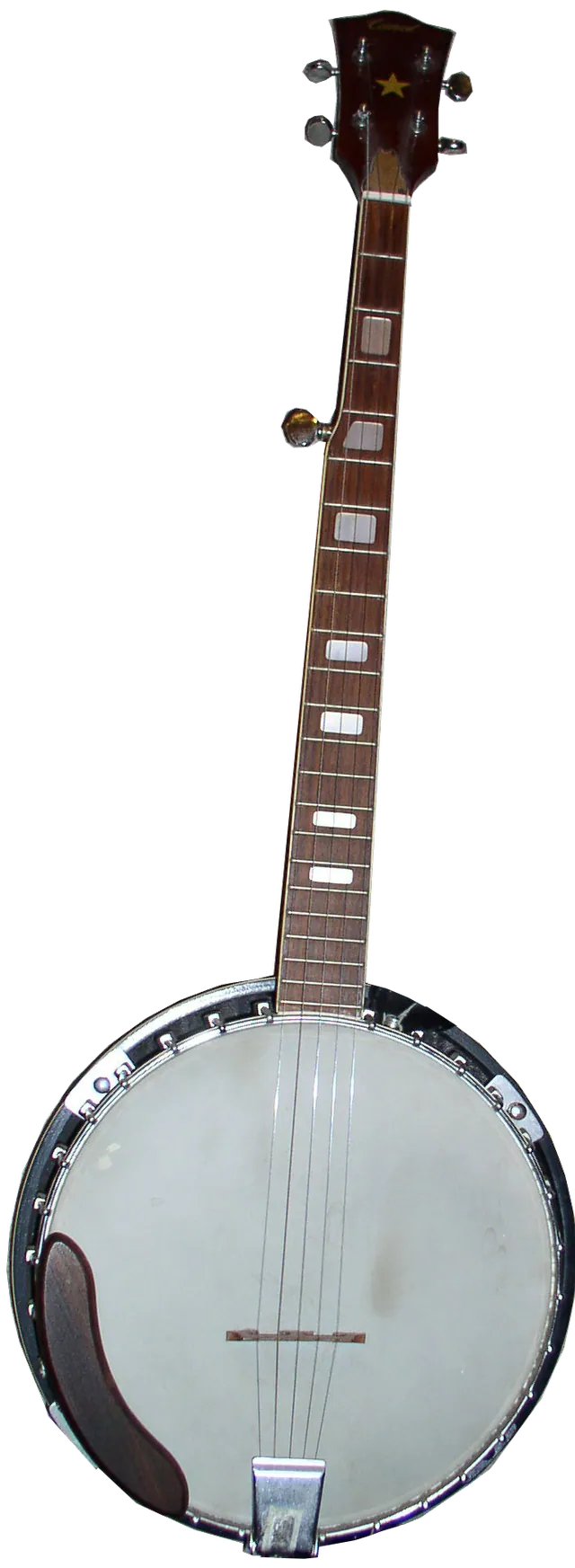
Banjo
Five-string banjo in open G: g4 D3 G3 B3 D4, with a short drone string.
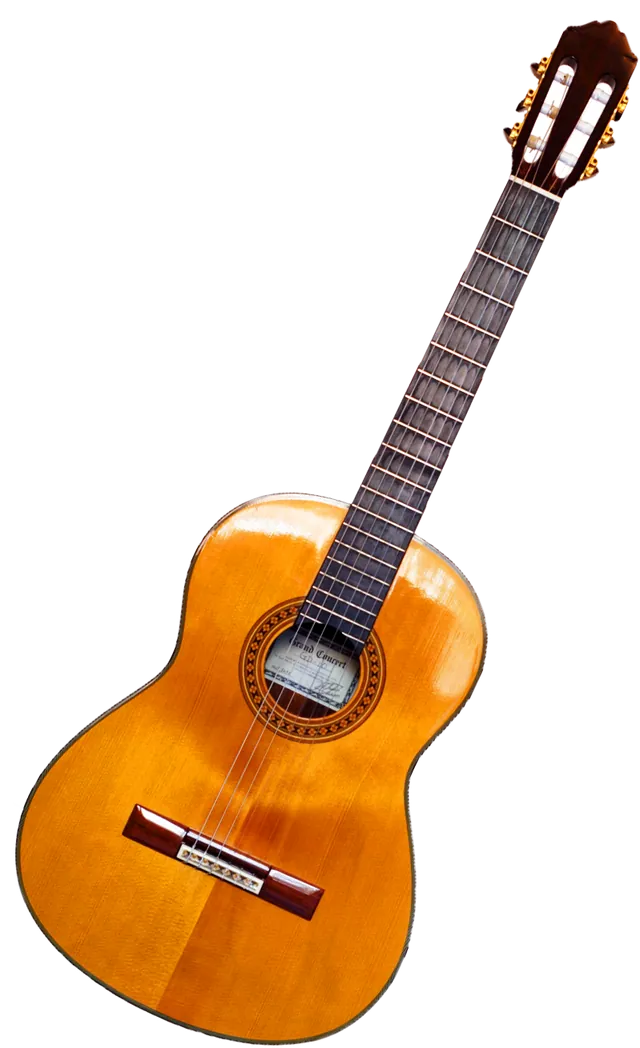
Guitar
Standard tuning E2 A2 D3 G3 B3 E4; written an octave higher than it sounds.
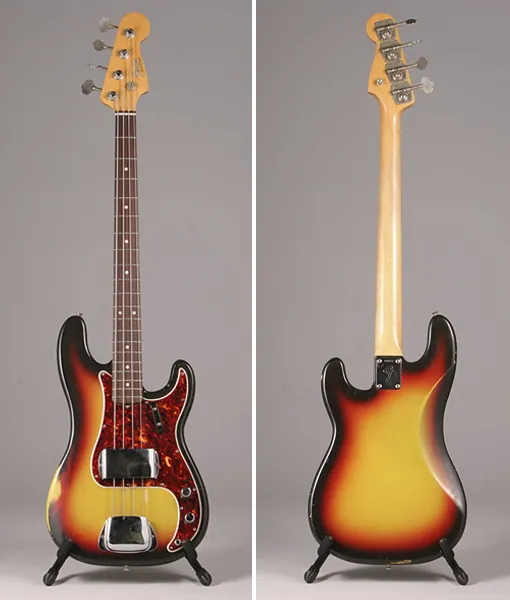
Bass Guitar
Tuned like the double bass (E1 A1 D2 G2) and also written an octave higher.

Ukulele
Standard re-entrant tuning G4 C4 E4 A4 ('My Dog Has Fleas').

Harp
47 strings tuned diatonically; seven pedals set each pitch class flat, natural or sharp.