Soprano Recorder · Natural Minor scale · written pitch
C♯ Natural Minor scale for Soprano Recorder
2 octaves from C♯4, key signature 4 sharps (F♯, C♯, G♯, D♯). On the soprano recorder this sounds in concert C♯ minor.
Scale — ascending & descending
Arpeggio
Download: MIDI · MusicXML (opens in MuseScore, Sibelius, Dorico, Finale) ·
Fingerings for every note
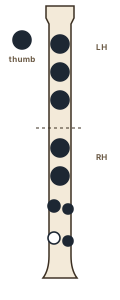
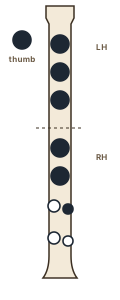
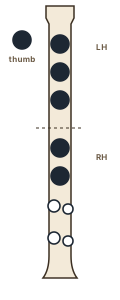
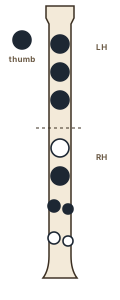
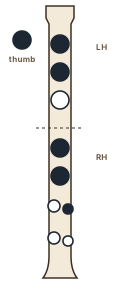
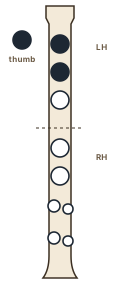
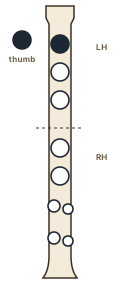
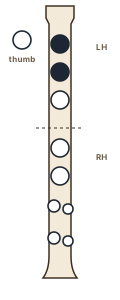
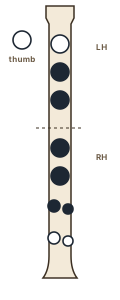
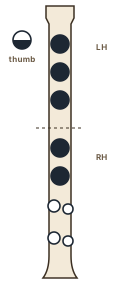
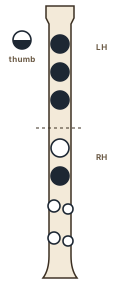
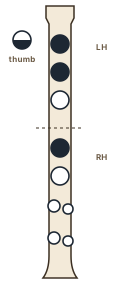
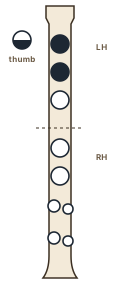
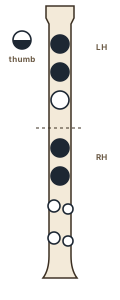
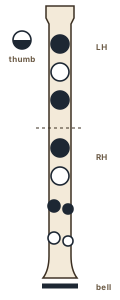
Notes of the scale
| Degree | 1 | 2 | 3 | 4 | 5 | 6 | 7 | 8 |
|---|---|---|---|---|---|---|---|---|
| Written | C♯ | D♯ | E | F♯ | G♯ | A | B | C♯ |
| Concert | C♯ | E♭ | E | F♯ | A♭ | A | B | C♯ |
Practice tips
- With 4 sharps, work out the chromatic fingerings first (sliver keys, side keys, alternate pinky keys) and practise the awkward pairs slowly in isolation.
- Practise with a metronome: legato first, then tongued; then in thirds and in rhythms (long–short, short–long).
Frequently asked questions
What are the notes of the C♯ Natural Minor scale on soprano recorder?
C♯, D♯, E, F♯, G♯, A, B, C♯.
What is the key signature of C♯ Natural Minor?
C♯ minor has 4 sharps (F♯, C♯, G♯, D♯).
What concert key is written C♯ Natural Minor on the soprano recorder?
Written C♯ minor on the soprano recorder sounds in concert C♯ minor.