Tenor Saxophone · Melodic Minor scale · written pitch
E♭ Melodic Minor scale for Tenor Saxophone
2 octaves from E♭4, key signature 6 flats (B♭, E♭, A♭, D♭, G♭, C♭). On the tenor saxophone this sounds in concert D♭ minor.
Scale — ascending & descending
Arpeggio
Download: MIDI · MusicXML (opens in MuseScore, Sibelius, Dorico, Finale) ·
Fingerings for every note
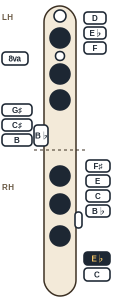
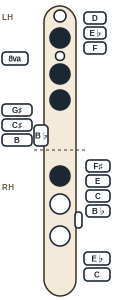
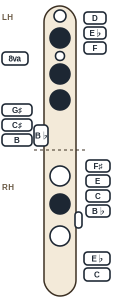
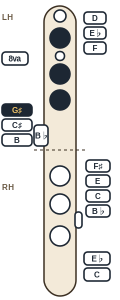
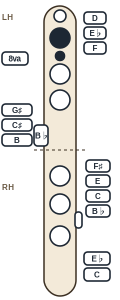
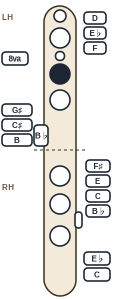
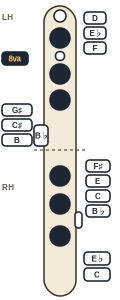
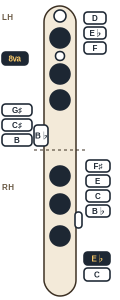
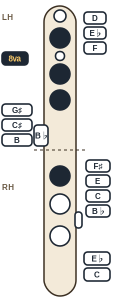
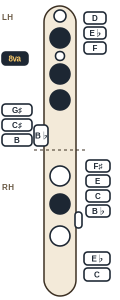
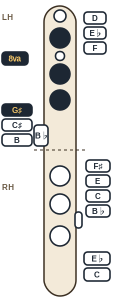
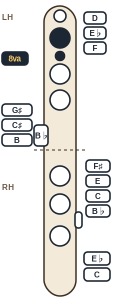
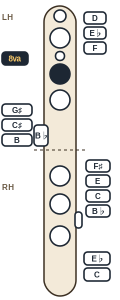
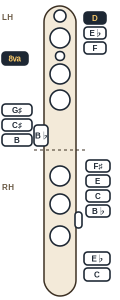
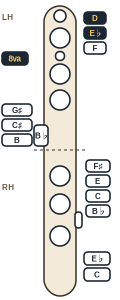
Notes of the scale
| Degree | 1 | 2 | 3 | 4 | 5 | 6 | 7 | 8 |
|---|---|---|---|---|---|---|---|---|
| Written | E♭ | F | G♭ | A♭ | B♭ | C | D | E♭ |
| Concert | C♯ | E♭ | E | F♯ | A♭ | B♭ | C | C♯ |
Descending, the melodic minor uses the natural minor: D♭ C♭ B♭ A♭ G♭ F E♭ D♭.
Practice tips
- With 6 flats, work out the chromatic fingerings first (sliver keys, side keys, alternate pinky keys) and practise the awkward pairs slowly in isolation.
- Ascending, degrees 6 and 7 are raised; descending they return to the key signature (natural minor).
- Practise with a metronome: legato first, then tongued; then in thirds and in rhythms (long–short, short–long).
Frequently asked questions
What are the notes of the E♭ Melodic Minor scale on tenor saxophone?
E♭, F, G♭, A♭, B♭, C, D, E♭.
What is the key signature of E♭ Melodic Minor?
E♭ minor has 6 flats (B♭, E♭, A♭, D♭, G♭, C♭).
What concert key is written E♭ Melodic Minor on the tenor saxophone?
Written E♭ minor on the tenor saxophone sounds in concert D♭ minor.