Woodwinds · Edge-blown · Flute family
Alto Flute
Pitched in G; written C sounds G a perfect fourth lower.
Quick facts
| Family | Woodwinds — Edge-blown |
|---|---|
| Hornbostel–Sachs | 421.121.12 |
| Pitched in | G |
| Transposition | Sounds a perfect fourth lower than written |
| Written range | C4 – C7 |
| Sounding range | G3 – G6 (196.00 – 1568 Hz) |
| Clef | Treble |
| Inventor | Theobald Boehm |
| Other names | Altflöte, flauta alto, flûte en sol |
Player's notes
- Pitched in G; written C sounds G a perfect fourth lower.
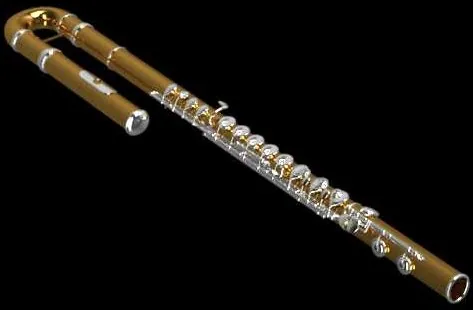
- Head joint may be straight or curved for smaller players.
- Ravel's Daphnis et Chloé and Stravinsky's Rite of Spring feature it prominently.
About the alto flute
The alto flute is an instrument in the Western concert flute family, pitched below the standard C flute and the uncommon flûte d'amour. It is the third-most common member of its family after the standard C flute and the piccolo. It is characterized by its rich, mellow tone in the lower portion of its range. The bore of the alto flute is considerably larger in diameter and longer than the C flute, and requires a larger column of air (volume of air) from the player, though it also requires a slower airspeed. This gives it a greater dynamic presence in the bottom octave and a half of its range. Its range is from G3 (the G below middle C) to G6 (4 ledger lines above the treble clef staff) plus an altissimo register stretching to D♭7. It uses the same fingerings as the C flute and piccolo. However, the instrument thereof is a transposing instrument in G, which is sounding a perfect fourth lower than written.
British music that uses this instrument often refers to it as a bass flute, which can be confusing since there is a distinct instrument also called the bass flute. This particular naming confusion originated in the fact that the modern C flute is pitched in the same range as the Renaissance tenor flute; implying that a lower-pitched instrument should be called 'bass', following the pattern of other instruments. However, the flute family's pitch-range naming system does not correspond correctly to human voice pitches (see description of ranges in the C flute article).
Text adapted from the Wikipedia article “Alto flute”, licensed under CC BY-SA 4.0.
Notable repertoire
- Piano Concerto No. 15 — Wolfgang Amadeus Mozart (1784)
- Turandot — Giacomo Puccini (1921)
- Piano Concerto No. 4 — Sergei Prokofiev
- Symphony No. 4 — Franz Schubert (1816)
- Le merle noir — Olivier Messiaen (1951)
- Youth — Leoš Janáček (1924)
- Serenade No. 9 — Wolfgang Amadeus Mozart
- Adagio in E for Violin and Orchestra — Wolfgang Amadeus Mozart (1776)
- Partita in A minor for solo flute — Johann Sebastian Bach
- Iron Foundry — Alexander Mosolov (1926)
- Wind Quintet — Arnold Schoenberg (1924)
- Flute Sonata — Francis Poulenc (1956)
Frequently asked questions
What is the range of the alto flute?
The practical written range of the alto flute is C4 to C7, which sounds G3 to G6 (196.0 Hz to 1568 Hz at A4 = 440 Hz).
Is the alto flute a transposing instrument?
Yes. The alto flute is pitched in G: sounds a perfect fourth lower than written. A written C sounds G.
What clef does the alto flute read?
The alto flute reads treble clef.
How is the alto flute classified?
In the Hornbostel–Sachs system the alto flute is classified as 421.121.12.
Historic examples in museums
Museum →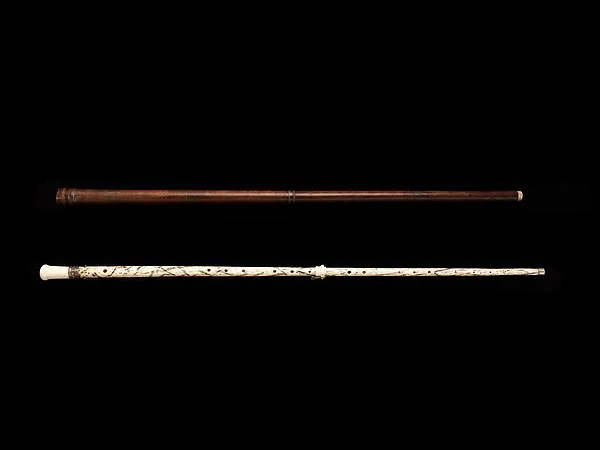 Walking-Stick Flute/Oboeca. 1750–57 · The Met
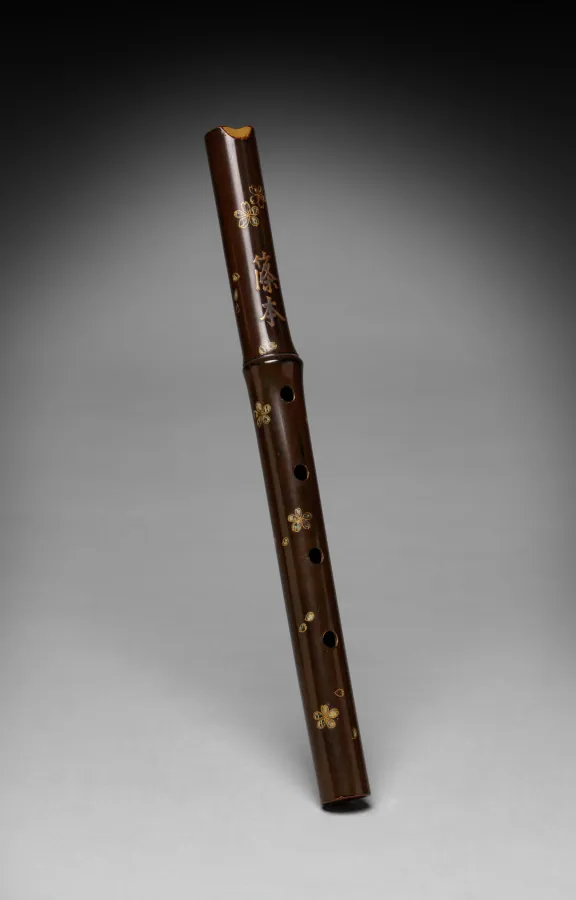 End-blown Flute (Hitoyogiri)late 1800s · Cleveland Museum of Art
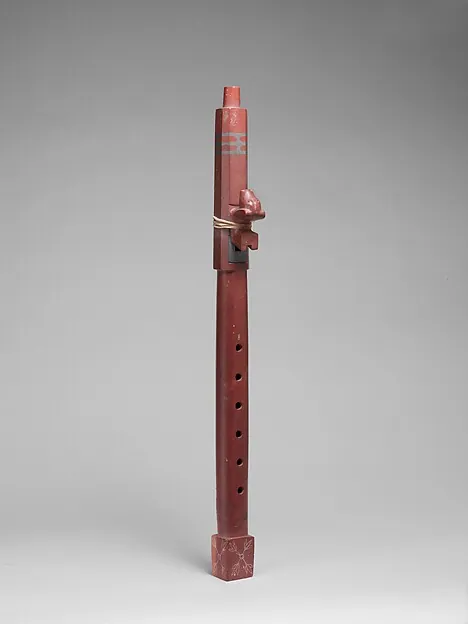 Courting flute (siyotanka)ca. 1850–1900 · The Met
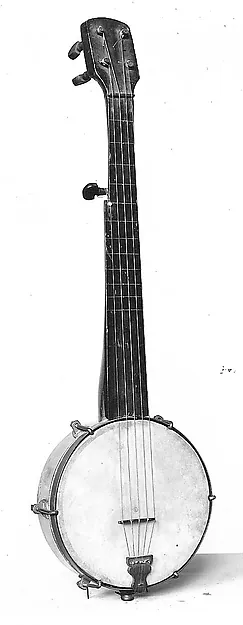 Piccolo Banjo1870–80 · The Met
 Transverse Flutelate 19th century · The Met
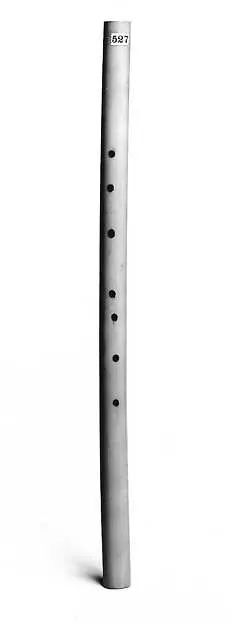 Flutelate 19th century · The Met
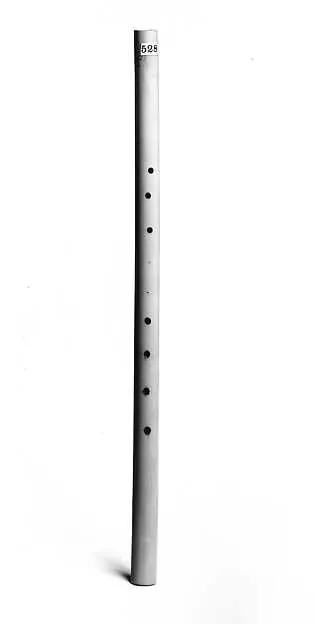 Flutelate 19th century · The Met
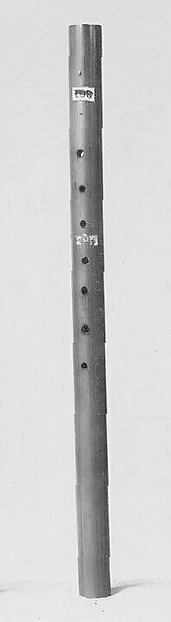 Flutelate 19th century · The Met