Woodwinds · Edge-blown · Flute family
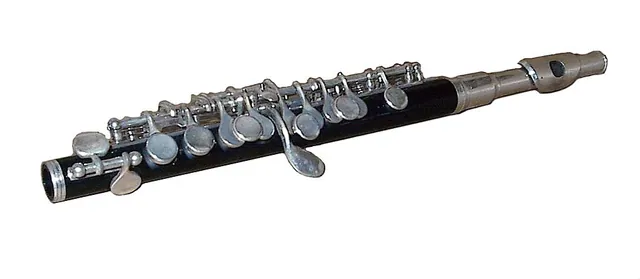
Piccolo
Half the size of the flute; sounds an octave higher than written.
Quick facts
| Family | Woodwinds — Edge-blown |
|---|---|
| Hornbostel–Sachs | 421.121.12-71 |
| Pitched in | C |
| Transposition | Sounds a octave higher than written |
| Written range | D4 – C7 |
| Sounding range | D5 – C8 (587.33 – 4186 Hz) |
| Clef | Treble |
| Other names | Piccoloflöte, flautín / piccolo |
Player's notes
- Half the size of the flute; sounds an octave higher than written.
- The highest regular member of the orchestra (top sounding C8).
- Fingerings follow the flute, without the foot-joint notes.
About the piccolo
The piccolo ( PIK-ə-loh; Italian for 'small') is a smaller version of the western concert flute and a member of the woodwind family of musical instruments. Sometimes referred to as a "baby flute" or piccolo flute, the modern piccolo has the same type of fingering as the standard transverse flute, but the sound it produces is an octave higher. This has given rise to the name ottavino (Italian pronunciation: [ottaˈviːno]), by which the instrument is called in Italian and thus also in scores of Italian composers.
Piccolos are often orchestrated to double the violins or the flutes, adding sparkle and brilliance to the overall sound because of the aforementioned one-octave transposition upwards. The piccolo is a standard member in orchestras, marching bands, and wind ensembles.
Text adapted from the Wikipedia article “Piccolo”, licensed under CC BY-SA 4.0.
Listen
Recordings from Wikimedia Commons, found via Openverse.
Notable repertoire
- Piano Concerto No. 15 — Wolfgang Amadeus Mozart (1784)
- Turandot — Giacomo Puccini (1921)
- Piano Concerto No. 4 — Sergei Prokofiev
- Symphony No. 4 — Franz Schubert (1816)
- Le merle noir — Olivier Messiaen (1951)
- Youth — Leoš Janáček (1924)
- Serenade No. 9 — Wolfgang Amadeus Mozart
- Adagio in E for Violin and Orchestra — Wolfgang Amadeus Mozart (1776)
- Partita in A minor for solo flute — Johann Sebastian Bach
- Iron Foundry — Alexander Mosolov (1926)
- Wind Quintet — Arnold Schoenberg (1924)
- Flute Sonata — Francis Poulenc (1956)
Frequently asked questions
What is the range of the piccolo?
The practical written range of the piccolo is D4 to C7, which sounds D5 to C8 (587.3 Hz to 4186 Hz at A4 = 440 Hz).
Is the piccolo a transposing instrument?
Yes. The piccolo is pitched in C: sounds a octave higher than written. A written C sounds C.
What clef does the piccolo read?
The piccolo reads treble clef.
How is the piccolo classified?
In the Hornbostel–Sachs system the piccolo is classified as 421.121.12-71.
Historic examples in museums
Museum →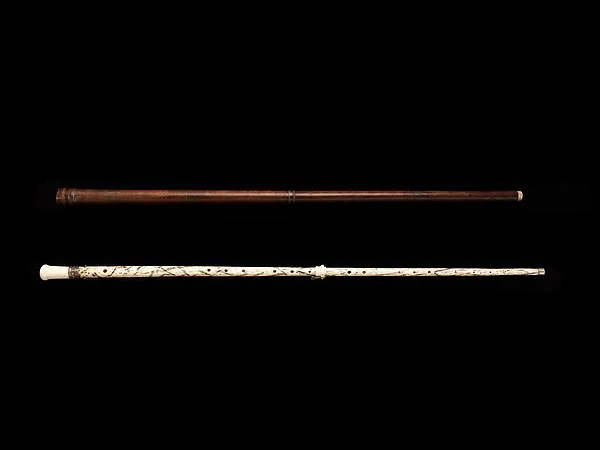 Walking-Stick Flute/Oboeca. 1750–57 · The Met
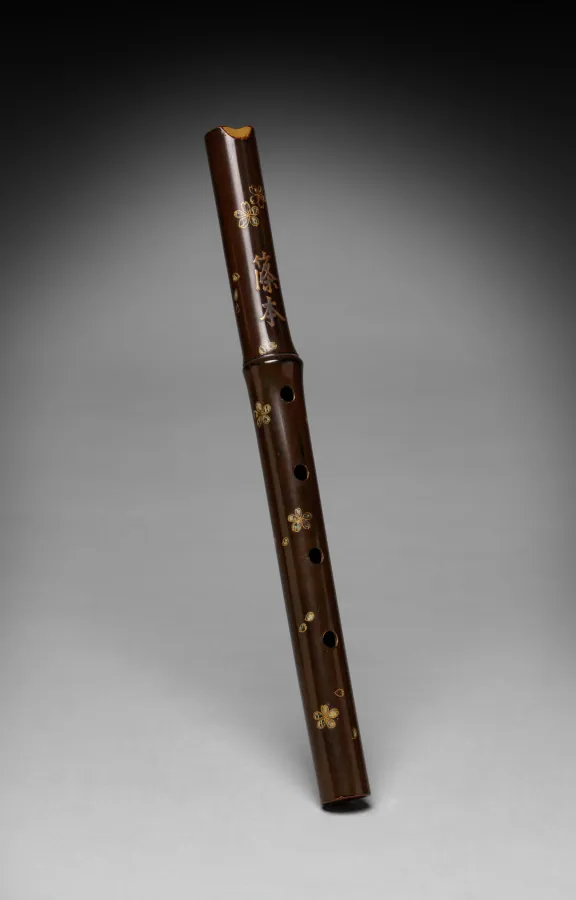 End-blown Flute (Hitoyogiri)late 1800s · Cleveland Museum of Art
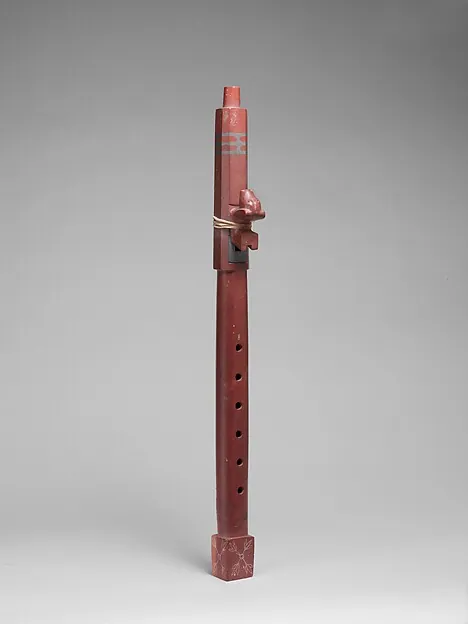 Courting flute (siyotanka)ca. 1850–1900 · The Met
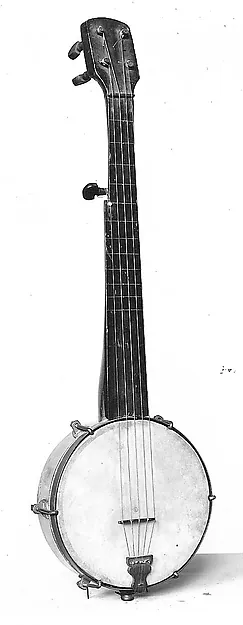 Piccolo Banjo1870–80 · The Met
 Transverse Flutelate 19th century · The Met
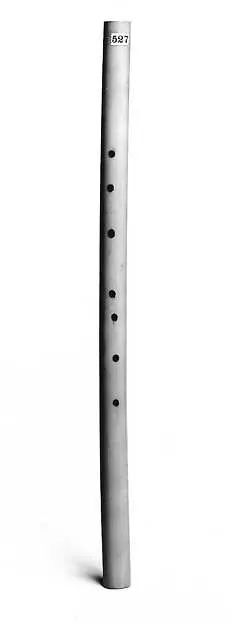 Flutelate 19th century · The Met
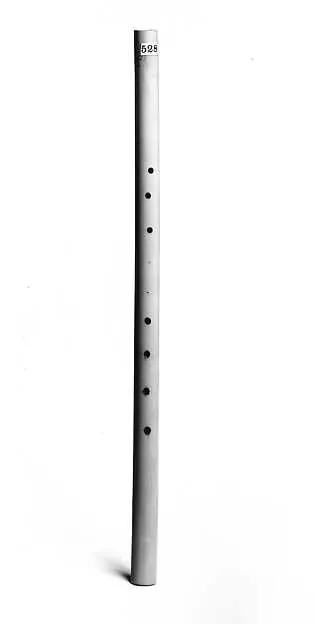 Flutelate 19th century · The Met
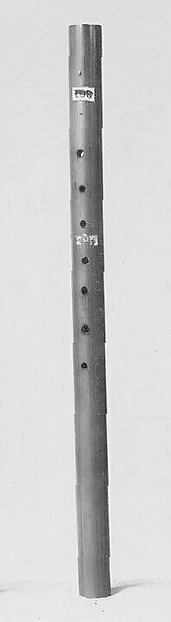 Flutelate 19th century · The Met