Flute · Melodic Minor scale
B♭ Melodic Minor scale for Flute
2 octaves from B♭4, key signature 5 flats (B♭, E♭, A♭, D♭, G♭).
Scale — ascending & descending
Arpeggio
Download: MIDI · MusicXML (opens in MuseScore, Sibelius, Dorico, Finale) ·
Fingerings for every note
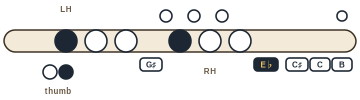
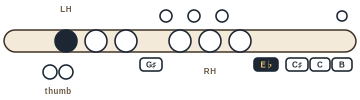
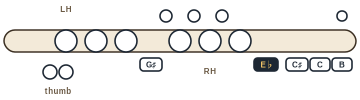
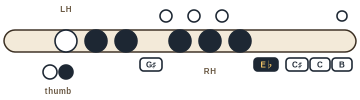
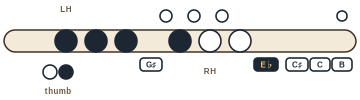
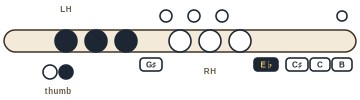
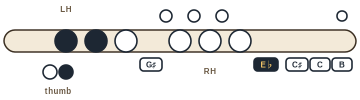
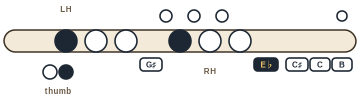
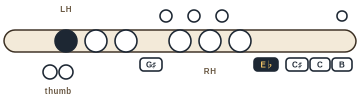
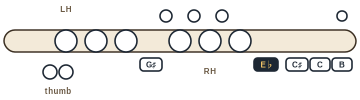
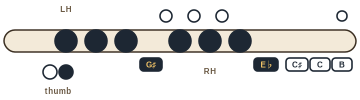
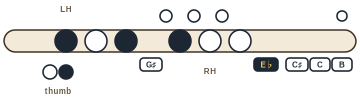
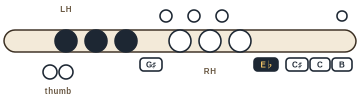
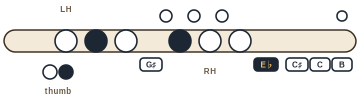
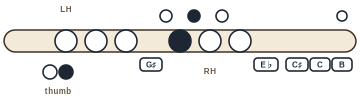
Notes of the scale
| Degree | 1 | 2 | 3 | 4 | 5 | 6 | 7 | 8 |
|---|---|---|---|---|---|---|---|---|
| Written | B♭ | C | D♭ | E♭ | F | G | A | B♭ |
Descending, the melodic minor uses the natural minor: A♭ G♭ F E♭ D♭ C B♭ A♭.
Practice tips
- With 5 flats, work out the chromatic fingerings first (sliver keys, side keys, alternate pinky keys) and practise the awkward pairs slowly in isolation.
- Ascending, degrees 6 and 7 are raised; descending they return to the key signature (natural minor).
- Third-octave notes rely on fast air through a small aperture — keep the lips relaxed and the jaw slightly forward.
- Practise with a metronome: legato first, then tongued; then in thirds and in rhythms (long–short, short–long).
Frequently asked questions
What are the notes of the B♭ Melodic Minor scale on flute?
B♭, C, D♭, E♭, F, G, A, B♭.
What is the key signature of B♭ Melodic Minor?
B♭ minor has 5 flats (B♭, E♭, A♭, D♭, G♭).