Woodwinds · Duct flute · Recorder family
Alto Recorder
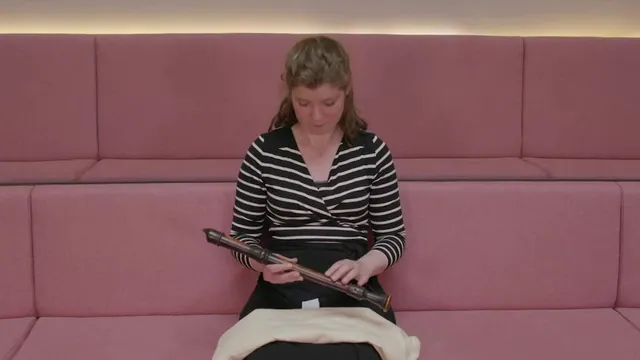
The baroque 'treble recorder', written at pitch with its lowest note F4.
Quick facts
| Family | Woodwinds — Duct flute |
|---|---|
| Pitched in | F |
| Transposition | Sounds as written (non-transposing) |
| Written range | F4 – G6 |
| Sounding range | F4 – G6 (349.23 – 1568 Hz) |
| Clef | Treble |
| Other names | Alt-Blockflöte, Altblockflöte, flûte à bec alto, treble recorder / alto recorder |
Player's notes
- The baroque 'treble recorder', written at pitch with its lowest note F4.
- Handel, Telemann and Bach wrote sonatas and concertos for it.
- Uses the same finger patterns as the soprano, a fifth lower in name.
About the alto recorder
The alto recorder in F, also known as a treble (and, historically, as consort flute and common flute) is a member of the recorder family. Up until the 17th century the alto instrument was normally in G4 instead of F4. Its standard range is F4 to G6.
The alto is between the soprano and tenor in size, and is correspondingly intermediate in pitch. It has the same general shape as a soprano, but is larger in all dimensions, resulting in a lower pitch for a given fingering.
The F alto is a non-transposing instrument, though its basic scale is in F, that is, a fifth lower than the soprano recorder and a fourth higher than the tenor (both with a basic scale in C). So-called F fingerings are therefore used, as with the bassoon or the low register of the clarinet, in contrast to the C fingerings used for most other woodwinds. Its notation is usually at sounding pitch, but sometimes is written an octave lower than it sounds.
Text adapted from the Wikipedia article “Alto recorder”, licensed under CC BY-SA 4.0.
Frequently asked questions
What is the range of the alto recorder?
The practical written range of the alto recorder is F4 to G6, which sounds F4 to G6 (349.2 Hz to 1568 Hz at A4 = 440 Hz).
Is the alto recorder a transposing instrument?
No. The alto recorder sounds at written pitch (concert pitch).
What clef does the alto recorder read?
The alto recorder reads treble clef.
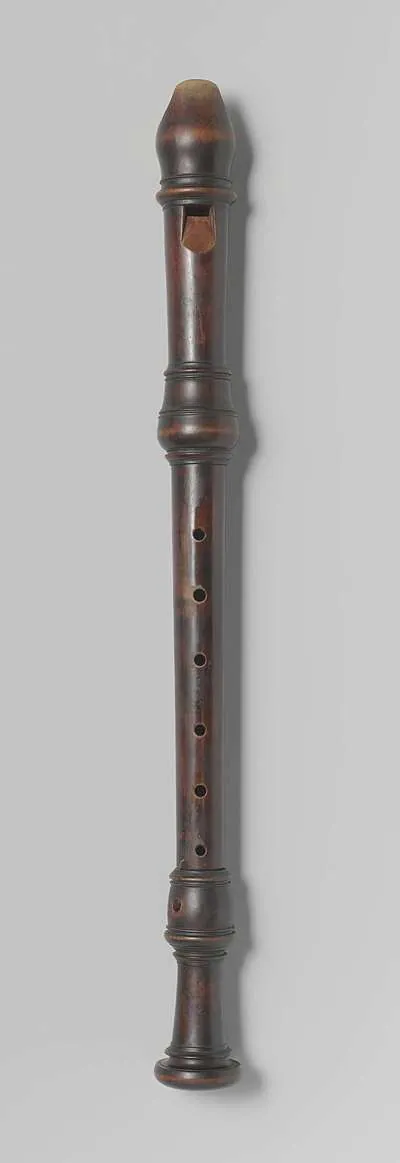
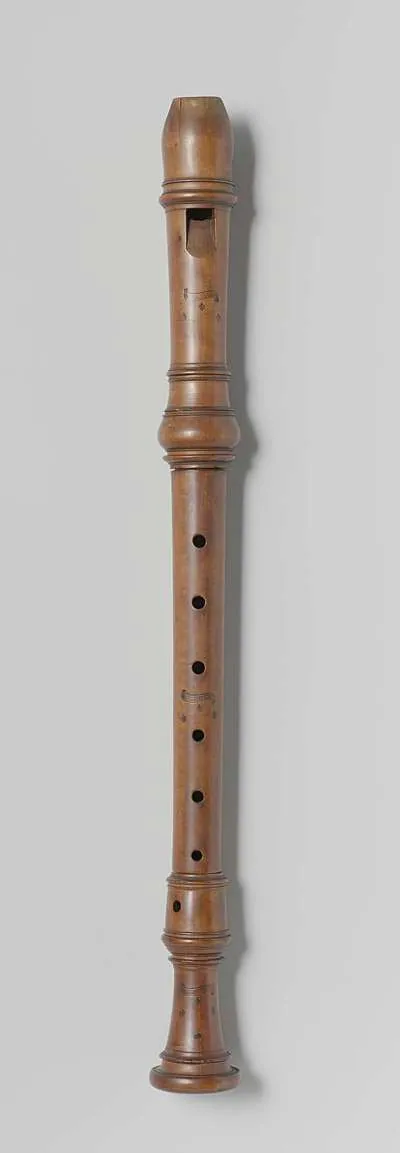
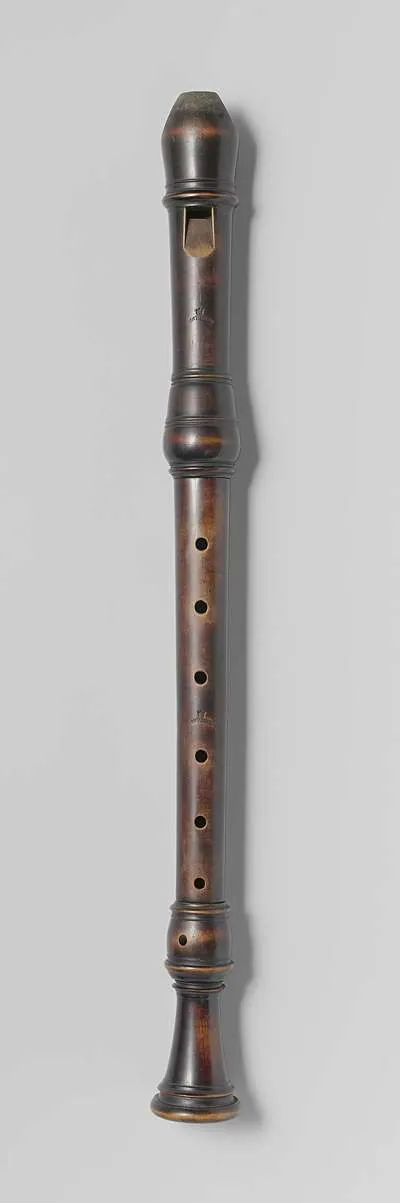
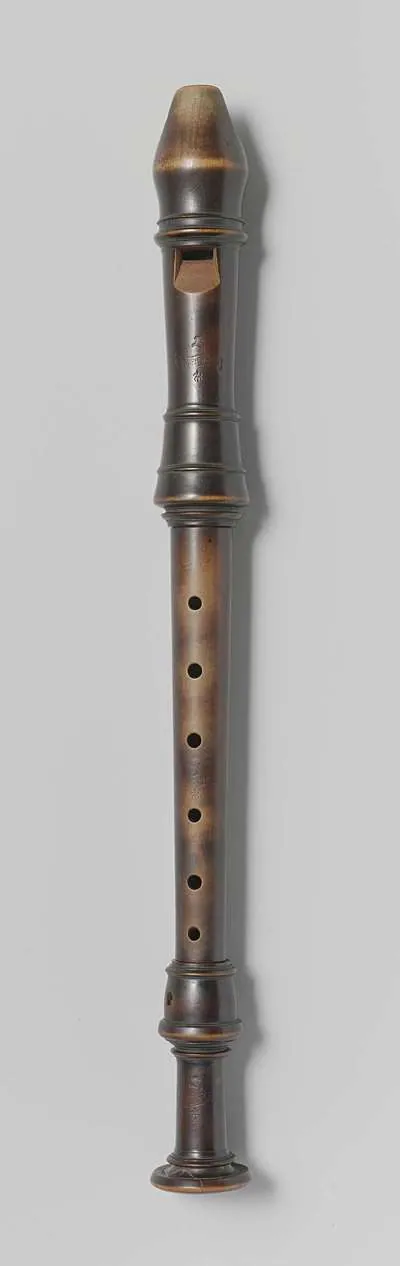
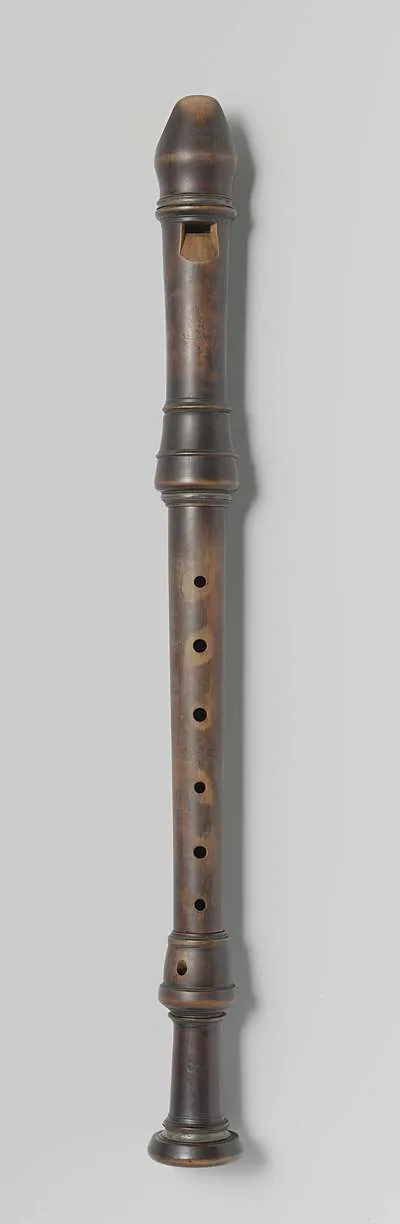
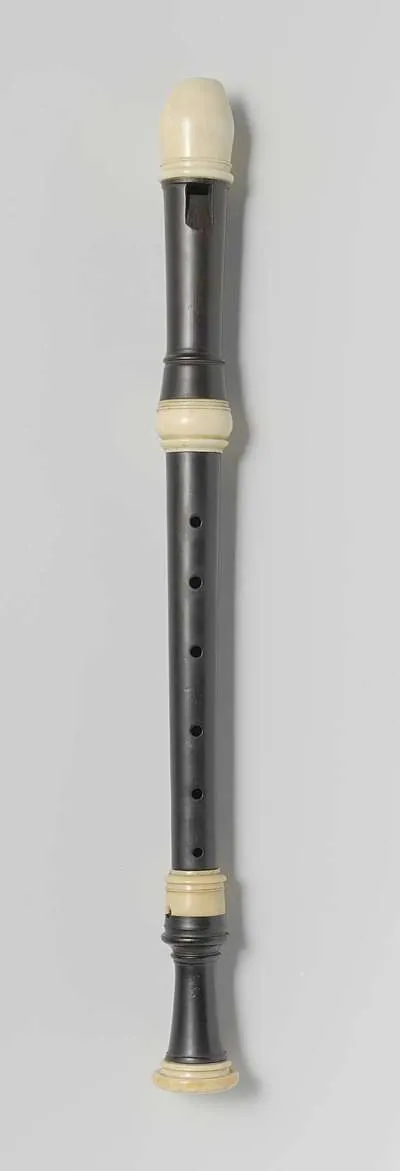
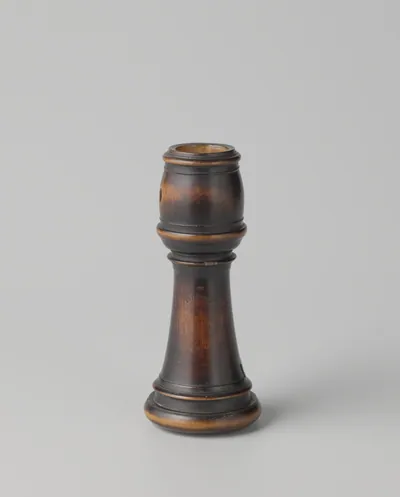
Historic examples in museums
Museum →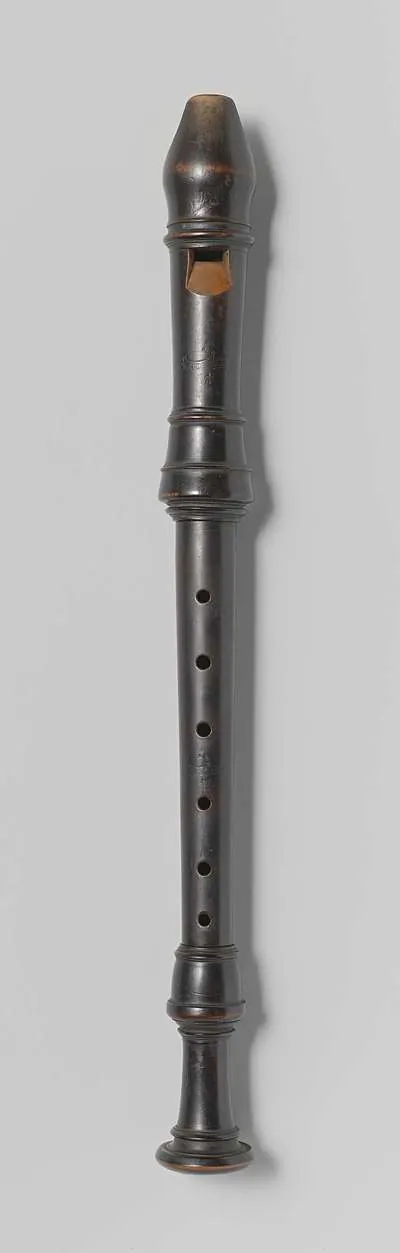
Related instruments

Soprano Recorder
Also called the descant; sounds an octave above written pitch.
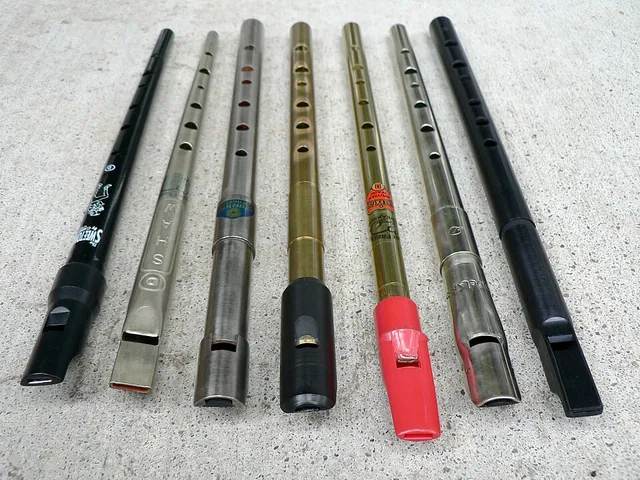
Tin Whistle
Six-holed duct flute at the heart of Irish traditional music.
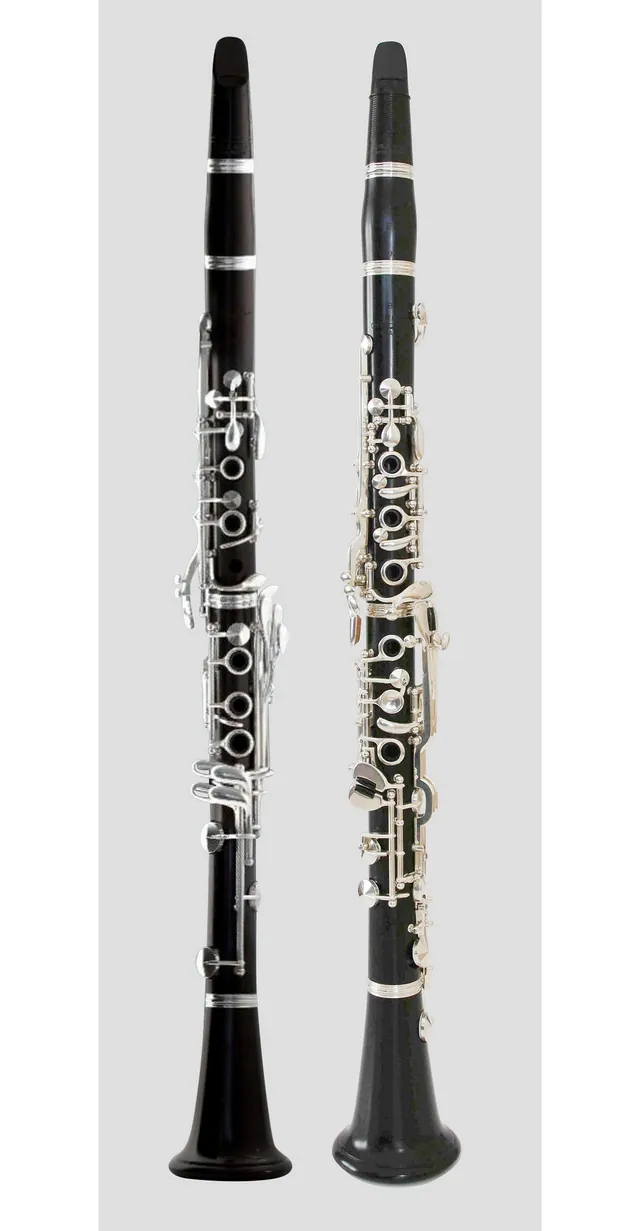
B♭ Clarinet
The most common clarinet: written C sounds B♭ a whole step lower.

A Clarinet
Slightly longer sibling of the B♭ clarinet; written C sounds A, a minor third lower.
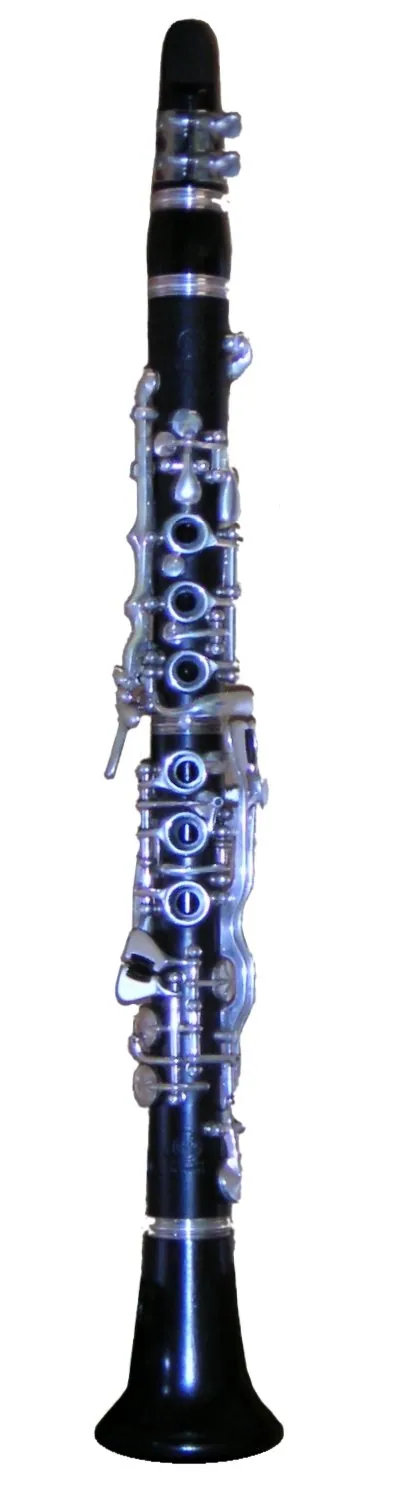
E♭ Clarinet
The small 'piccolo' of the clarinet family; written C sounds E♭ a minor third higher.
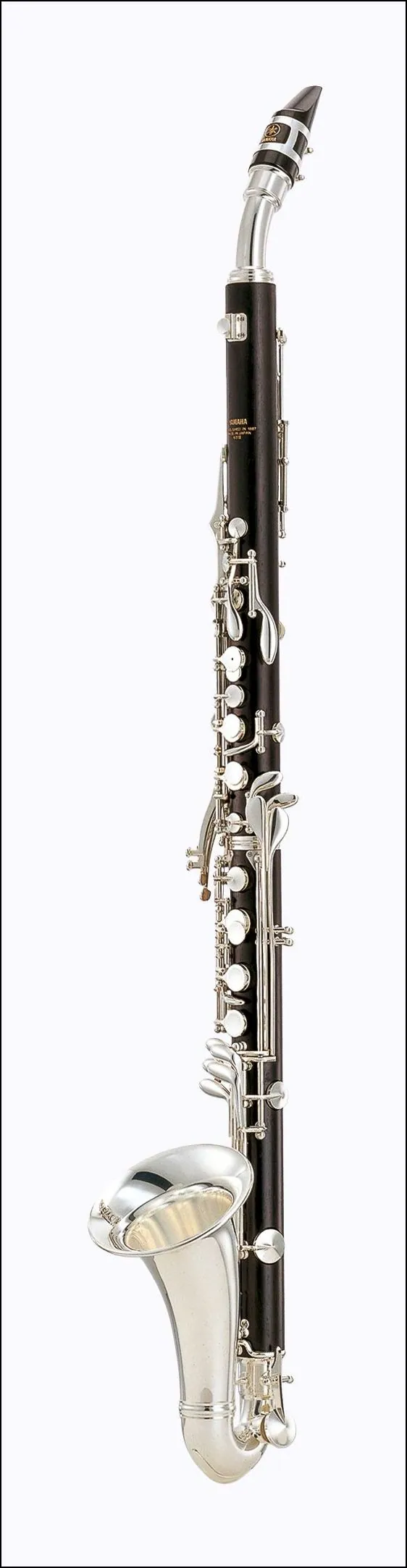
Alto Clarinet
Pitched in E♭ a fifth below the B♭ soprano; written C sounds E♭ a major sixth lower.