Woodwinds · Single reed · Clarinet family
E♭ Clarinet
The small 'piccolo' of the clarinet family; written C sounds E♭ a minor third higher.
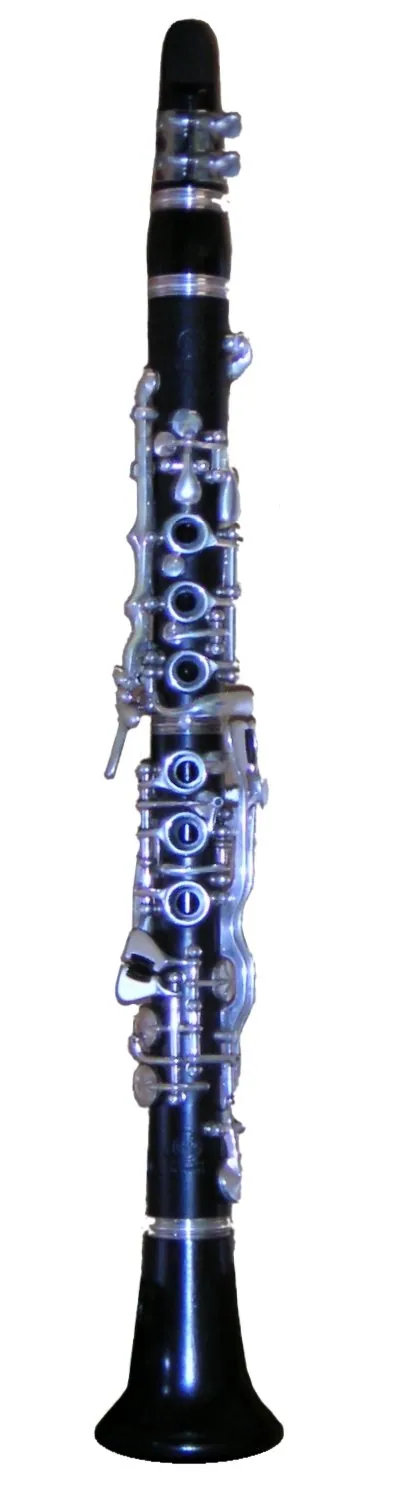
Quick facts
| Family | Woodwinds — Single reed |
|---|---|
| Hornbostel–Sachs | 422.211.2 |
| Pitched in | E♭ |
| Transposition | Sounds a minor third higher than written |
| Written range | E3 – A6 |
| Sounding range | G3 – C7 (196.00 – 2093 Hz) |
| Clef | Treble |
| Other names | Es-Klarinette, Requinto, clarinete MI bemol, sopranino clarinet |
Player's notes
- The small 'piccolo' of the clarinet family; written C sounds E♭ a minor third higher.
- Famous for piercing solos in Berlioz, Mahler, Strauss and Shostakovich.
- Uses the standard Boehm fingerings; tuning in the altissimo is notoriously sensitive.
About the E♭ Clarinet
The E-flat (E♭) clarinet is a member of the clarinet family, smaller than the more common B♭ clarinet and pitched a perfect fourth higher. It is typically considered the sopranino or piccolo member of the clarinet family and is a transposing instrument in E♭ with a sounding pitch a minor third higher than written. The E-flat clarinet has a total length of about 49 centimetres (19 in).
In Italian, the term quartino refers specifically to the E♭ clarinet, particularly in band scores. The term terzino is also used, referring more generally to any small clarinet; in Italian scores, the E♭ clarinet is sometimes indicated as terzino in Mi♭, e.g. the Fantasia Eroica op. 33 (1913) by Francesco Paolo Neglia. Until the late nineteenth century, the term Elafà also indicated a clarinet in E♭.
The E♭ clarinet is used in orchestras, concert bands, and marching bands, and plays a central role in clarinet choirs, carrying melodies that would be uncomfortably high for the B♭ clarinet. Solo repertoire is limited, but composers from Berlioz to Mahler have used it extensively as a solo instrument in orchestral contexts.
Text adapted from the Wikipedia article “E-flat clarinet”, licensed under CC BY-SA 4.0.
Notable repertoire
- Octet — Franz Schubert (1824)
- Turandot — Giacomo Puccini (1921)
- Piano Concerto No. 4 — Sergei Prokofiev
- Meeresstille und glückliche Fahrt — Ludwig van Beethoven (1814)
- Kegelstatt Trio — Wolfgang Amadeus Mozart (1786)
- Contrasts — Béla Bartók
- Youth — Leoš Janáček (1924)
- The Carnival of the Animals — Camille Saint-Saëns (1886)
- Clarinet Concerto in A major, K. 622 — Wolfgang Amadeus Mozart (1791)
- Horn Concerto No. 3 — Wolfgang Amadeus Mozart (1787)
- The Sorcerer's Apprentice — Paul Dukas (1890)
- Sinfonia Concertante for Four Winds — Wolfgang Amadeus Mozart (1778)
Frequently asked questions
What is the range of the E♭ Clarinet?
The practical written range of the E♭ Clarinet is E3 to A6, which sounds G3 to C7 (196.0 Hz to 2093 Hz at A4 = 440 Hz).
Is the E♭ Clarinet a transposing instrument?
Yes. The E♭ Clarinet is pitched in E♭: sounds a minor third higher than written. A written C sounds E♭.
What clef does the E♭ Clarinet read?
The E♭ Clarinet reads treble clef.
How is the E♭ Clarinet classified?
In the Hornbostel–Sachs system the E♭ Clarinet is classified as 422.211.2.
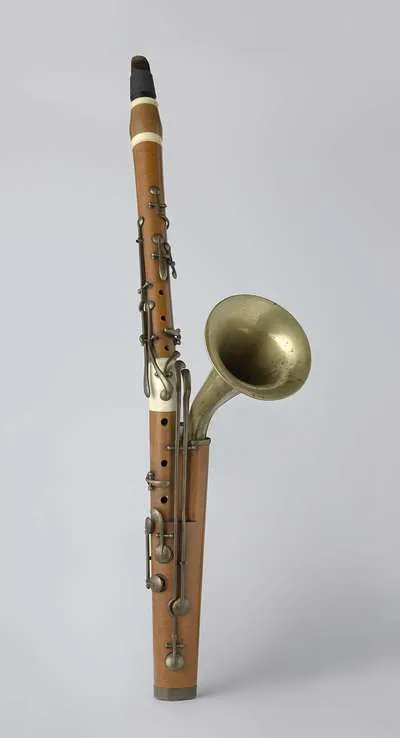
Historic examples in museums
Museum →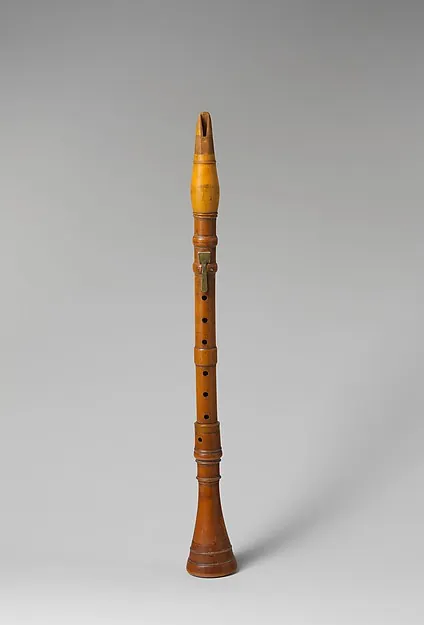
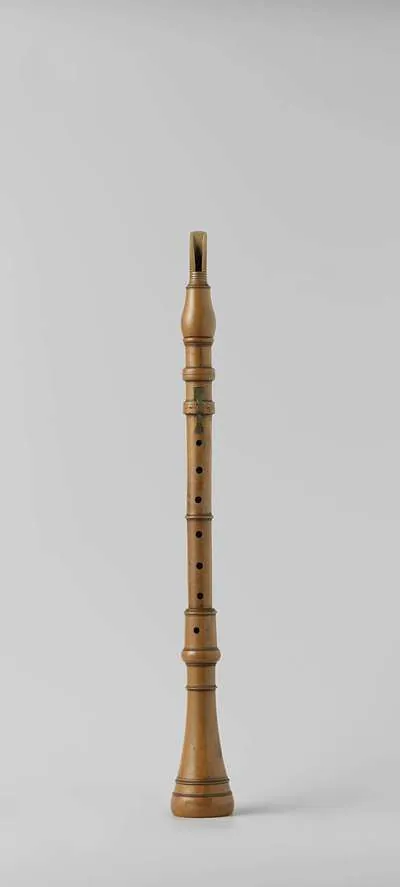
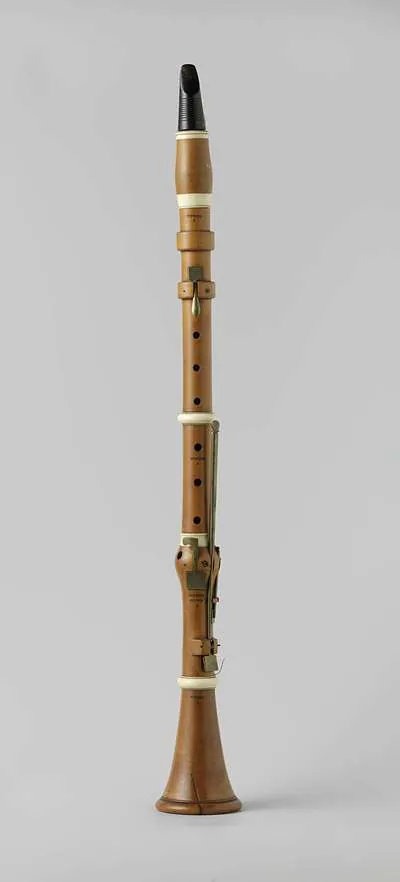
Related instruments
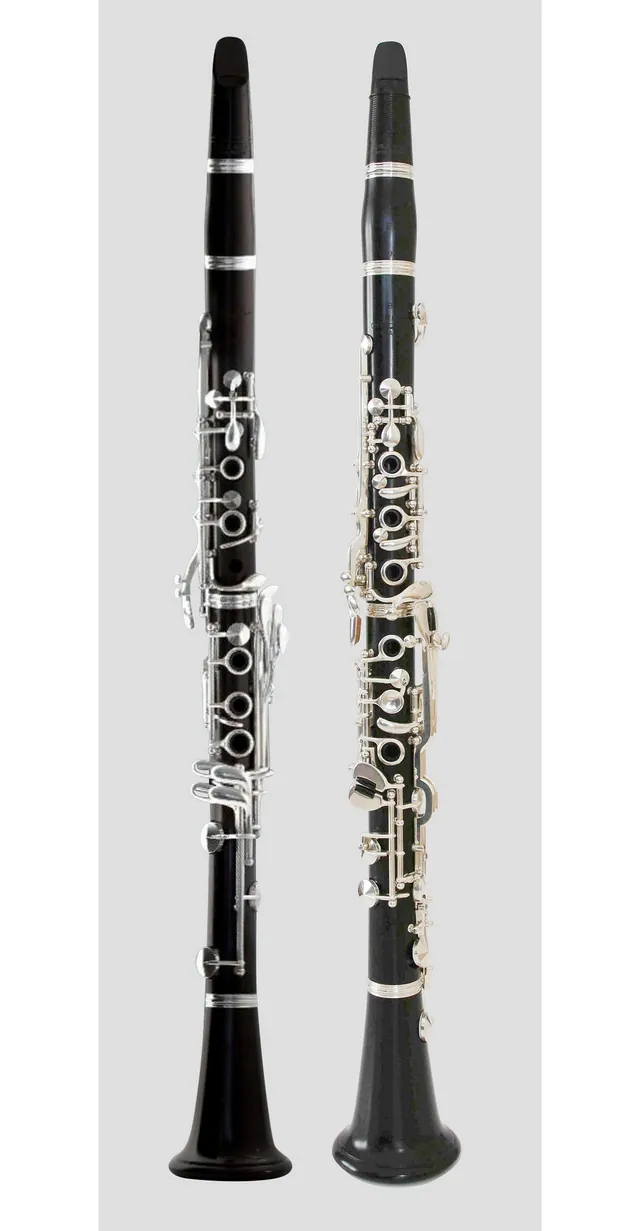
B♭ Clarinet
The most common clarinet: written C sounds B♭ a whole step lower.

A Clarinet
Slightly longer sibling of the B♭ clarinet; written C sounds A, a minor third lower.
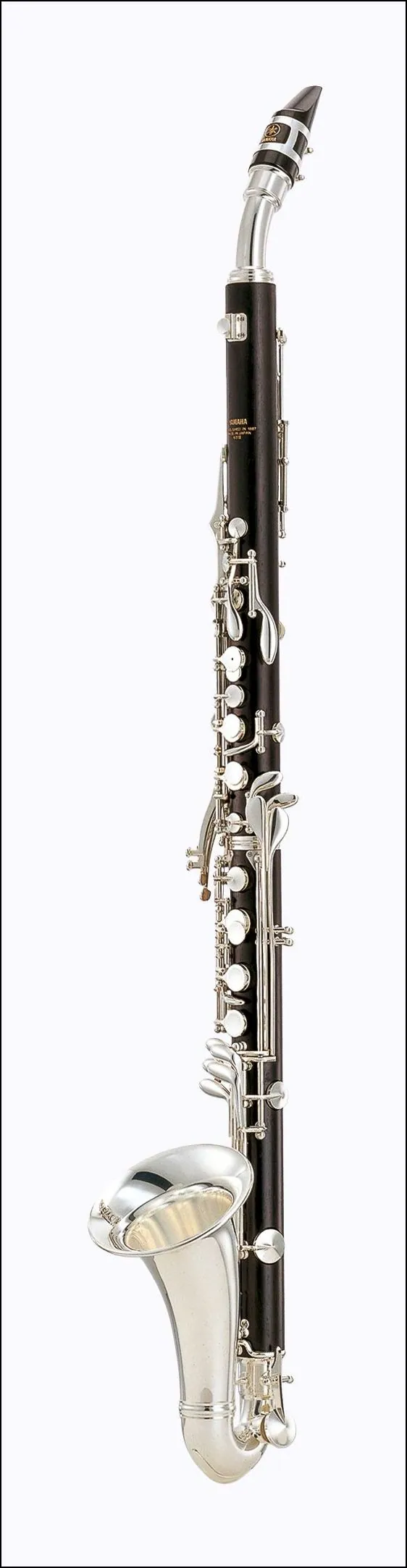
Alto Clarinet
Pitched in E♭ a fifth below the B♭ soprano; written C sounds E♭ a major sixth lower.
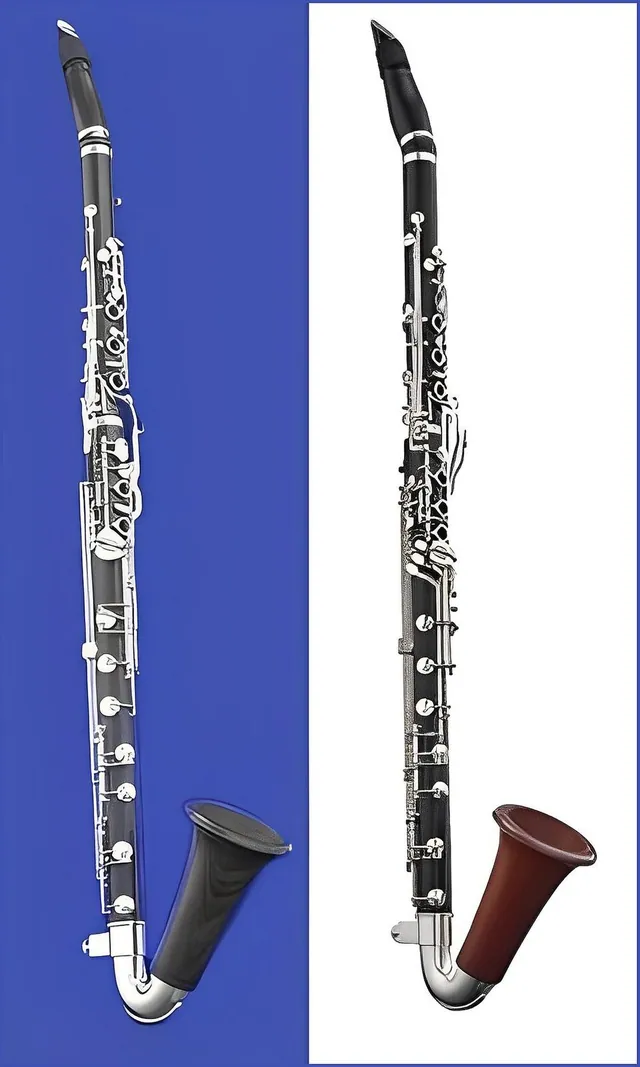
Basset Horn
An F alto clarinet with extension down to written C — beloved by Mozart (Requiem, Gran…
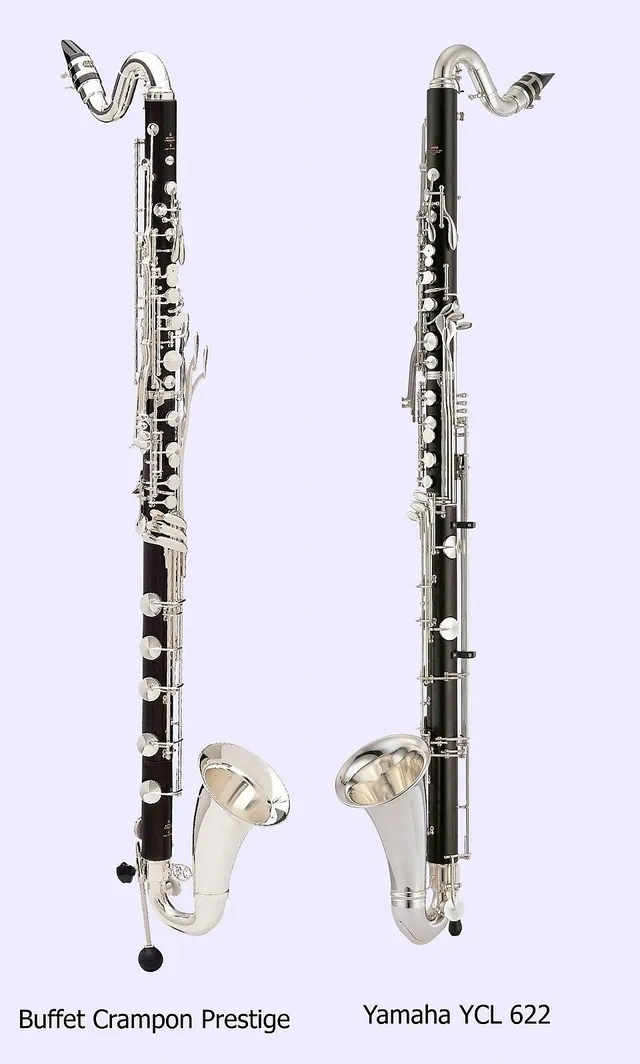
Bass Clarinet
Sounds an octave below the B♭ clarinet; in French (treble-clef) notation written C…
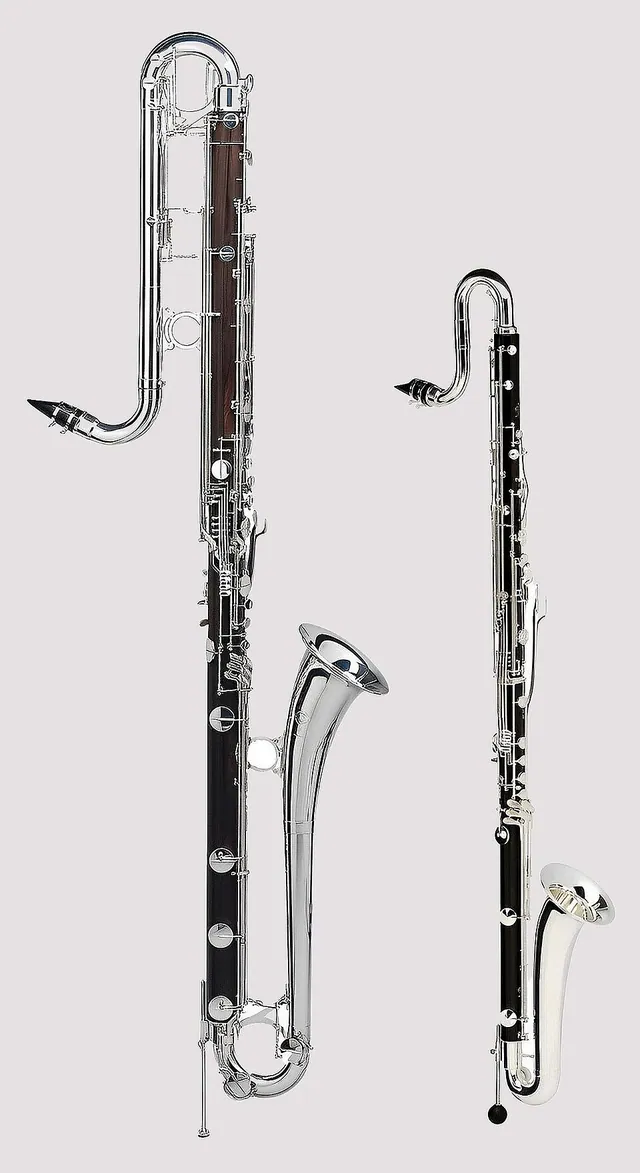
Contrabass Clarinet
Sounds two octaves and a whole step below written pitch.