Woodwinds · Single reed · Clarinet family
Bass Clarinet
Sounds an octave below the B♭ clarinet; in French (treble-clef) notation written C sounds B♭ a major ninth lower.
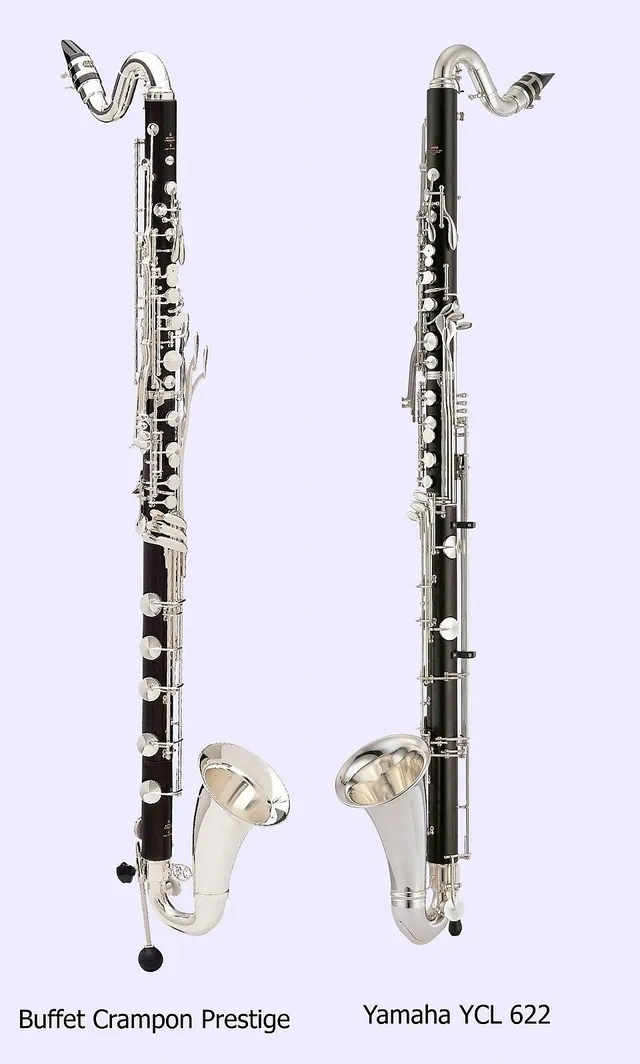
Quick facts
| Family | Woodwinds — Single reed |
|---|---|
| Hornbostel–Sachs | 422.211.2-71 |
| Pitched in | B♭ |
| Transposition | Sounds a major ninth lower than written |
| Written range | C3 – G6 |
| Sounding range | B♭1 – F5 (58.27 – 698 Hz) |
| Clefs | Treble, Bass |
| Other names | Bassklarinette, clarinete bajo, clarinette basse |
Player's notes
- Sounds an octave below the B♭ clarinet; in French (treble-clef) notation written C sounds B♭ a major ninth lower.
- Professional instruments extend to low written C (sounding B♭1).
- Fingerings mirror the soprano clarinet; the left-index half-hole replaces the open vent in the altissimo.
About the bass clarinet
The bass clarinet is a musical instrument of the clarinet family. Like the more common soprano B♭ clarinet, it is usually pitched in B♭ (meaning it is a transposing instrument on which a written C sounds as B♭), but it plays notes an octave below the soprano B♭ clarinet. Bass clarinets in other keys, notably C and A, also exist, but are very rare (in contrast to the regular A clarinet, which is quite common in classical music). Bass clarinets regularly perform in orchestras, wind ensembles and concert bands, and occasionally in marching bands and jazz bands. They also play an occasional solo role in contemporary music and jazz in particular.
Someone who plays a bass clarinet is called a bass clarinettist or a bass clarinetist.
Text adapted from the Wikipedia article “Bass clarinet”, licensed under CC BY-SA 4.0.
Listen
Recordings from Wikimedia Commons, found via Openverse.
Notable repertoire
- Octet — Franz Schubert (1824)
- Turandot — Giacomo Puccini (1921)
- Piano Concerto No. 4 — Sergei Prokofiev
- Meeresstille und glückliche Fahrt — Ludwig van Beethoven (1814)
- Kegelstatt Trio — Wolfgang Amadeus Mozart (1786)
- Contrasts — Béla Bartók
- Youth — Leoš Janáček (1924)
- The Carnival of the Animals — Camille Saint-Saëns (1886)
- Clarinet Concerto in A major, K. 622 — Wolfgang Amadeus Mozart (1791)
- Horn Concerto No. 3 — Wolfgang Amadeus Mozart (1787)
- The Sorcerer's Apprentice — Paul Dukas (1890)
- Sinfonia Concertante for Four Winds — Wolfgang Amadeus Mozart (1778)
Frequently asked questions
What is the range of the bass clarinet?
The practical written range of the bass clarinet is C3 to G6, which sounds B♭1 to F5 (58.3 Hz to 698 Hz at A4 = 440 Hz).
Is the bass clarinet a transposing instrument?
Yes. The bass clarinet is pitched in B♭: sounds a major ninth lower than written. A written C sounds B♭.
What clef does the bass clarinet read?
The bass clarinet reads treble clef and bass clef.
How is the bass clarinet classified?
In the Hornbostel–Sachs system the bass clarinet is classified as 422.211.2-71.
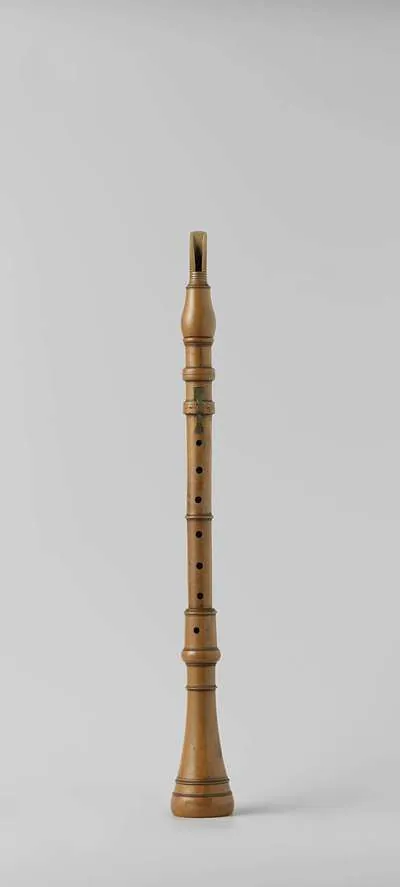
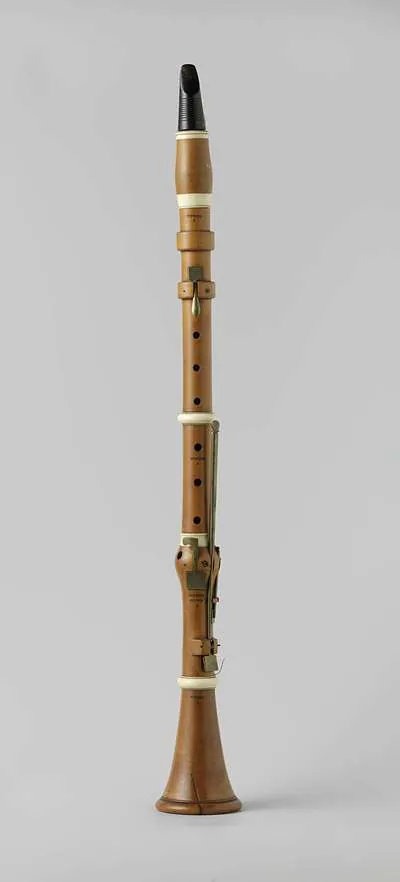
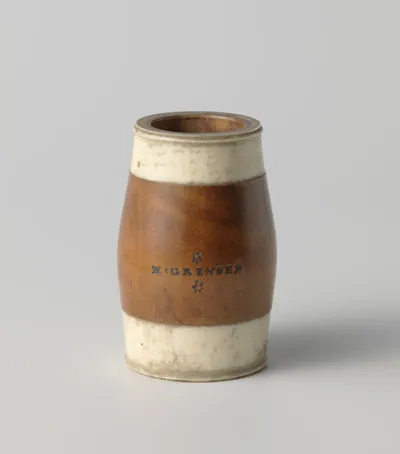
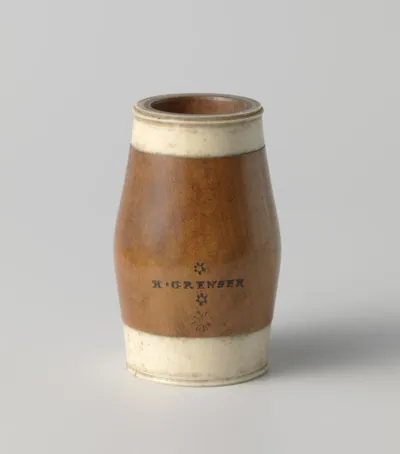
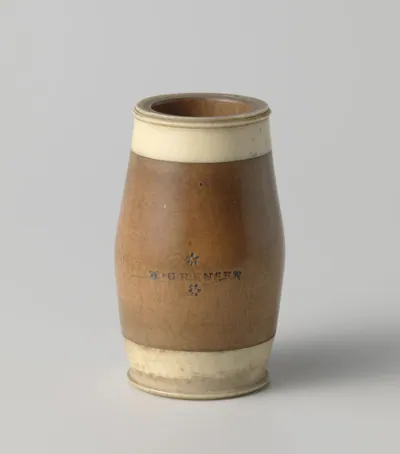
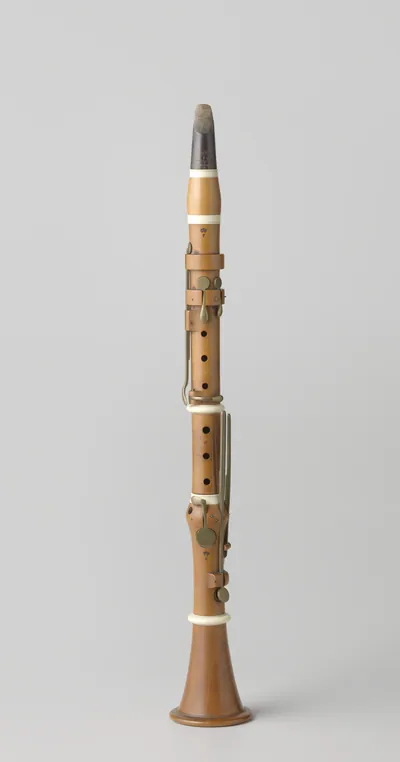
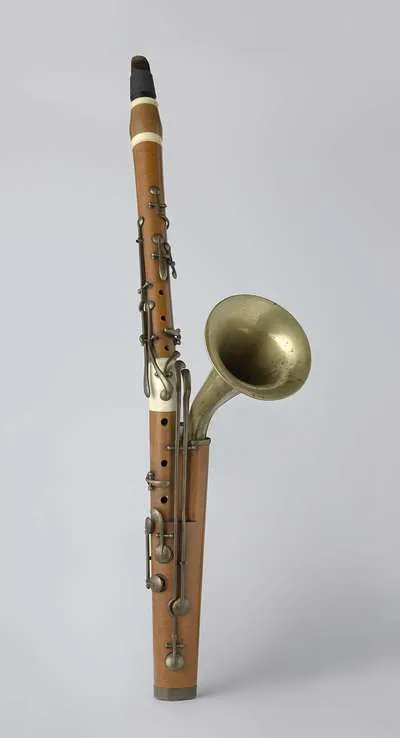
Historic examples in museums
Museum →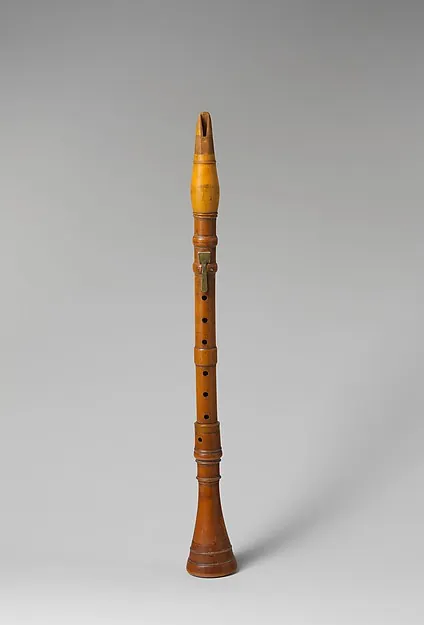
Related instruments
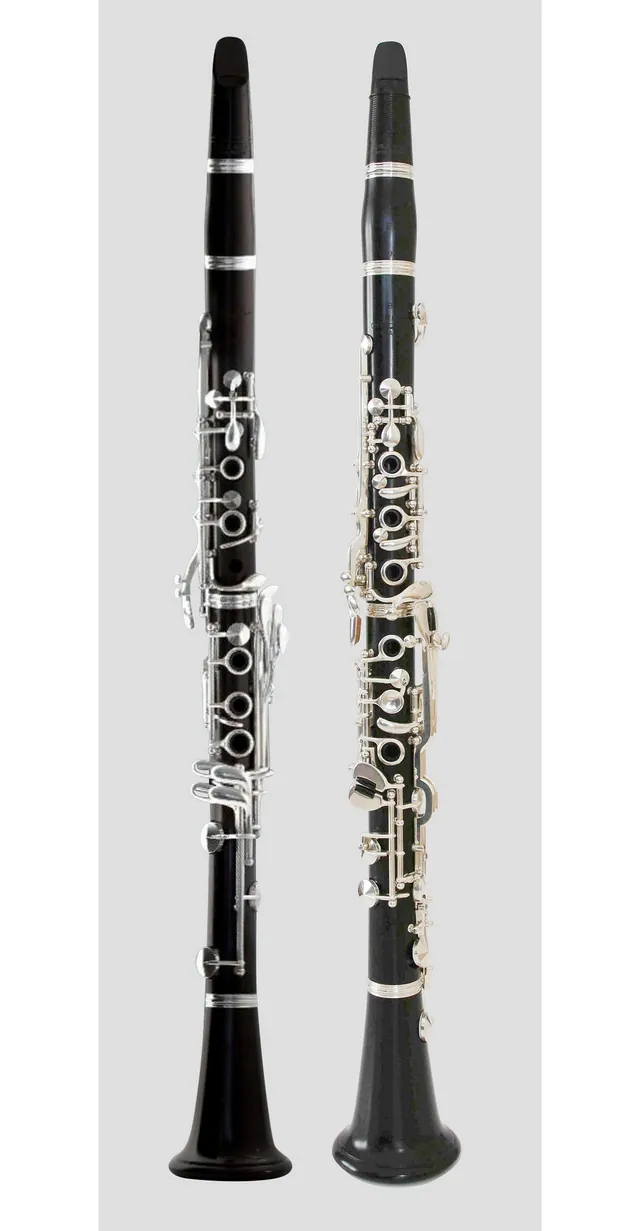
B♭ Clarinet
The most common clarinet: written C sounds B♭ a whole step lower.

A Clarinet
Slightly longer sibling of the B♭ clarinet; written C sounds A, a minor third lower.
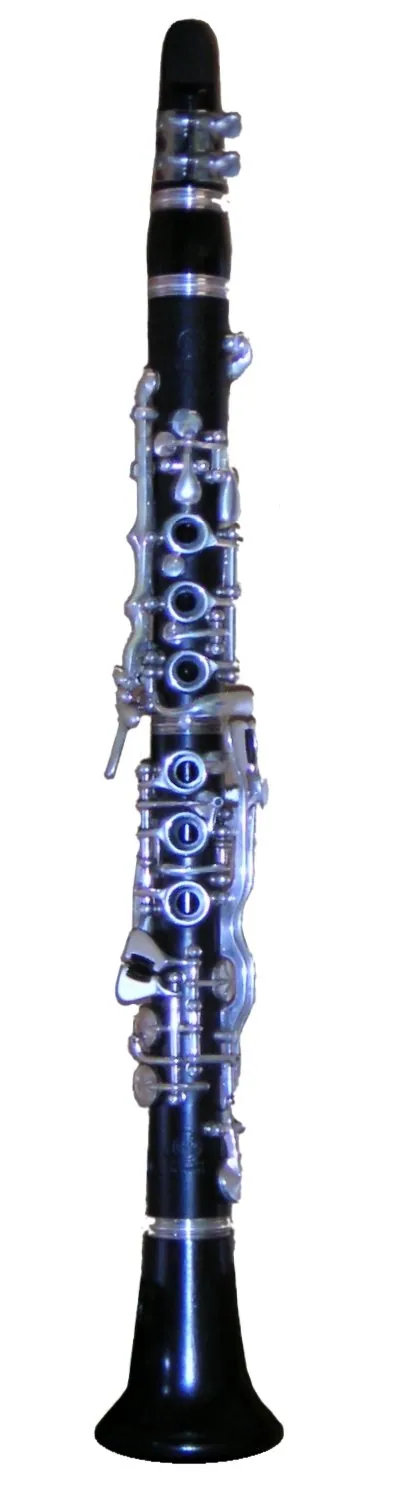
E♭ Clarinet
The small 'piccolo' of the clarinet family; written C sounds E♭ a minor third higher.
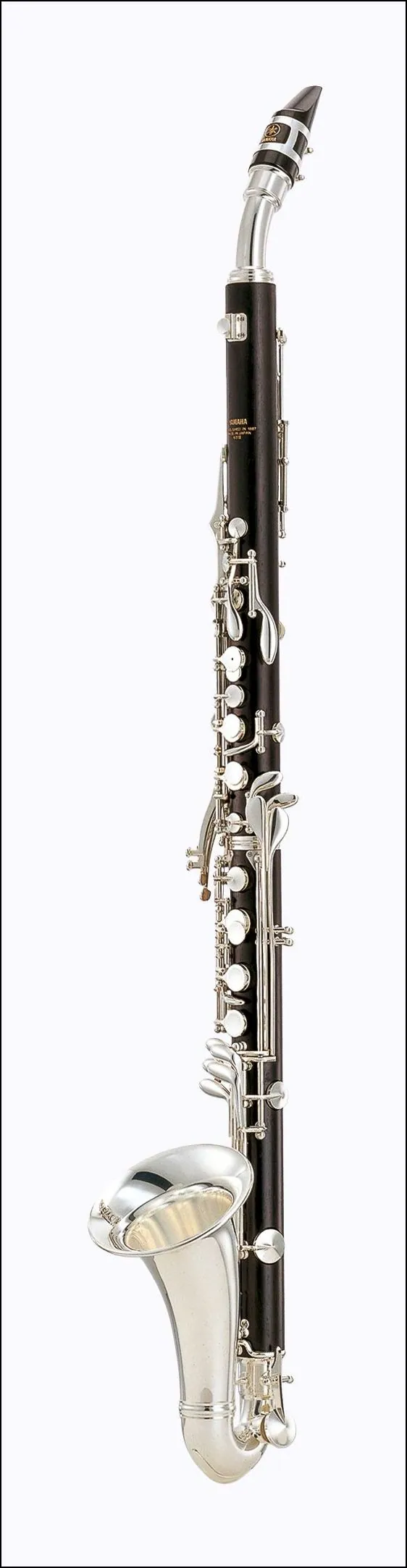
Alto Clarinet
Pitched in E♭ a fifth below the B♭ soprano; written C sounds E♭ a major sixth lower.
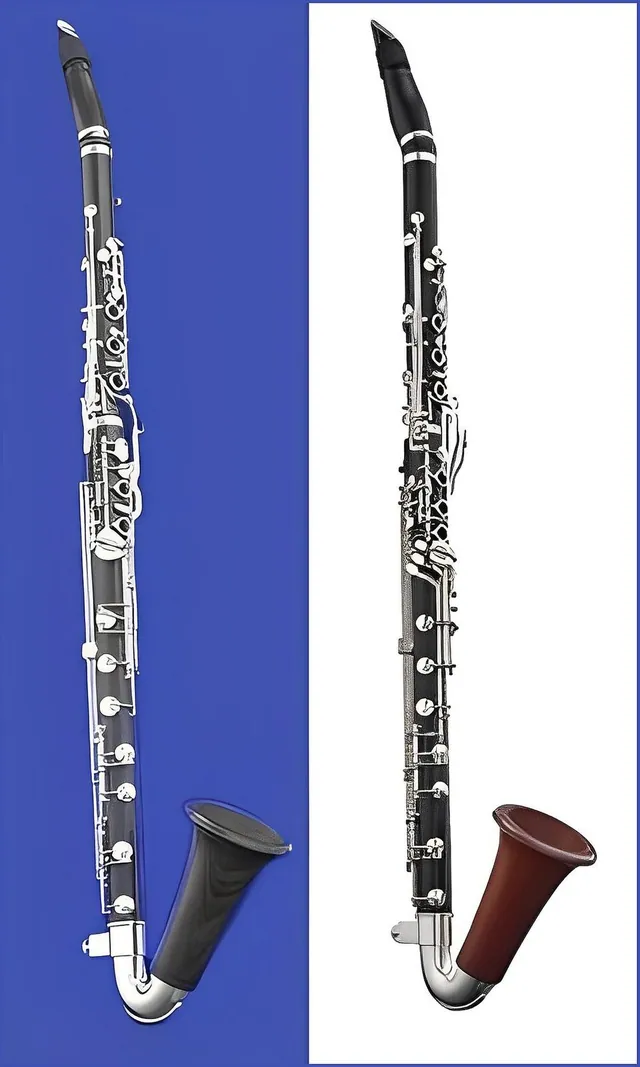
Basset Horn
An F alto clarinet with extension down to written C — beloved by Mozart (Requiem, Gran…
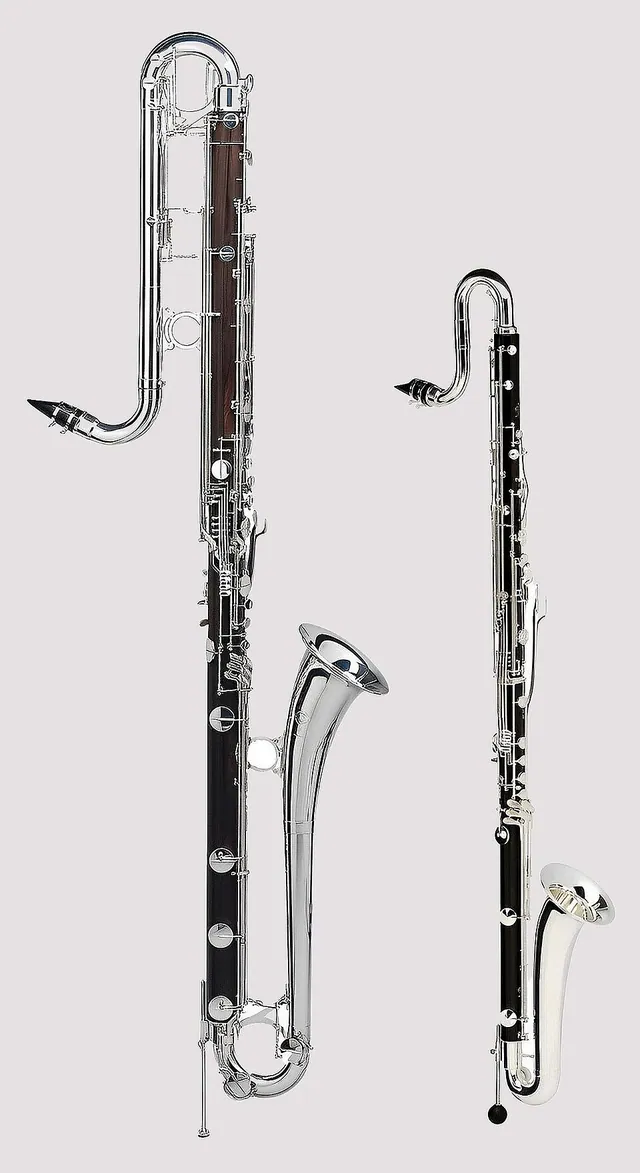
Contrabass Clarinet
Sounds two octaves and a whole step below written pitch.