Woodwinds · Double reed · Oboe family
English Horn
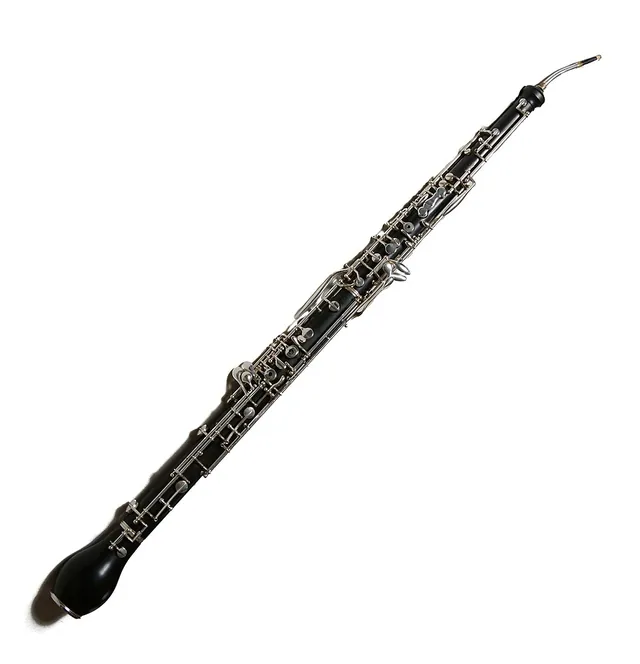
An alto oboe in F with a bulb-shaped bell; written C sounds F a fifth lower.
Quick facts
| Family | Woodwinds — Double reed |
|---|---|
| Hornbostel–Sachs | 422.112-71 |
| Pitched in | F |
| Transposition | Sounds a perfect fifth lower than written |
| Written range | B3 – G6 |
| Sounding range | E3 – C6 (164.81 – 1047 Hz) |
| Clef | Treble |
| Other names | Altoboe, Coranglais, Corno inglese, Englisch-Horn, Englischhorn, corne inglês, corno inglés, corno inglês, cuerno inglés, англійський ріжок |
Player's notes
- An alto oboe in F with a bulb-shaped bell; written C sounds F a fifth lower.
- Played with a bocal (crook) and slightly larger reed.
- Dvořák's 'Largo' (New World Symphony) is its signature solo.
About the english horn
The cor anglais (UK: , US: or original French: [kɔʁ ɑ̃ɡlɛ]; plural: cors anglais), or English horn (mainly North America), is a double-reed woodwind instrument in the oboe family. It is approximately one and a half times the length of an oboe, making it essentially an alto oboe in F.
The cor anglais is a transposing instrument pitched in F, a perfect fifth lower than the oboe (a C instrument). This means that music for the cor anglais is written a perfect fifth higher than the instrument sounds. The fingering and playing technique used for the cor anglais are essentially the same as those of the oboe, and oboists typically double on the cor anglais when required. The cor anglais normally lacks the lowest B♭ key found on most oboes, and so its sounding range stretches from E3 (written B♮) below middle C to C6 two octaves above middle C. Some versions have a Low B♭ key to extend the range down one more note to sounding E♭3.
Text adapted from the Wikipedia article “Cor anglais”, licensed under CC BY-SA 4.0.
Listen
Recordings from Wikimedia Commons, found via Openverse.
Notable repertoire
- Symphony No. 46 — Wolfgang Amadeus Mozart (1771)
- The Sorcerer's Apprentice — Paul Dukas (1890)
- Sinfonia Concertante for Four Winds — Wolfgang Amadeus Mozart (1778)
- Rondo in C for Violin and Orchestra — Wolfgang Amadeus Mozart (1781)
- Oboe Concerto — Wolfgang Amadeus Mozart (1777)
- Three Romances for Oboe and Piano — Robert Schumann (1849)
- Mass in D — Ethel Smyth
- Henrico Leone — Agostino Steffani
- Concerto in A minor for Oboe and Strings — Ralph Vaughan Williams (1944)
- Concerto for Oboe and Strings in D minor — Alessandro Marcello
- Oboe Sonata — Francis Poulenc (1962)
- Six Metamorphoses after Ovid — Benjamin Britten (1951)
Frequently asked questions
What is the range of the english horn?
The practical written range of the english horn is B3 to G6, which sounds E3 to C6 (164.8 Hz to 1047 Hz at A4 = 440 Hz).
Is the english horn a transposing instrument?
Yes. The english horn is pitched in F: sounds a perfect fifth lower than written. A written C sounds F.
What clef does the english horn read?
The english horn reads treble clef.
How is the english horn classified?
In the Hornbostel–Sachs system the english horn is classified as 422.112-71.
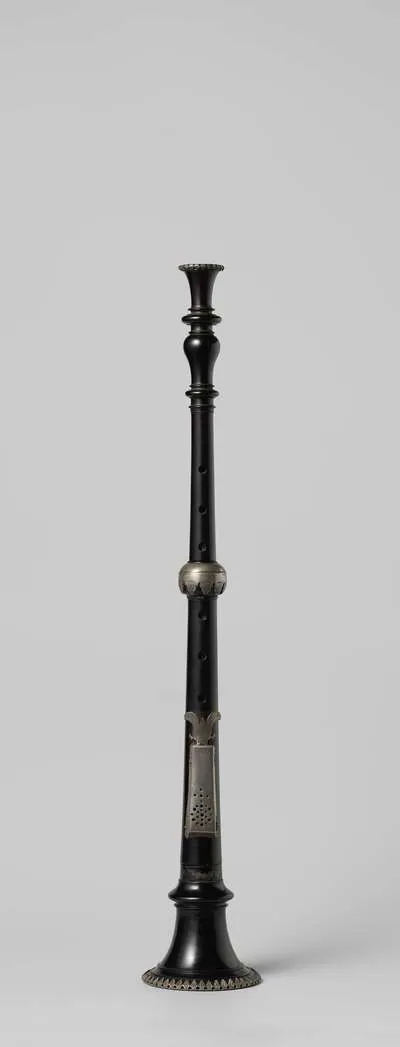
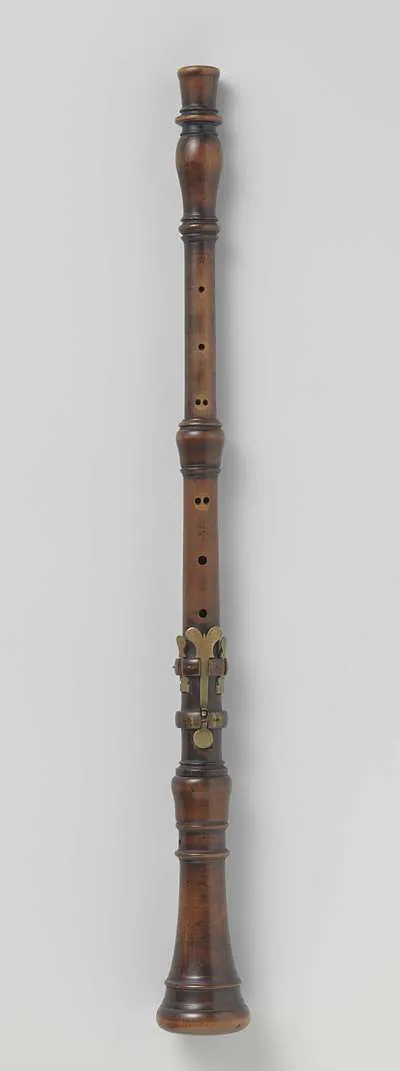
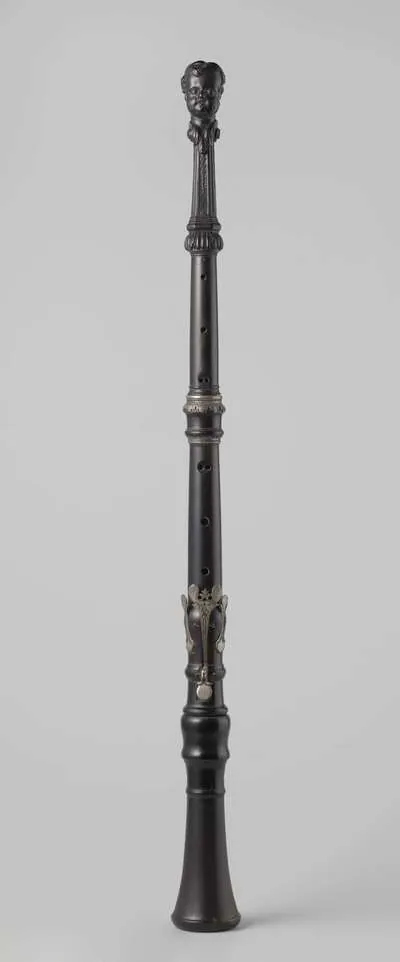
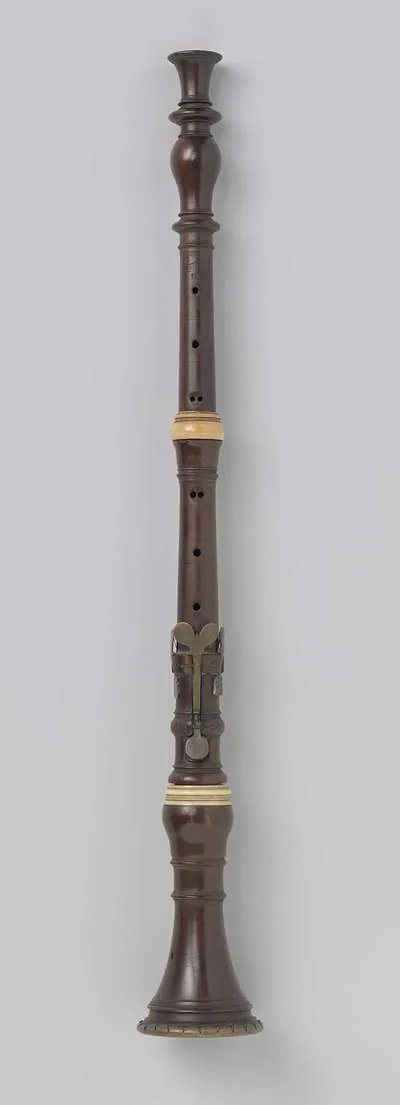
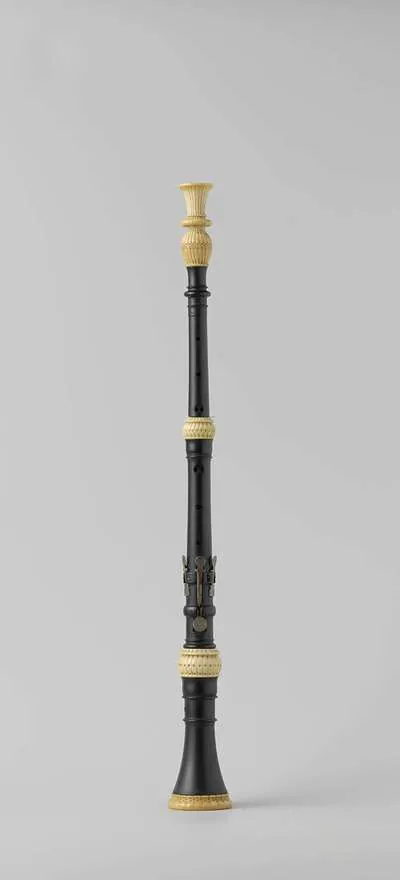
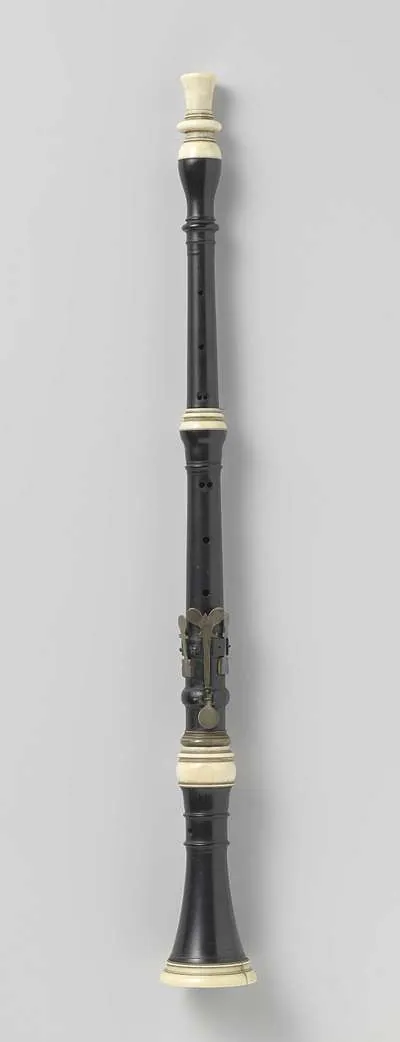
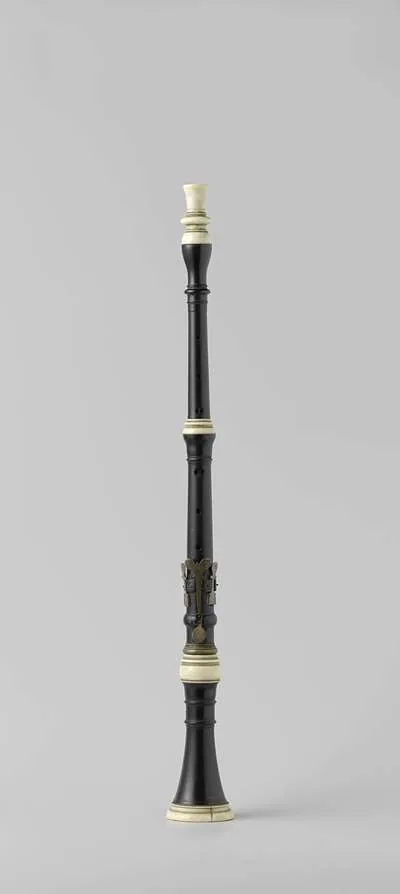
Historic examples in museums
Museum →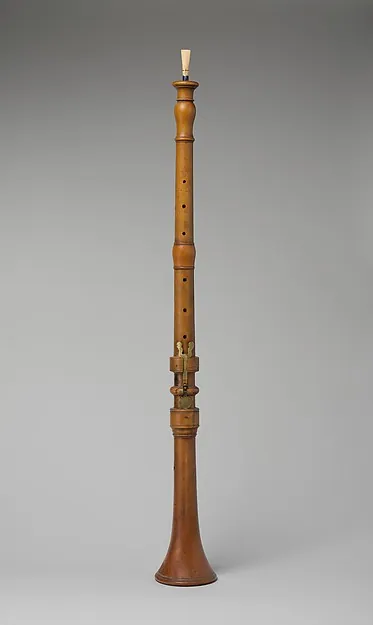
Related instruments
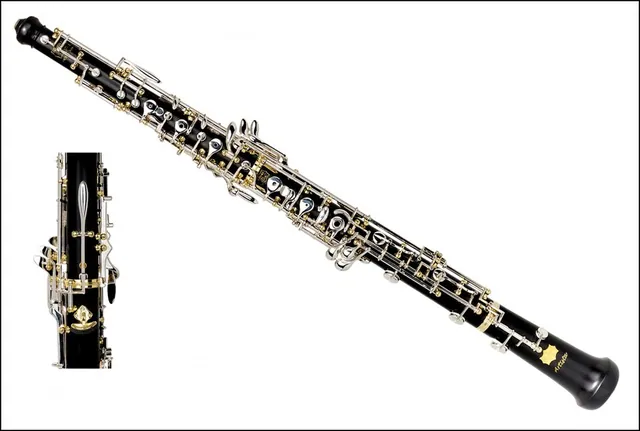
Oboe
Non-transposing double-reed instrument with a conical bore.
Oboe d'amore
Pitched in A between oboe and English horn; sounds a minor third lower than written.
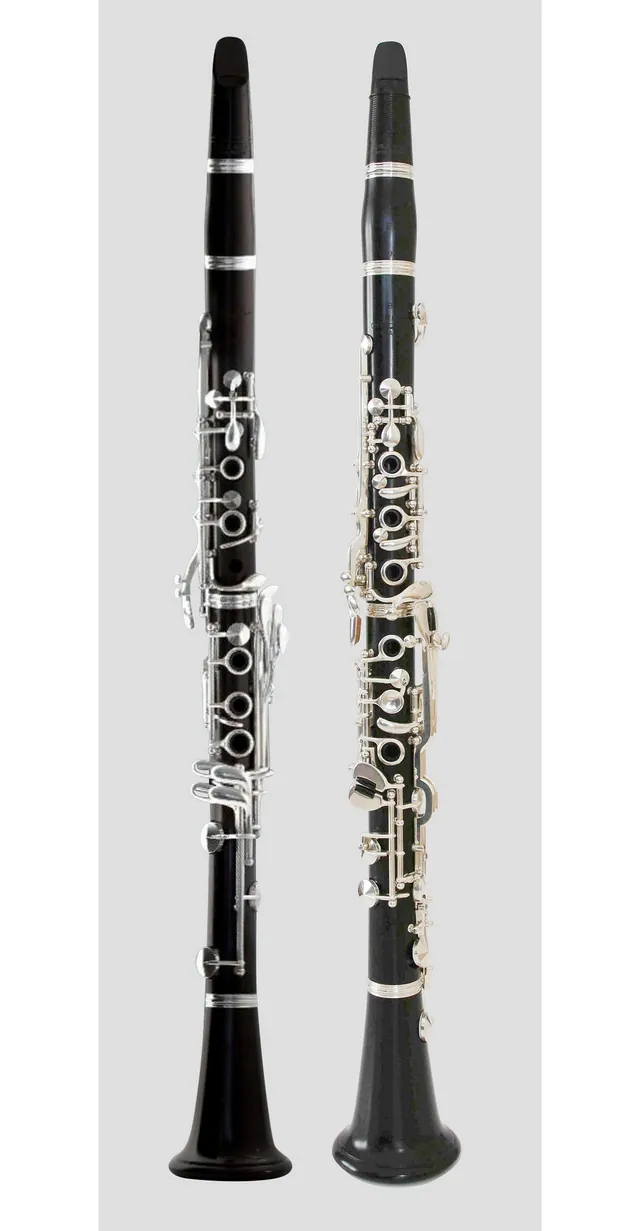
B♭ Clarinet
The most common clarinet: written C sounds B♭ a whole step lower.

A Clarinet
Slightly longer sibling of the B♭ clarinet; written C sounds A, a minor third lower.
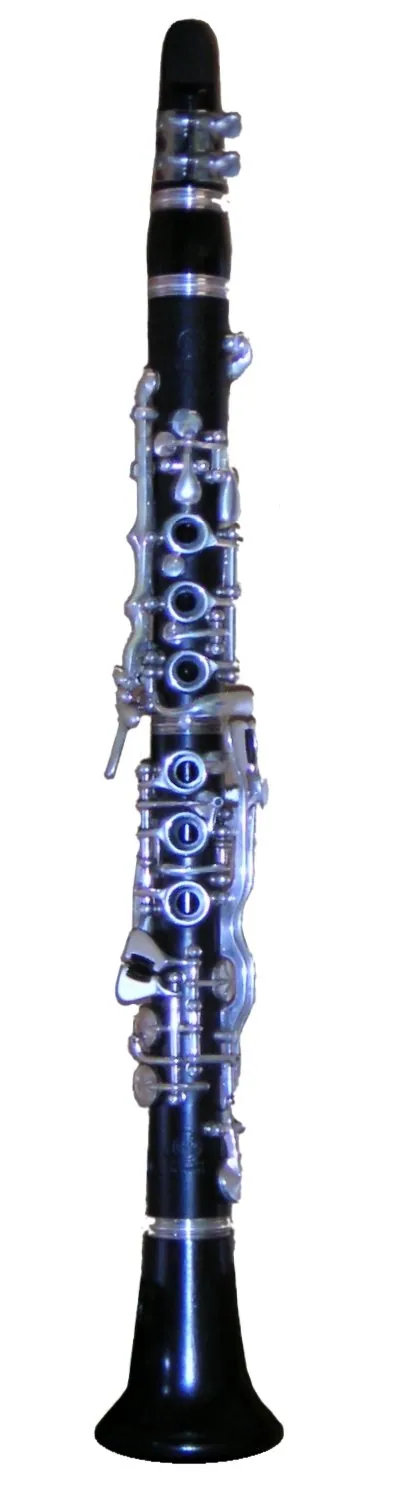
E♭ Clarinet
The small 'piccolo' of the clarinet family; written C sounds E♭ a minor third higher.
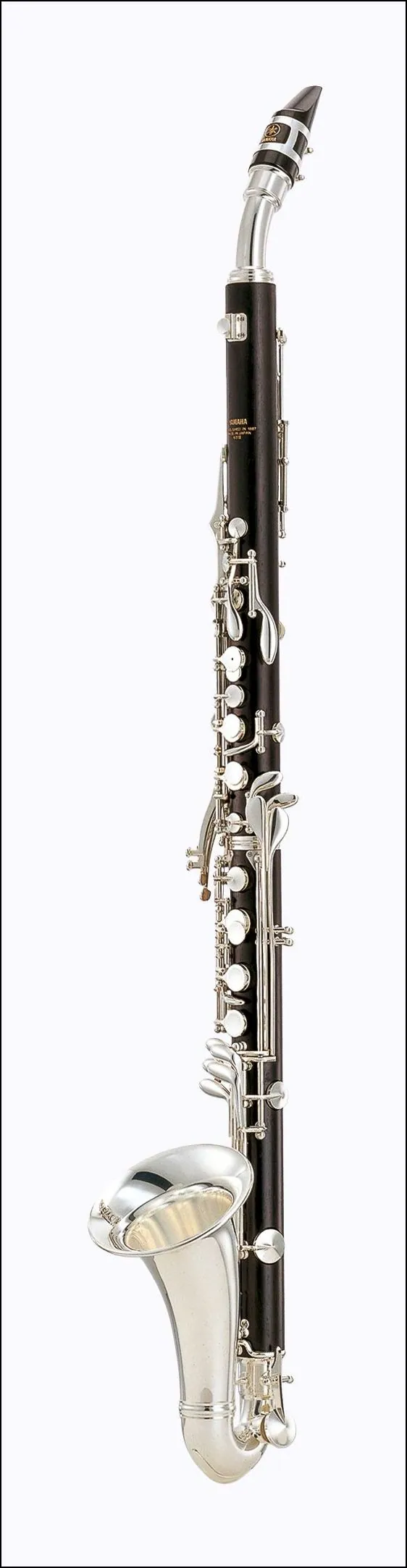
Alto Clarinet
Pitched in E♭ a fifth below the B♭ soprano; written C sounds E♭ a major sixth lower.