Brass · Lip-reed (valved) · Tuba family
Euphonium
Conical-bore tenor tuba; in bass clef it reads at concert pitch.
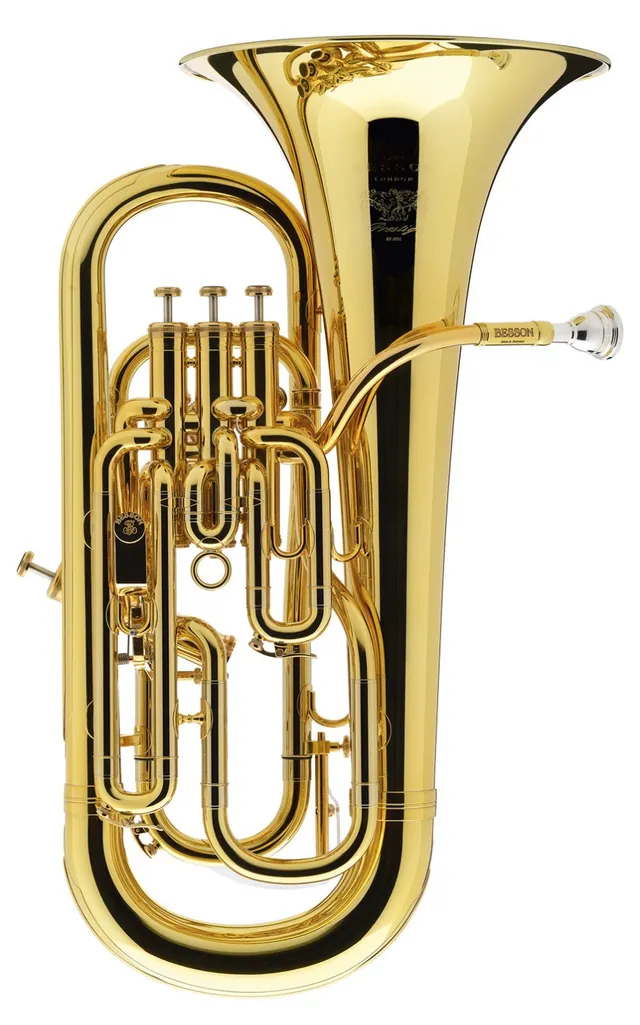
Quick facts
| Family | Brass — Lip-reed (valved) |
|---|---|
| Hornbostel–Sachs | 423.232 |
| Pitched in | C |
| Transposition | Sounds as written (non-transposing) |
| Written range | B♭1 – B♭4 |
| Sounding range | B♭1 – B♭4 (58.27 – 466 Hz) |
| Clef | Bass |
Player's notes
- Conical-bore tenor tuba; in bass clef it reads at concert pitch.
- In brass bands it is written in treble clef in B♭.
About the euphonium
The euphonium (English: yoo-FOH-nee-əm; Italian: eufonio; Spanish: bombardino) is a tenor- and baritone-voiced valved brass instrument pitched in 9-foot (9′) B♭ an octave below the B♭ trumpet or cornet, employed chiefly in brass, military, and concert bands. As with any brass instrument, sound is produced with a lip vibration or "buzz" in the mouthpiece. The euphonium is a member of the large family of valved bugles, along with the tuba and flugelhorn, characterized by a wide conical bore. Most instruments have four valves, usually compensating piston valves, although instruments with four or five rotary valves are common in Eastern and Central Europe.
Euphonium repertoire can be notated in concert pitch in the bass clef, or in the treble clef as a transposing instrument in B♭. In British brass bands, it is typically treated as a treble-clef instrument, while in American band music, parts may be written in either treble clef or bass clef, or both. A musician who plays the euphonium is known as a euphoniumist, a euphonist, or simply a euphonium player.
Text adapted from the Wikipedia article “Euphonium”, licensed under CC BY-SA 4.0.
Listen
Recordings from Wikimedia Commons, found via Openverse.
Frequently asked questions
What is the range of the euphonium?
The practical written range of the euphonium is B♭1 to B♭4, which sounds B♭1 to B♭4 (58.3 Hz to 466 Hz at A4 = 440 Hz).
Is the euphonium a transposing instrument?
No. The euphonium sounds at written pitch (concert pitch).
What clef does the euphonium read?
The euphonium reads bass clef.
How is the euphonium classified?
In the Hornbostel–Sachs system the euphonium is classified as 423.232.
Related instruments
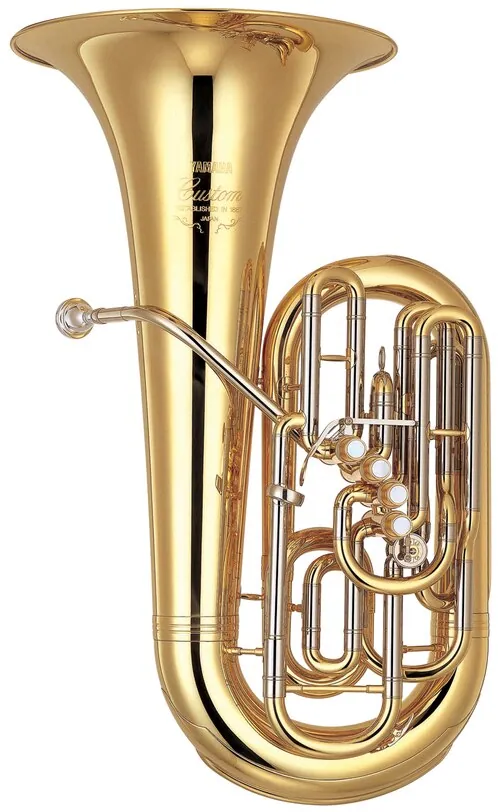
Tuba
Built in B♭, C, E♭ or F but always written at concert pitch in orchestral music.
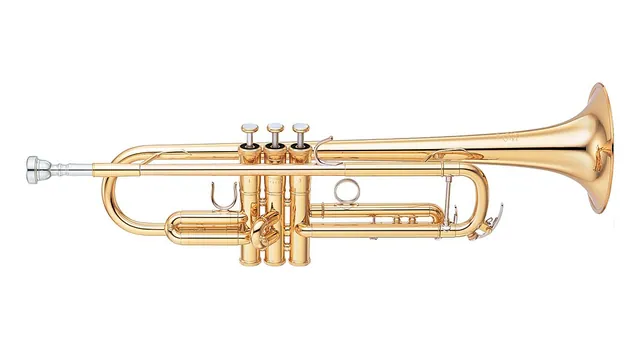
Trumpet
B♭ trumpet sounds a whole step lower than written; orchestral players also use C trumpets.
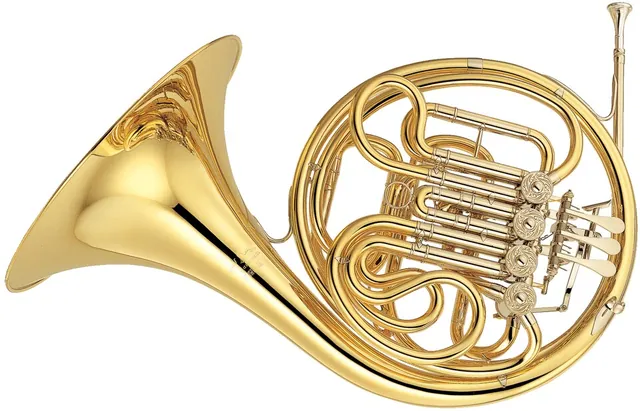
French Horn
Horn in F sounds a perfect fifth lower than written.
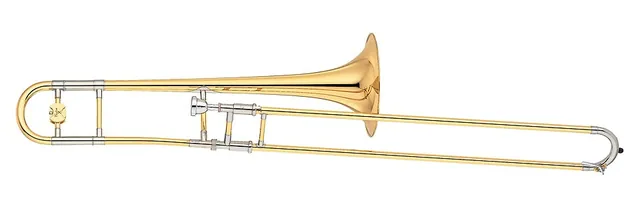
Trombone
Non-transposing in orchestral music; seven slide positions.
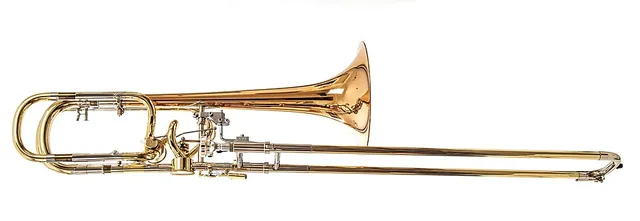
Bass Trombone
Wider bore and bell than the tenor, with one or two valve attachments.