Brass · Lip-reed (valved) · Tuba family
Tuba
Built in B♭, C, E♭ or F but always written at concert pitch in orchestral music.
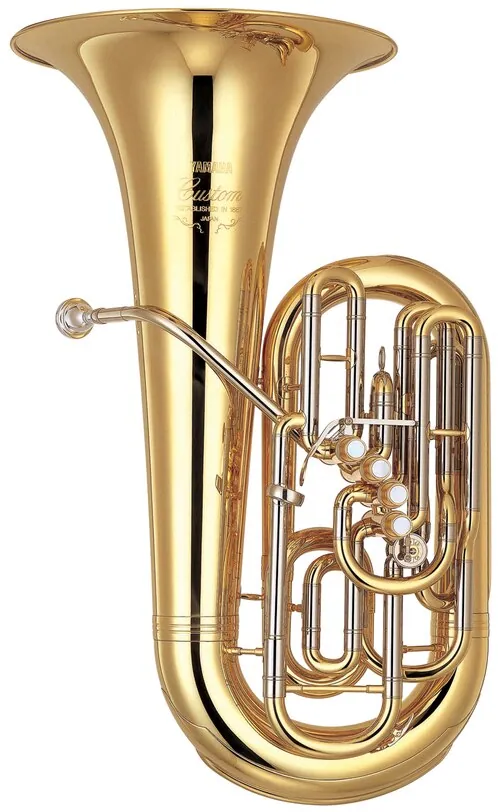
Quick facts
| Family | Brass — Lip-reed (valved) |
|---|---|
| Hornbostel–Sachs | 423.232 |
| Pitched in | C |
| Transposition | Sounds as written (non-transposing) |
| Written range | D1 – F4 |
| Sounding range | D1 – F4 (36.71 – 349 Hz) |
| Clef | Bass |
Player's notes
- Built in B♭, C, E♭ or F but always written at concert pitch in orchestral music.
- The youngest member of the orchestra's brass section (1835).
About the tuba
The tuba (Latin, "trumpet"; UK: ; US: ) is a large brass instrument in the bass-to-contrabass range. It is a member of the valved bugles, a large and diverse family of instruments characterized by their wide conical bore and use of valves to alter pitch. The tuba usually has four or five valves, although some models have three or six. Descending from the serpent and ophicleide, the tuba was invented in Prussia by Wilhelm Friedrich Wieprecht and Johann Gottfried Moritz and patented in 1835 as the Baß-Tuba, pitched in 12-foot (12′) F. Its five valves provided a fully chromatic contrabass instrument with a deep, full contrabass timbre.
The tuba evolved through the 19th century as valves improved, and other makers contributed new designs and sizes. By the 1850s, Adolphe Sax had developed his E♭ and B♭ contrabass saxhorns which became standard in British brass bands, and Václav František Červený developed contrabass tubas in 16′ C and 18′ B♭ in the 1870s. A circular, wearable tuba called the helicon was designed for marching, and by the late 1890s was adopted and modified by John Philip Sousa as the sousaphone.
The tuba is used in the symphony orchestra as the bass of the brass section, and in chamber music as the bass of the brass quintet. Tubas are standard in brass, concert, and military bands, in American marching bands and Mexican banda music (often as the sousaphone), and are occasionally used in jazz and popular music. Since the mid-20th century, the tuba has been increasingly considered as a solo instrument, and has accumulated a substantial body of chamber and solo music, as well as notable concertos by composers including Ralph Vaughan Williams, Edward Gregson, and Kalevi Aho.
Text adapted from the Wikipedia article “Tuba”, licensed under CC BY-SA 4.0.
Listen
Recordings from Wikimedia Commons, found via Openverse.
Frequently asked questions
What is the range of the tuba?
The practical written range of the tuba is D1 to F4, which sounds D1 to F4 (36.7 Hz to 349 Hz at A4 = 440 Hz).
Is the tuba a transposing instrument?
No. The tuba sounds at written pitch (concert pitch).
What clef does the tuba read?
The tuba reads bass clef.
How is the tuba classified?
In the Hornbostel–Sachs system the tuba is classified as 423.232.
Related instruments
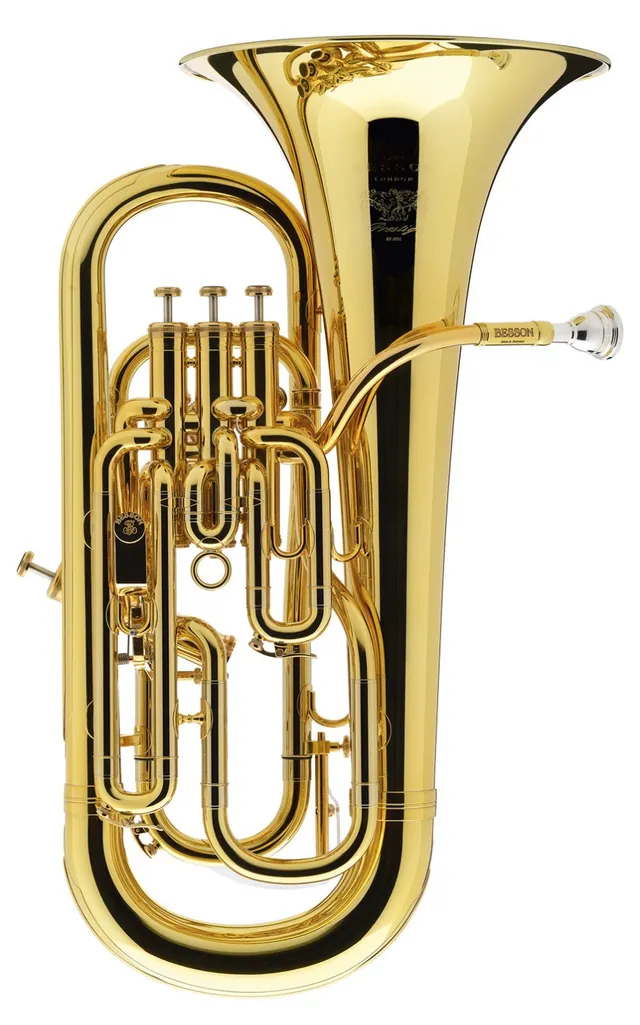
Euphonium
Conical-bore tenor tuba; in bass clef it reads at concert pitch.
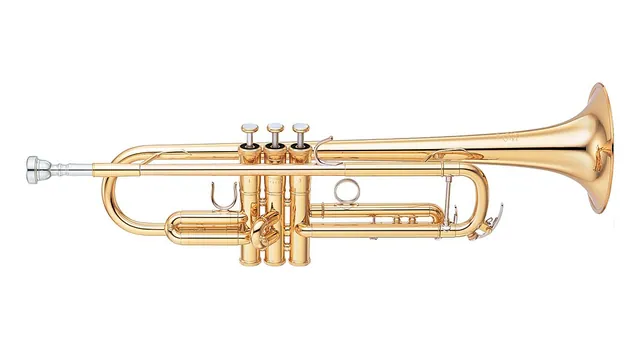
Trumpet
B♭ trumpet sounds a whole step lower than written; orchestral players also use C trumpets.
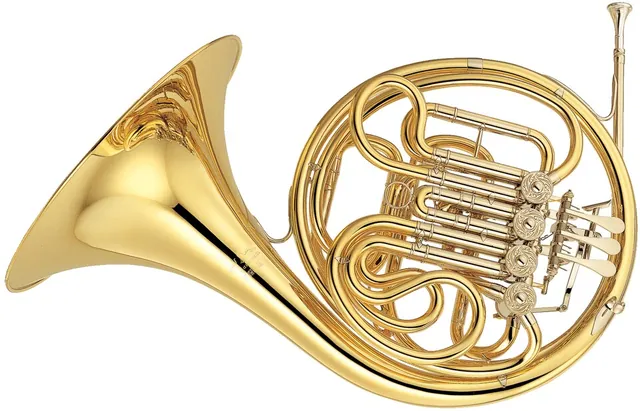
French Horn
Horn in F sounds a perfect fifth lower than written.
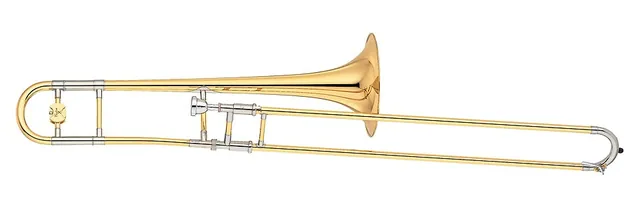
Trombone
Non-transposing in orchestral music; seven slide positions.
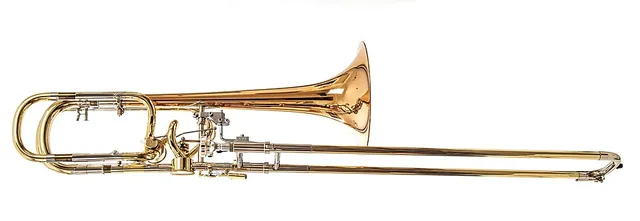
Bass Trombone
Wider bore and bell than the tenor, with one or two valve attachments.