Brass · Lip-reed (slide) · Trombone family
Trombone
Non-transposing in orchestral music; seven slide positions.
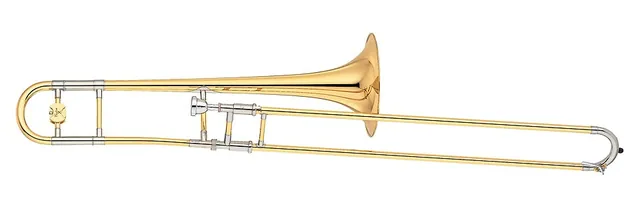
Quick facts
| Family | Brass — Lip-reed (slide) |
|---|---|
| Hornbostel–Sachs | 423.22 |
| Pitched in | C |
| Transposition | Sounds as written (non-transposing) |
| Written range | E2 – F5 |
| Sounding range | E2 – F5 (82.41 – 698 Hz) |
| Clefs | Bass, Tenor |
| Other names | Posaune, trombón |
Player's notes
- Non-transposing in orchestral music; seven slide positions.
- British brass bands write it in treble clef in B♭.
About the trombone
The trombone is a musical instrument in the brass family. As with all brass instruments, sound is produced when the player's lips vibrate inside a mouthpiece, causing the air column inside the instrument to vibrate. Nearly all trombones use a telescoping slide mechanism to alter the pitch instead of the valves used by other brass instruments. The valve trombone is an exception, using three valves similar to those on a trumpet, and the superbone has valves and a slide.
The word trombone derives from Italian tromba (trumpet) and -one (a suffix meaning 'large'), so the name means 'large trumpet'. The trombone has a predominantly cylindrical bore like the trumpet, in contrast to the more conical brass instruments like the cornet, the flugelhorn, the baritone, and the euphonium. The two most frequently encountered variants are the tenor trombone and bass trombone; when the word trombone is mentioned alone; it is mostly taken to mean the tenor. These are treated as non-transposing instruments, reading at concert pitch in bass clef, with higher notes sometimes being notated in tenor clef. They are pitched in B♭, an octave below the B♭ trumpet and an octave above the B♭ contrabass tuba. The E♭ alto trombone became less common as improvements in technique extended the upper range of the tenor, but it is regaining popularity for its lighter sonority. In British brass-band music the tenor trombone is treated as a B♭ transposing instrument, written in treble clef, and the alto trombone is written at concert pitch, usually in alto clef.
A person who plays the trombone is called a trombonist or trombone player.
Text adapted from the Wikipedia article “Trombone”, licensed under CC BY-SA 4.0.
Listen
Recordings from Wikimedia Commons, found via Openverse.
Frequently asked questions
What is the range of the trombone?
The practical written range of the trombone is E2 to F5, which sounds E2 to F5 (82.4 Hz to 698 Hz at A4 = 440 Hz).
Is the trombone a transposing instrument?
No. The trombone sounds at written pitch (concert pitch).
What clef does the trombone read?
The trombone reads bass clef and tenor clef.
How is the trombone classified?
In the Hornbostel–Sachs system the trombone is classified as 423.22.
Related instruments
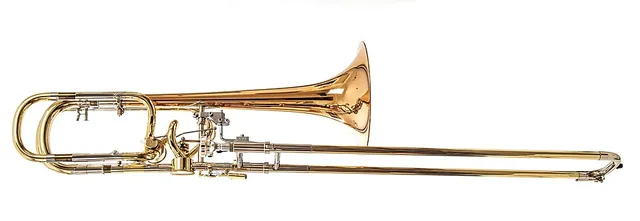
Bass Trombone
Wider bore and bell than the tenor, with one or two valve attachments.
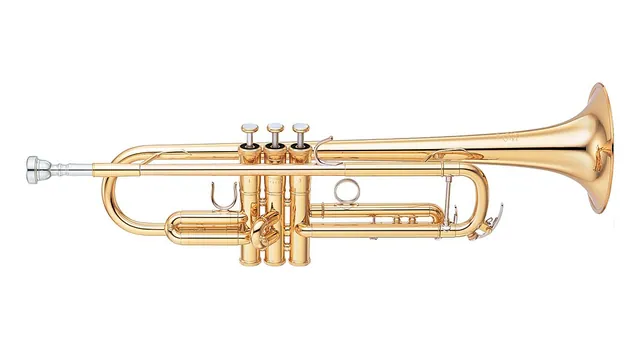
Trumpet
B♭ trumpet sounds a whole step lower than written; orchestral players also use C trumpets.
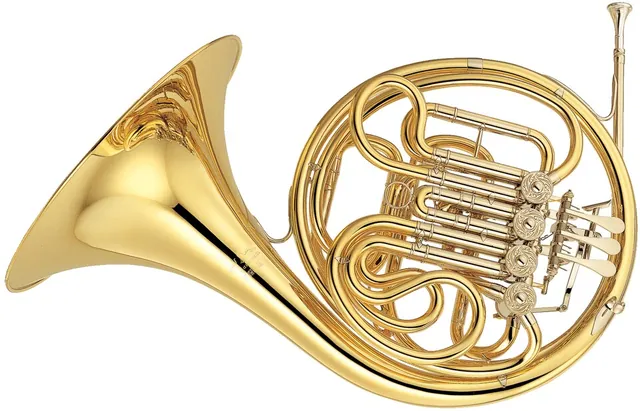
French Horn
Horn in F sounds a perfect fifth lower than written.
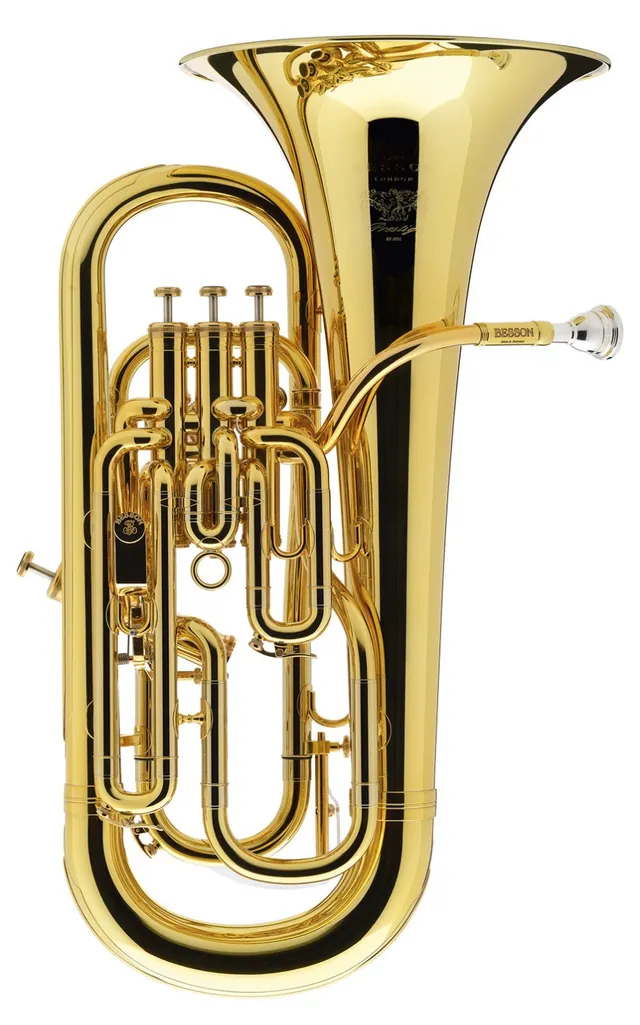
Euphonium
Conical-bore tenor tuba; in bass clef it reads at concert pitch.
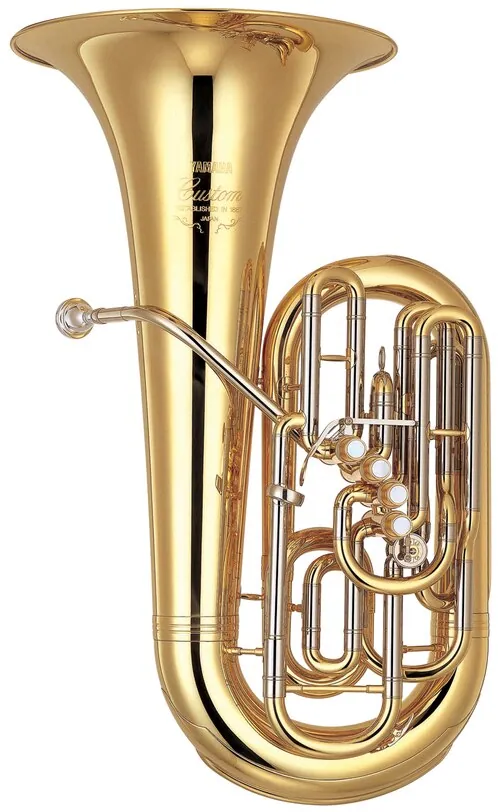
Tuba
Built in B♭, C, E♭ or F but always written at concert pitch in orchestral music.