Brass · Lip-reed (valved) · Trumpet family
Trumpet
B♭ trumpet sounds a whole step lower than written; orchestral players also use C trumpets.
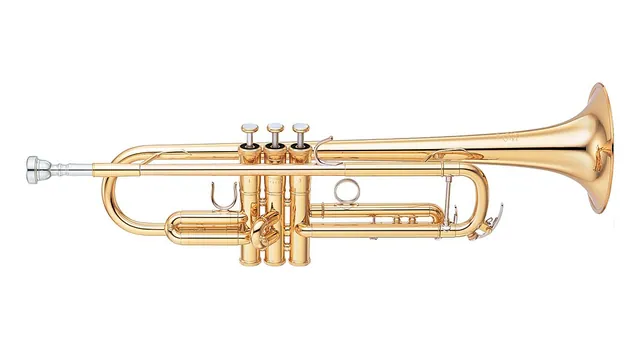
Quick facts
| Family | Brass — Lip-reed (valved) |
|---|---|
| Hornbostel–Sachs | 423.233 |
| Pitched in | B♭ |
| Transposition | Sounds a major second lower than written |
| Written range | F♯3 – C6 |
| Sounding range | E3 – B♭5 (164.81 – 932 Hz) |
| Clef | Treble |
| Inventor | Tyrrhenus |
| Other names | Trompete, trompeta, trompette, 🎺 |
Player's notes
- B♭ trumpet sounds a whole step lower than written; orchestral players also use C trumpets.
- Three valves lower the pitch by 2, 1 and 3 semitones.
- Range is set by the player's chops — professionals go well above written C6.
About the trumpet
The trumpet is a brass instrument. The most common type of trumpet is a transposing instrument in B♭, with pitches sounding a whole step lower than written. The trumpet family includes instruments ranging from the piccolo trumpet, with the highest register in the brass family, to the bass trumpet, pitched one octave below the standard B♭ or C trumpet.
Trumpet-like instruments have historically been used as signaling devices in battle or hunting, with examples dating back to the 2nd Millennium BC. They began to be used as musical instruments only in the late 14th or early 15th century. Trumpets are used in art music styles, appearing in orchestras, concert bands, chamber music groups, and jazz ensembles. They are also common in popular music and are generally included in school bands. Sound is produced by vibrating the lips in a mouthpiece, which starts a standing wave in the air column of the instrument. Since the late 15th century, trumpets have primarily been constructed of brass tubing, usually bent twice into a rounded rectangular shape.
The most common trumpet is pitched in B♭, with a tubing length of about 1.48 m (4 ft 10 in). There are trumpets pitched in C, D, and E♭, as well as the piccolo trumpet in B♭ (an octave higher than the standard trumpet), and the bass trumpet (in B♭ an octave lower, or in C). The cornet is similar to the trumpet but has a conical bore (the trumpet has a cylindrical bore) and its tubing is generally wound differently. Early trumpets did not provide means to change the length of tubing, whereas modern instruments generally have three (or sometimes four) valves which are used to change their pitch. Most trumpets have piston valves, although some have rotary valves. The use of rotary-valved trumpets is more common in orchestral settings (especially in German and German-style orchestras), although this practice varies by country. A musician who plays the trumpet is called a trumpet player or trumpeter.
Text adapted from the Wikipedia article “Trumpet”, licensed under CC BY-SA 4.0.
Listen
Recordings from Wikimedia Commons, found via Openverse.
Frequently asked questions
What is the range of the trumpet?
The practical written range of the trumpet is F♯3 to C6, which sounds E3 to B♭5 (164.8 Hz to 932 Hz at A4 = 440 Hz).
Is the trumpet a transposing instrument?
Yes. The trumpet is pitched in B♭: sounds a major second lower than written. A written C sounds B♭.
What clef does the trumpet read?
The trumpet reads treble clef.
How is the trumpet classified?
In the Hornbostel–Sachs system the trumpet is classified as 423.233.
Related instruments
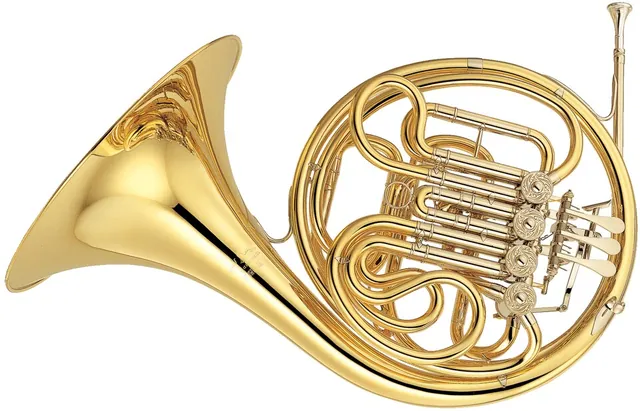
French Horn
Horn in F sounds a perfect fifth lower than written.
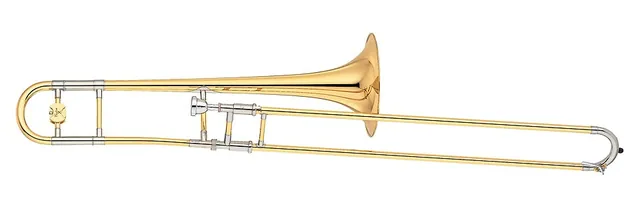
Trombone
Non-transposing in orchestral music; seven slide positions.
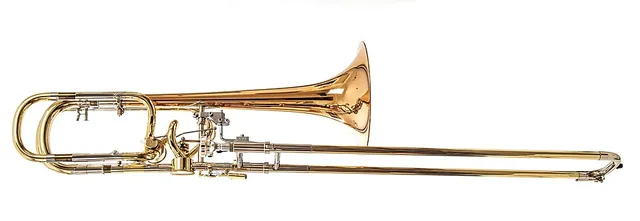
Bass Trombone
Wider bore and bell than the tenor, with one or two valve attachments.
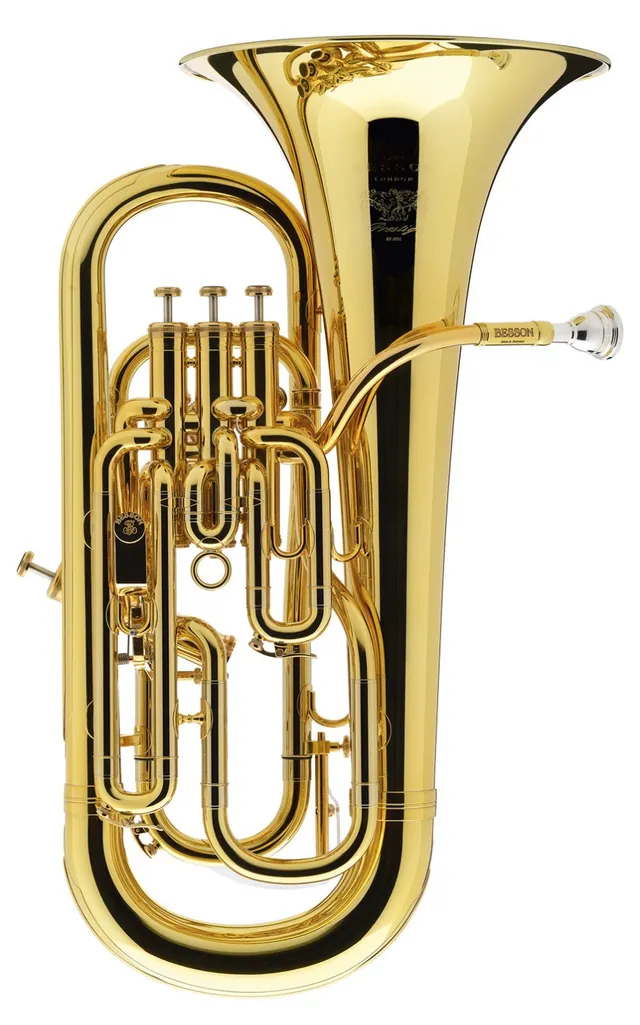
Euphonium
Conical-bore tenor tuba; in bass clef it reads at concert pitch.
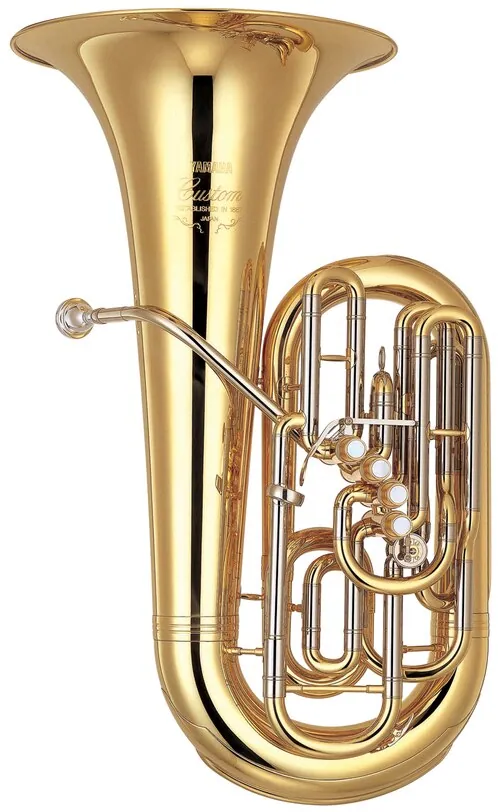
Tuba
Built in B♭, C, E♭ or F but always written at concert pitch in orchestral music.