Woodwinds · Double reed · Bassoon family
Bassoon
The bass of the woodwind section; reads bass and tenor clef.
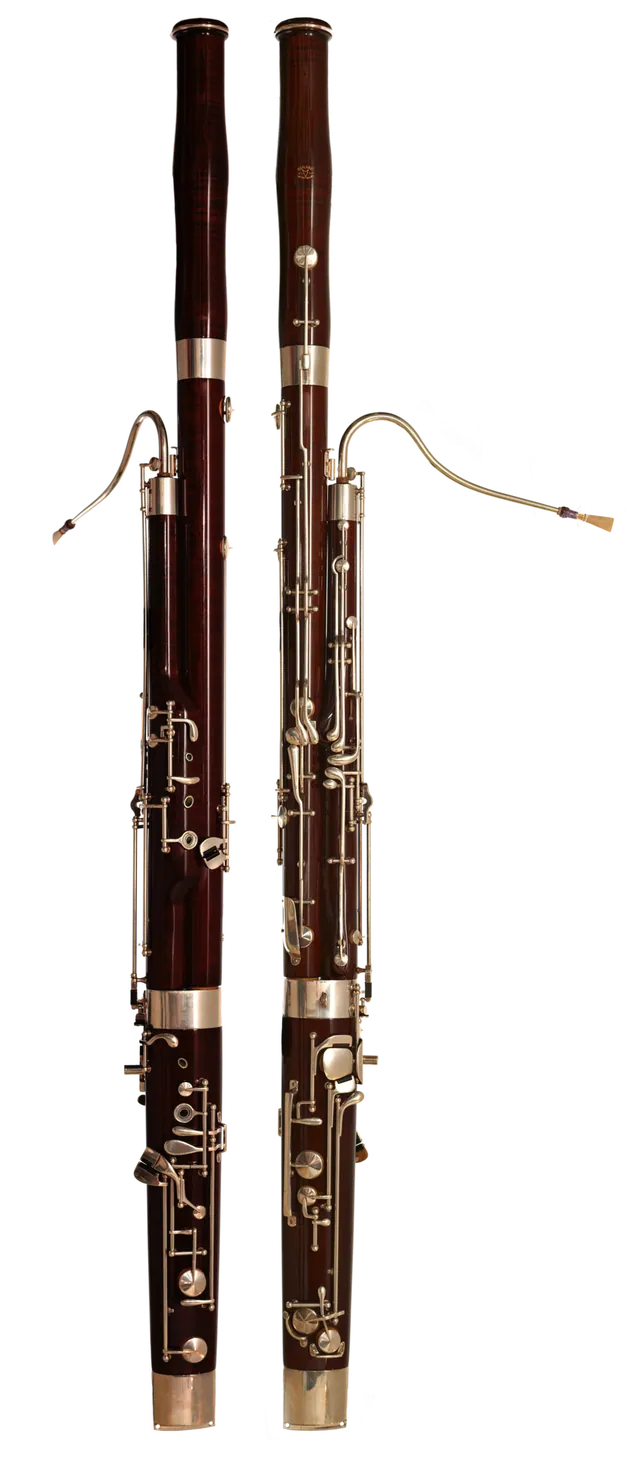
Quick facts
| Family | Woodwinds — Double reed |
|---|---|
| Hornbostel–Sachs | 422.112-71 |
| Pitched in | C |
| Transposition | Sounds as written (non-transposing) |
| Written range | B♭1 – E5 |
| Sounding range | B♭1 – E5 (58.27 – 659 Hz) |
| Clefs | Bass, Tenor |
| Other names | Fagott, basson, fagot |
Player's notes
- The bass of the woodwind section; reads bass and tenor clef.
- About 2.5 m of conical tube folded in two.
- Uses a metal bocal and a double reed; the left thumb manages up to nine keys.
About the bassoon
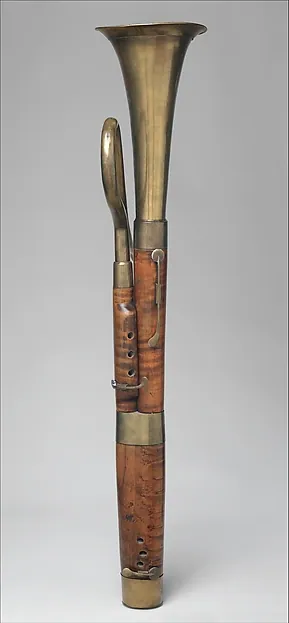
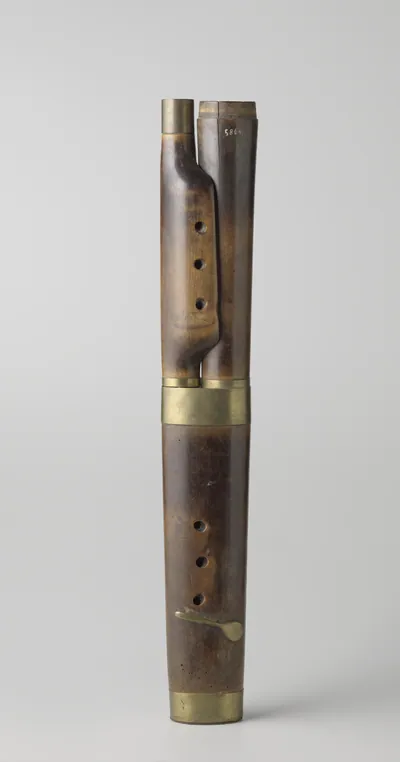
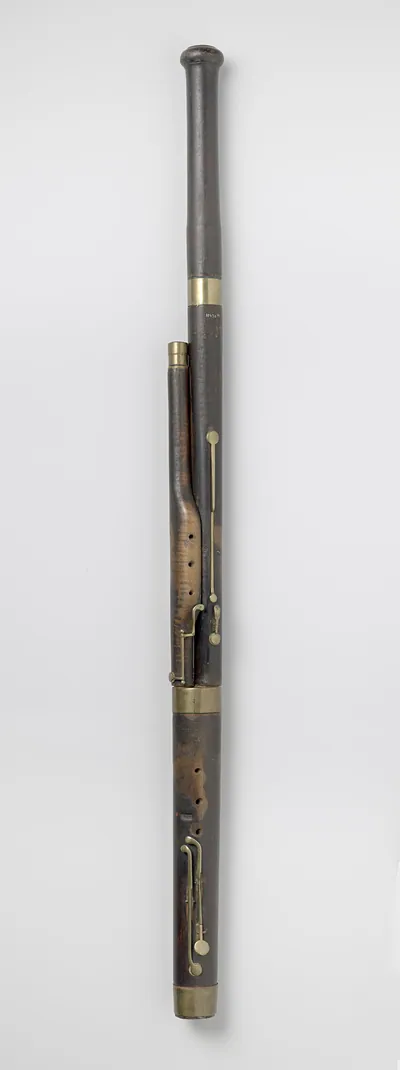
The bassoon is a musical instrument in the woodwind family, which plays in the tenor and bass ranges. It is composed of six pieces, and is usually made of wood. It is known for its distinctive tone color, wide range, versatility, and virtuosity. It is a non-transposing instrument and typically its music is written in the bass and tenor clefs, and sometimes in the treble. There are two forms of modern bassoon: the Buffet (or French) and Heckel (or German) systems. It is typically played while sitting using a seat strap, but can be played while standing if the player has a harness to hold the instrument. Sound is produced by rolling both lips over the reed and blowing direct air pressure to cause the reed to vibrate. Its fingering system can be quite complex when compared to those of other instruments. Appearing in its modern form in the 19th century, the bassoon figures prominently in orchestral, concert band, and chamber music literature, and is occasionally heard in pop, rock, and jazz settings as well. One who plays a bassoon is called a bassoonist.
Text adapted from the Wikipedia article “Bassoon”, licensed under CC BY-SA 4.0.
Listen
Recordings from Wikimedia Commons, found via Openverse.
Notable repertoire
- Octet — Franz Schubert (1824)
- Piano Concerto No. 15 — Wolfgang Amadeus Mozart (1784)
- Turandot — Giacomo Puccini (1921)
- Piano Concerto No. 4 — Sergei Prokofiev
- Symphony No. 4 — Franz Schubert (1816)
- Meeresstille und glückliche Fahrt — Ludwig van Beethoven (1814)
- Youth — Leoš Janáček (1924)
- Serenade No. 9 — Wolfgang Amadeus Mozart
- Horn Concerto No. 3 — Wolfgang Amadeus Mozart (1787)
- The Sorcerer's Apprentice — Paul Dukas (1890)
- Sinfonia Concertante for Four Winds — Wolfgang Amadeus Mozart (1778)
- Bassoon Concerto — Wolfgang Amadeus Mozart
Frequently asked questions
What is the range of the bassoon?
The practical written range of the bassoon is B♭1 to E5, which sounds B♭1 to E5 (58.3 Hz to 659 Hz at A4 = 440 Hz).
Is the bassoon a transposing instrument?
No. The bassoon sounds at written pitch (concert pitch).
What clef does the bassoon read?
The bassoon reads bass clef and tenor clef.
How is the bassoon classified?
In the Hornbostel–Sachs system the bassoon is classified as 422.112-71.
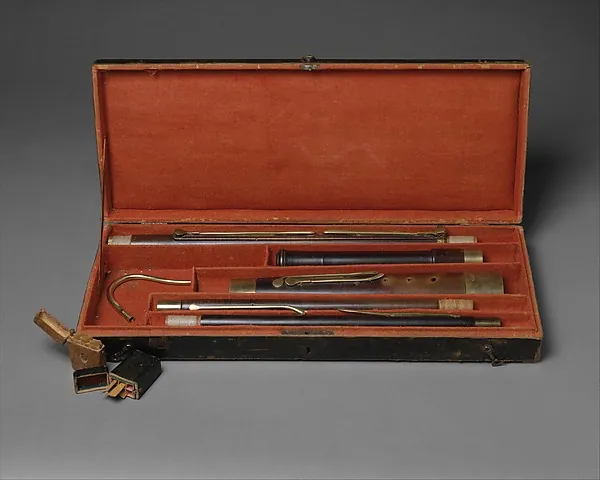
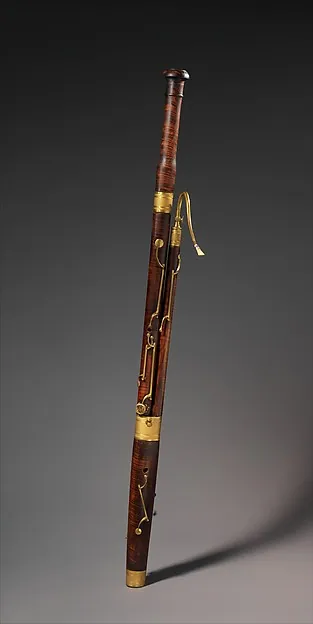
Historic examples in museums
Museum →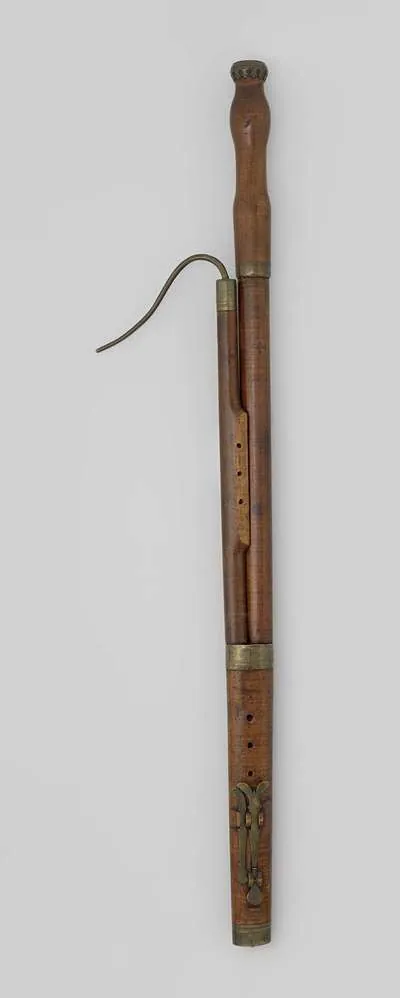

Related instruments
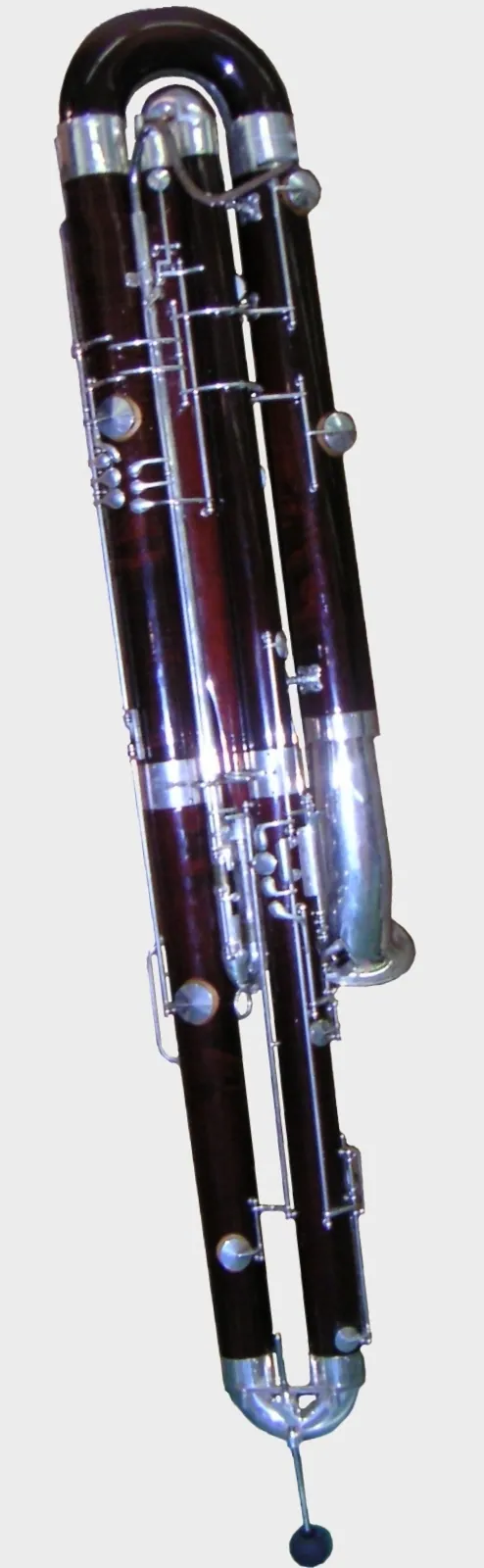
Contrabassoon
Sounds an octave lower than written; the lowest regular orchestral woodwind.
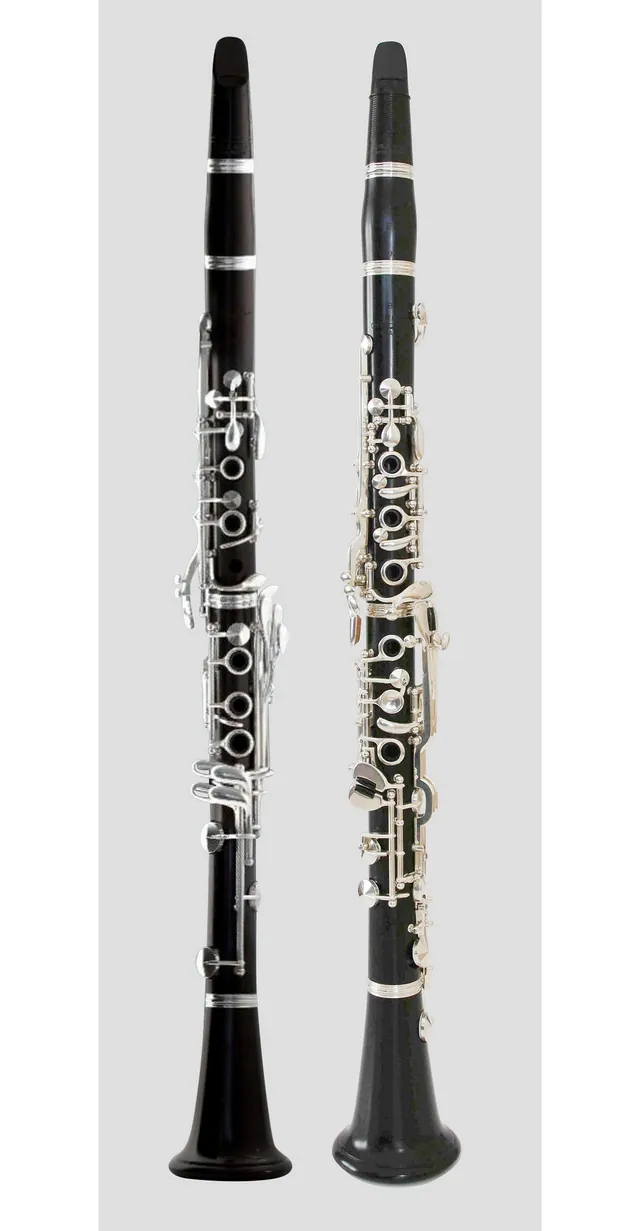
B♭ Clarinet
The most common clarinet: written C sounds B♭ a whole step lower.

A Clarinet
Slightly longer sibling of the B♭ clarinet; written C sounds A, a minor third lower.
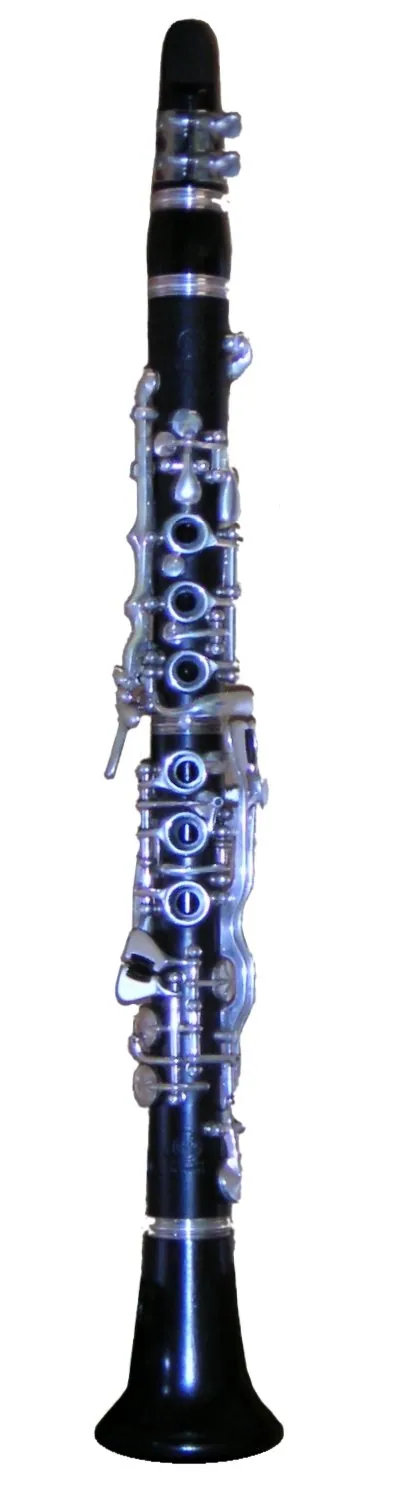
E♭ Clarinet
The small 'piccolo' of the clarinet family; written C sounds E♭ a minor third higher.
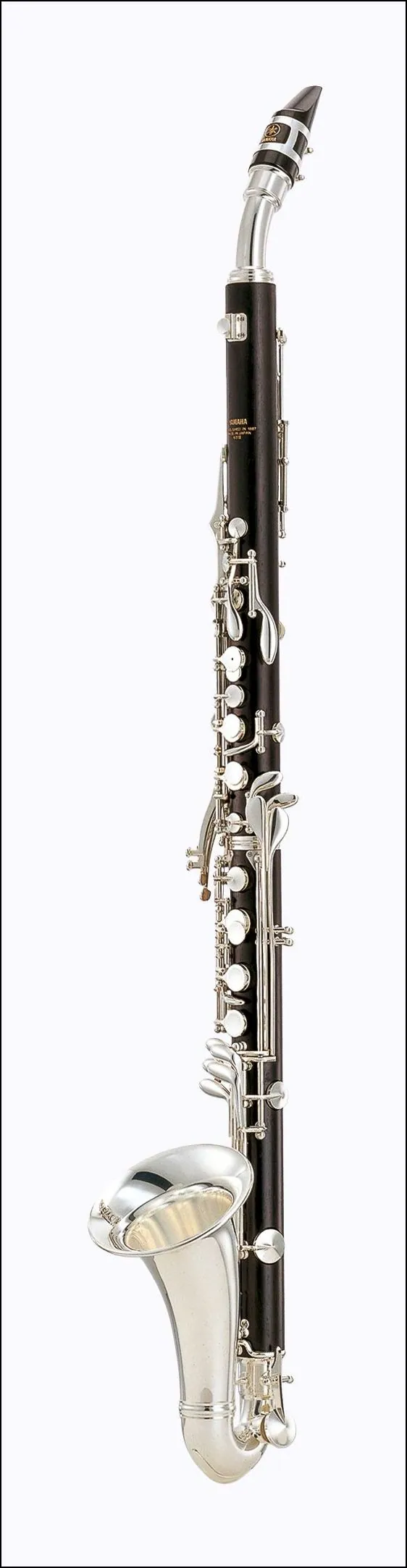
Alto Clarinet
Pitched in E♭ a fifth below the B♭ soprano; written C sounds E♭ a major sixth lower.
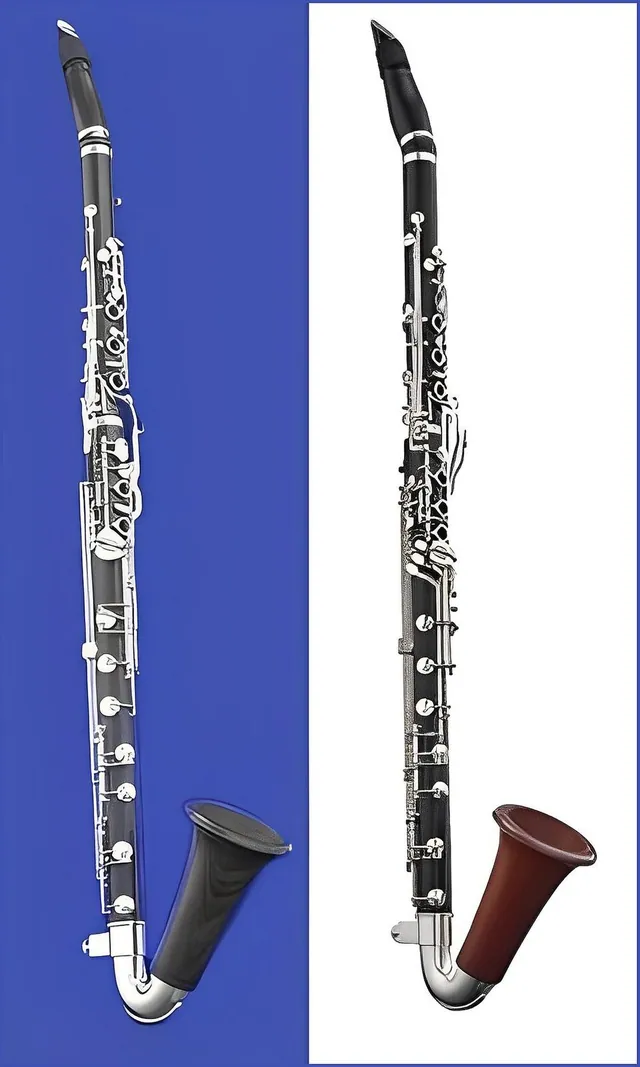
Basset Horn
An F alto clarinet with extension down to written C — beloved by Mozart (Requiem, Gran…