Clarinet · Chalumeau register
Clarinet fingering for B3
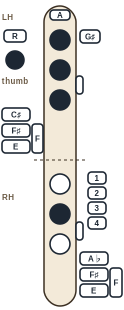
Thumb hole, left hand 1-2-3, right hand 2. Basic — right middle finger only.
What it sounds like
| Instrument | Sounding pitch | Frequency (A4 = 440 Hz) | |
|---|---|---|---|
| B♭ clarinet | A3 | 220.00 Hz | |
| A clarinet | G♯3 | 207.65 Hz | |
| E♭ clarinet | D4 | 293.66 Hz | |
| Bass clarinet | A2 | 110.00 Hz |
Tip for the chalumeau register
Seal the holes with the pads of your fingers, not the tips — the most common cause of squeaks down here is a hole that is only partly covered. Keep the air warm and the tongue low for a dark, rich sound.
Frequently asked questions
How do you play B3 on the clarinet?
Standard fingering: Thumb hole, left hand 1-2-3, right hand 2. Basic — right middle finger only.
What does written B3 sound like on the clarinet?
B♭ clarinet: A3 (220.0 Hz); A clarinet: G♯3 (207.7 Hz); E♭ clarinet: D4 (293.7 Hz); Bass clarinet: A2 (110.0 Hz).
Are there alternate fingerings for B3?
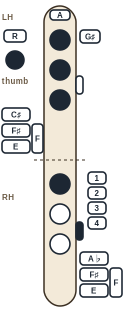
Yes — 1 alternate: (1) Thumb hole, left hand 1-2-3, right hand 1, B/F♯ sliver key. Sliver-key alternative for chromatic passages.