Clarinet · Clarion register
Clarinet fingering for G♯5 / A♭5
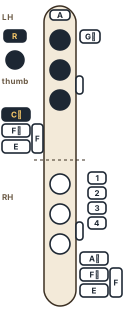
Thumb hole, left hand 1-2-3, register key, C♯/G♯ key (left pinky). Basic.
What it sounds like
| Instrument | Sounding pitch | Frequency (A4 = 440 Hz) | |
|---|---|---|---|
| B♭ clarinet | F♯5 | 739.99 Hz | |
| A clarinet | E♯5 | 698.46 Hz | |
| E♭ clarinet | B5 | 987.77 Hz | |
| Bass clarinet | F♯4 | 369.99 Hz |
Tip for the clarion register
The register key turns each chalumeau fingering into the note a twelfth higher. Keep air speed up and the embouchure steady; don't bite to make notes speak.
Frequently asked questions
How do you play G♯5 (A♭5) on the clarinet?
Standard fingering: Thumb hole, left hand 1-2-3, register key, C♯/G♯ key (left pinky). Basic.
What does written G♯5 sound like on the clarinet?
B♭ clarinet: F♯5 (740.0 Hz); A clarinet: E♯5 (698.5 Hz); E♭ clarinet: B5 (987.8 Hz); Bass clarinet: F♯4 (370.0 Hz).
Are there alternate fingerings for G♯5?
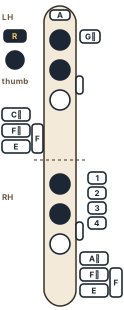
Yes — 1 alternate: (1) Thumb hole, left hand 1-2, right hand 1-2, register key. Alternative used next to right-hand notes.