Clarinet · Chalumeau register
Clarinet fingering for E♭4 / D♯4
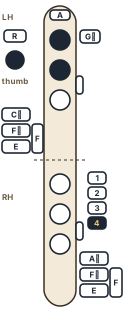
Thumb hole, left hand 1-2, side key 4 (E♭/B♭). Basic — lowest right-hand side key.
What it sounds like
| Instrument | Sounding pitch | Frequency (A4 = 440 Hz) | |
|---|---|---|---|
| B♭ clarinet | D♭4 | 277.18 Hz | |
| A clarinet | C4 | 261.63 Hz | |
| E♭ clarinet | G♭4 | 369.99 Hz | |
| Bass clarinet | D♭3 | 138.59 Hz |
Tip for the chalumeau register
Seal the holes with the pads of your fingers, not the tips — the most common cause of squeaks down here is a hole that is only partly covered. Keep the air warm and the tongue low for a dark, rich sound.
Frequently asked questions
How do you play E♭4 (D♯4) on the clarinet?
Standard fingering: Thumb hole, left hand 1-2, side key 4 (E♭/B♭). Basic — lowest right-hand side key.
What does written E♭4 sound like on the clarinet?
B♭ clarinet: D♭4 (277.2 Hz); A clarinet: C4 (261.6 Hz); E♭ clarinet: G♭4 (370.0 Hz); Bass clarinet: D♭3 (138.6 Hz).
Are there alternate fingerings for E♭4?
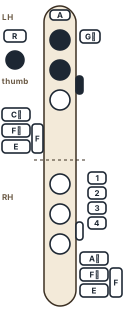
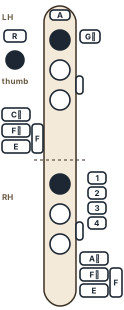
Yes — 2 alternate: (1) Thumb hole, left hand 1-2, E♭/B♭ sliver key. Sliver key; ideal for chromatic runs and D–E♭ trills. (2) Thumb hole, left hand 1, right hand 1. Fork fingering; slightly sharp.